

According to Gartner's 2025 Supply Chain Technology survey, 75% of logistics operators in North America acknowledge that their warehouse yard remains the hardest bottleneck to solve, even after investing in warehouse management systems (WMS) and transportation management systems (TMS). The reason is simple: the yard has historically been the least digitized segment of the logistics chain. While the inside of the warehouse captures data on every inventory movement, the yard still runs on guards taking paper notes, reactive dock assignments, and unpredictable wait times.
Artificial intelligence applied to yard management is changing that reality — not as a futuristic promise, but as available technology already being deployed by leading operators in Mexico and around the world. In this article, we explain what it is, how it works, and what concrete results you can expect.
To understand the value of AI in the logistics yard, you first need to understand the problem it solves.
A traditional Yard Management System (YMS) digitizes the yard: it records arrivals and departures, assigns docks, and maintains an appointment log. That's a massive leap compared to paper, but it's still a reactive system — it responds to what's happening now, but cannot anticipate what will happen in the next 30 minutes, the next two hours, or tomorrow.
AI adds the predictive and adaptive layer that was missing:
In Mexico, where nearshoring is driving sustained growth of the logistics market — which already exceeds $124 billion USD and is projected to reach $162 billion by 2030, according to Mordor Intelligence — pressure on CEDIS yards and distribution centers has never been higher. Per Deloitte's 2025 Manufacturing Outlook, 81% of manufacturing companies in the country plan to increase their automation investment in the coming years. The question is no longer whether to adopt AI, but when and how to do it intelligently.
Traditional dock assignment works like this: a truck arrives, the supervisor sees which dock is free and assigns it. The problem is that this process ignores dozens of variables that affect the outcome: How long until dock 3 is available? What type of cargo does the next incoming truck carry? Which docks have staff available right now?
An AI-powered system analyzes all those variables in real time and assigns the optimal dock based on a combination of criteria: cargo type, estimated operation time, staff availability, shipment priority, and historical efficiency patterns per dock.
The results measured in real operations are significant: up to a 30% improvement in dock assignment accuracy and a 20% reduction in congestion incidents, according to McKinsey's warehouse automation report, compared to manual assignment or availability-only assignment.
A distribution center in Mexico's Bajío region reported that, after implementing predictive dock assignment for 6 months, they reduced average yard dwell time from 3.2 hours to 1.8 hours and eliminated 90% of manual dock assignments.
This translates directly into less demurrage, higher dock utilization, and shorter operation times for everyone.
One of the most common problems in high-volume operations is the gap between the scheduled appointment and actual arrival. A carrier arriving 45 minutes late can throw off the dock schedule for the rest of the shift. A no-show can leave a dock idle for hours.
AI systems analyze each carrier's punctuality history, real-time traffic conditions, day-of-week and time-of-day patterns, and even weather conditions to more accurately predict what time each unit will arrive. With that prediction, the system can:
The practical result is that operations teams stop fighting fires reactively and start anticipating problems before they occur.
Automating the gate check-in process through computer vision is one of the most mature AI applications in logistics yards.
The system uses high-definition cameras to automatically read a unit's license plate as it approaches the gate. In less than two seconds, the system:
No guard has to leave the booth. No driver has to get out of the truck. No paper required. Gate processing time drops from the typical 15–20 minutes of a manual process to under 60 seconds.
Beyond speed, gate automation eliminates capture errors, generates a video record linked to each event, and frees the guard to focus on tasks that require human judgment — such as visual inspection of the vehicle or handling exceptional situations.
Already digitized your gate? Docklyx automates check-in with QR codes and photo records from day one. See how it works →
A logistics yard generates dozens of events per hour: arrivals, departures, dock status changes, operation starts and ends. No supervisor can monitor all those events in parallel and distinguish which are normal and which are warning signs.
Anomaly detection algorithms learn the typical operating pattern of the yard and generate alerts when something deviates significantly from that pattern:
These alerts allow the operations team to intervene at exactly the right moment, before a problem escalates into an operational stoppage or a demurrage charge.
Perhaps the most powerful long-term benefit of AI is not any specific function but the ability to improve over time. Machine learning algorithms analyze each completed operation and adjust their models to be more accurate in the next cycle.
A system that has been running in your yard for six months knows the specific patterns of your operation better than any new manager: it knows that Tuesday mornings have a receiving spike, that carrier X arrives an average of 22 minutes late, that dock 7 has 18% longer operation times than others due to its dimensions, and that the night shift has a 12% no-show rate.
That accumulated intelligence is an operational asset that no rigid rule-based system can generate.
The metrics reported by operators who have implemented AI-powered yard management are consistent across industry literature:
The following metrics are drawn from industry reports by McKinsey, Gartner, and operators who have shared results publicly:
Dwell time: Up to 25% reduction in the average time a unit spends inside the facility, by optimizing dock assignment and anticipating bottlenecks.
Dock utilization: 18% improvement in dock utilization rate, by eliminating idle time caused by coordination gaps between the yard and the warehouse.
Gate processing time: 70–80% reduction in operations that implement automatic license plate recognition, dropping from 15–20 minutes to under 2 minutes per unit.
Demurrage costs: Between 30 and 50% reduction in detention charges, by identifying and resolving bottlenecks before they generate billable wait time.
Dock assignment accuracy: Up to 30% improvement compared to manual or simple rule-based assignment.
These numbers are not linear or guaranteed for every operation, but they establish a realistic range of what the technology can achieve in a medium-to-high-volume CEDIS or distribution center context.
It's important to clarify the distinction, because there is confusion in the market about what counts as AI versus basic automation.
| Capability | Traditional YMS | AI-Powered YMS |
|---|---|---|
| Arrival/departure logging | ✅ Yes | ✅ Yes |
| Dock assignment | Manual or fixed rules | Dynamic real-time optimization |
| Appointment management | Predefined time slots | Arrival prediction and proactive adjustment |
| Alerts | Fixed thresholds (e.g. >2h on yard) | Contextual anomaly detection |
| Gate check-in | QR code or manual | Automatic license plate recognition + QR |
| Reports | Historical and descriptive | Predictive and prescriptive |
| Improves over time | No (static rules) | Yes (machine learning) |
The line between the two continues to shift. In 2026, the most advanced YMS platforms integrate AI capabilities as native components, not optional add-ons. When evaluating a solution, it's worth asking directly what analytical models the system uses and what data they are trained on.
Yes. AI needs data to learn. If your yard still runs on paper, the first step is digitization. Without a history of times, appointments, and events, predictive models have nothing to work from.
AI in the logistics yard generates the most return when there's sufficient variability: multiple cargo types, many different carriers, multi-shift operation. For operations handling fewer than 15–20 units per day, a traditional YMS is usually sufficient.
AI amplifies what you measure. Before implementing, define what you want to optimize: dwell time, dock utilization, demurrage costs. That guides which features to prioritize.
AI suggests and alerts — but a human must act. If the operations team doesn't have a culture of reviewing dashboards and responding to alerts, the value is lost. The training needed isn't technical but operational: learning to make data-driven decisions.
If you meet the first two points, you're in a position to explore solutions with AI components. If you don't have a basic YMS yet, the logical path is to implement the foundational digitization first and move toward the analytics layer once the base operation is consolidated.
Adopting artificial intelligence in a logistics yard is not a "flip the switch" project. Operators who have achieved sustained results tend to follow a staged path built around three phases, each with measurable objectives before moving on to the next.
Phase 1 — Foundational digitization. The first step is eliminating paper and spreadsheet files. That means digitally capturing every gate arrival and departure, standardizing the appointment schedule, logging dock status in real time, and making sure every event is tied to an appointment, a carrier, and a specific unit. The deliverable at the end of this phase is not a working AI system — it is a clean, consistent stream of operational data with no manual re-entry. Without that foundation, any model built later will learn from messy inputs and produce unreliable recommendations. Most failed AI projects in logistics trace back to skipping this step.
Phase 2 — Descriptive analytics. Once the data is clean, the next leap is building dashboards that show what is actually happening in the yard: average dwell time by operation type, dock utilization by shift, carrier punctuality rates, and accumulated demurrage charges. There is no prediction yet in this phase, but the first data-driven conversations start happening between operations, logistics, and finance. Operators begin identifying patterns that were previously invisible — a carrier that is consistently late on Mondays, a dock with systematically longer operation times, a shift with abnormally high idle windows. These descriptive insights alone typically unlock meaningful improvements, often before any predictive model is deployed.
Phase 3 — Predictive intelligence. Once the team trusts the data and the dashboards, it is time to activate the predictive layers: dynamic dock assignment, arrival estimates, anomaly detection, and contextual alerts. The critical discipline in this phase is to measure model performance against a real baseline — how much assignment accuracy improves, how much dwell time drops, how much demurrage is reduced — and adjust progressively based on results. It is also the right moment to introduce more advanced capabilities such as license plate recognition, carrier scoring, and automated slot reassignment.
The most common mistake is skipping Phase 1 and trying to jump straight into predictive intelligence. Without clean data, there is no AI. With clean data, almost any operation can extract meaningful value starting with the first analytics cycle — and then layer intelligence on top.
A practical tip: define a small set of success metrics before starting Phase 1 and keep measuring them across all three phases. Dwell time, dock utilization, gate processing time, and demurrage cost are the four metrics most operators anchor their business case around. If those move in the right direction, the investment justifies itself; if they don't, you have a concrete signal to adjust course before scaling.
The convergence of nearshoring growth in Mexico, increasing pressure on CEDIS logistics capacity, and the commercial maturity of AI solutions makes 2026 a genuine inflection point. Companies that begin digitizing and then intelligently analyzing their yard operations over the next 12 to 18 months will be building a competitive advantage that latecomers will struggle to recover.
The yard that isn't measured cannot be optimized. The yard that isn't optimized stops being an asset and becomes a liability. And the yard that adopts artificial intelligence stops reacting to problems and starts anticipating them.
That's the difference between a yard that slows your operation down and one that speeds it up.
Docklyx digitizes yard and dock operations from day one: digital gate check-in, appointment management, dock control, and real-time visibility. On that operational data foundation, analytics layers activate progressively — from KPI dashboards to intelligent alerts and optimized dock assignment.
You don't need to implement everything at once. The platform is designed so you can start with basic digitization and advance toward operational intelligence at your own pace, using the data your own operation generates.
Want to see how it works for your operation? Request a free demo →
Docklyx digitizes the entire yard: appointments, check-in, docks, and real-time traceability.
Request free demo →One email per week. No spam.
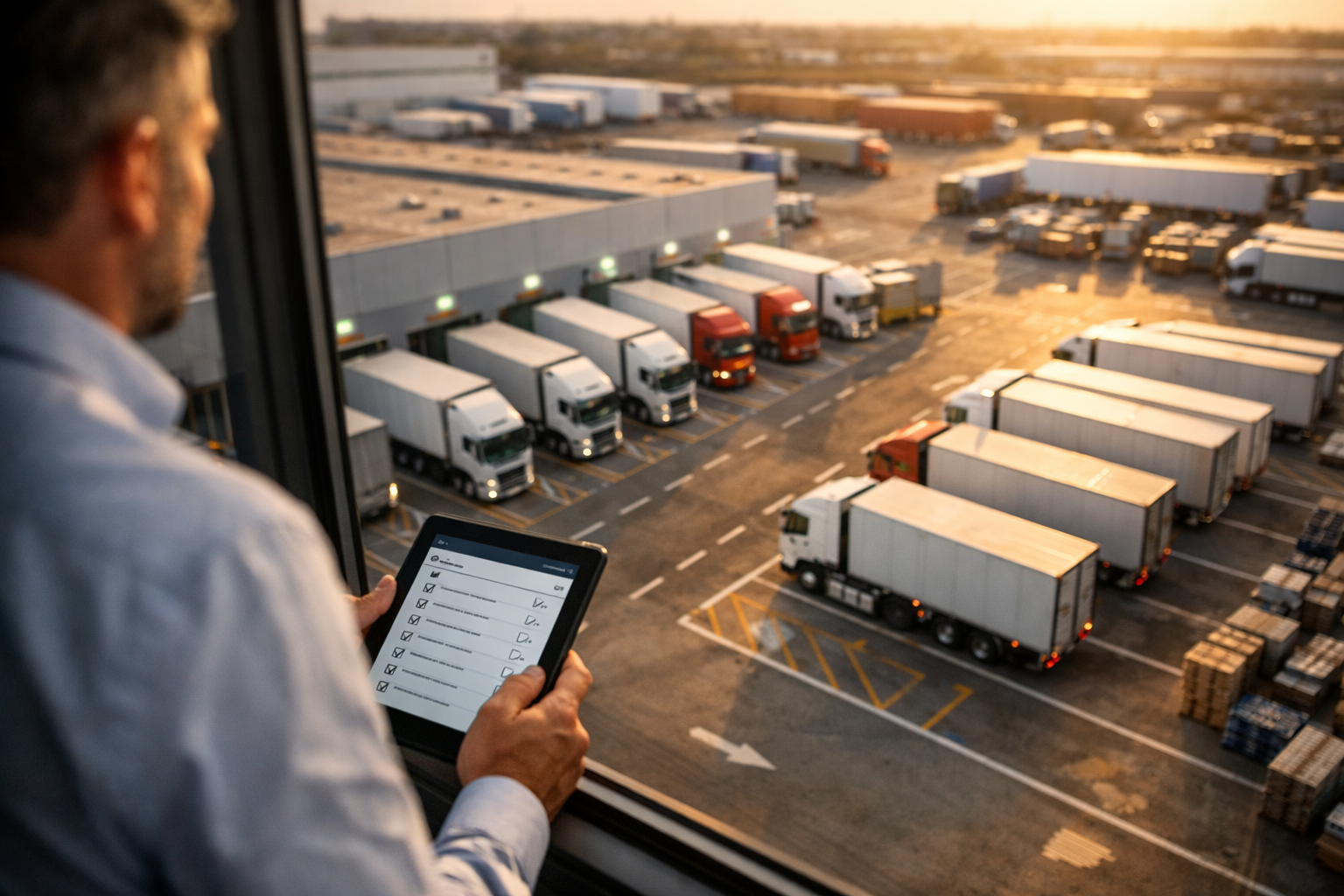
Buyer's guide for choosing a yard management system. 10-criteria checklist to evaluate vendors, avoid costly mistakes, and modernize your yard.
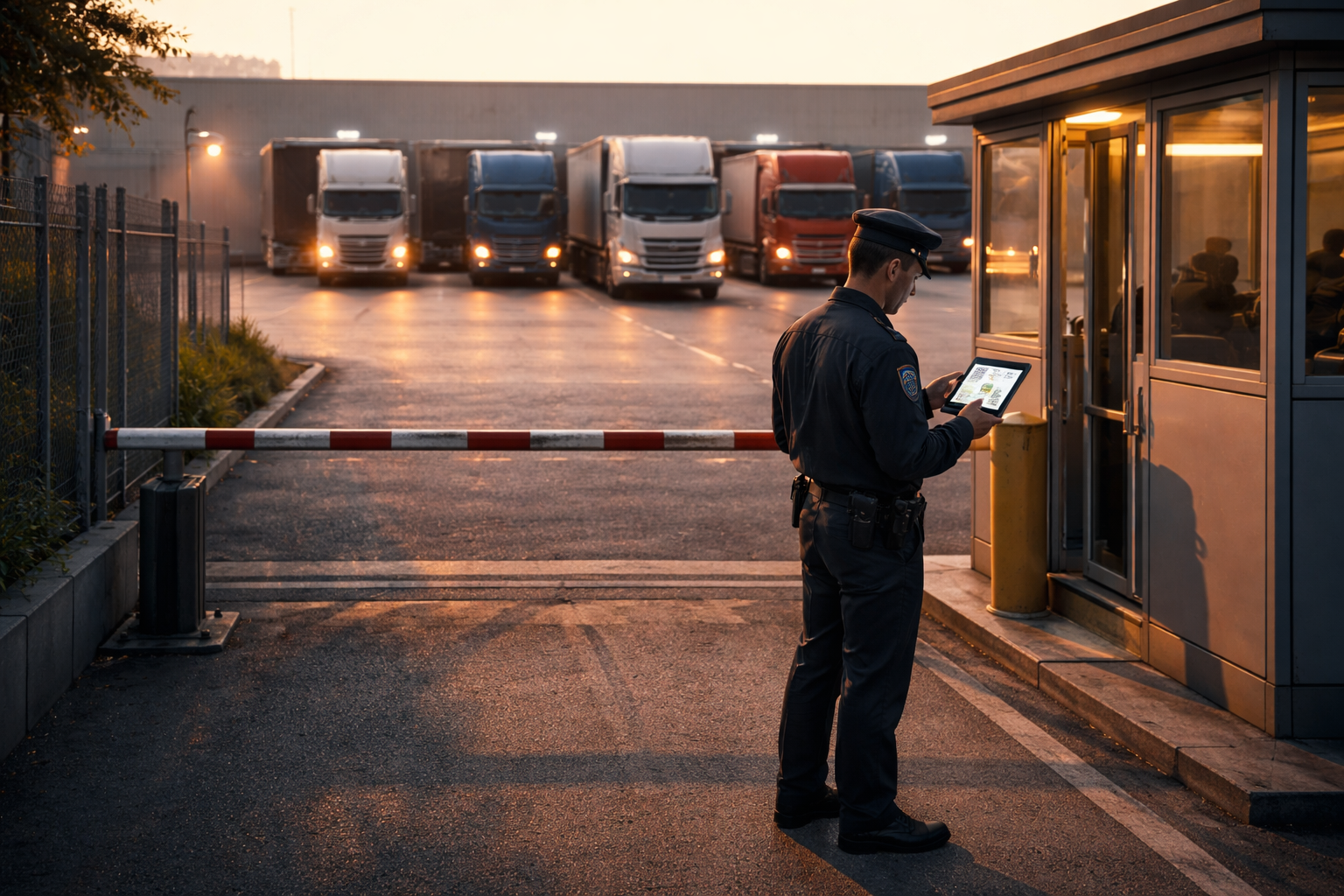
Automate dock appointments and check-in with WhatsApp Business API. Learn how to save 10+ hours weekly and eliminate yard congestion with Docklyx.
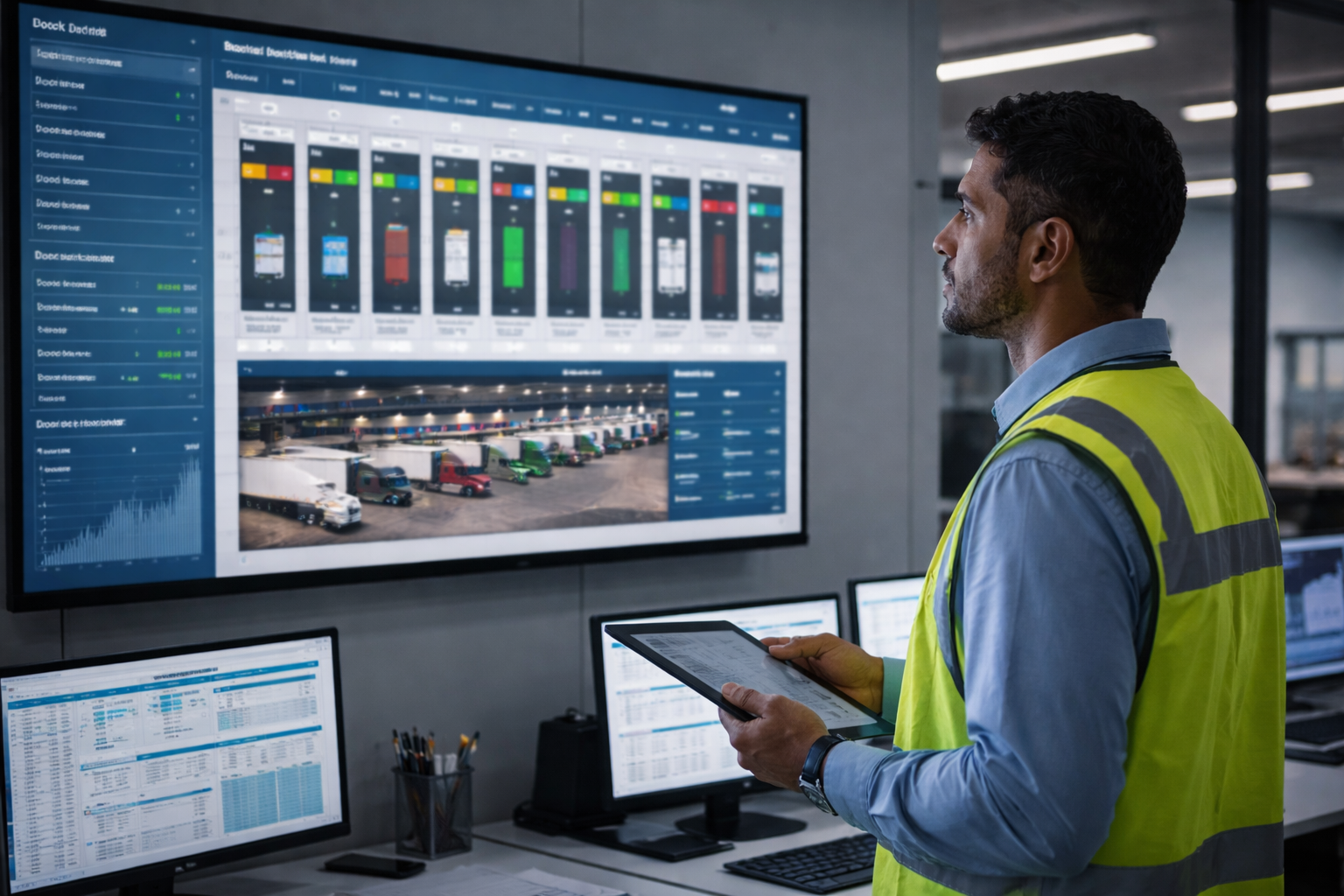
Unlock yard efficiency with our 2026 Yard Management Software guide. Features, McKinsey stats, and a Docklyx walkthrough. Digitizing your DC starts here.