
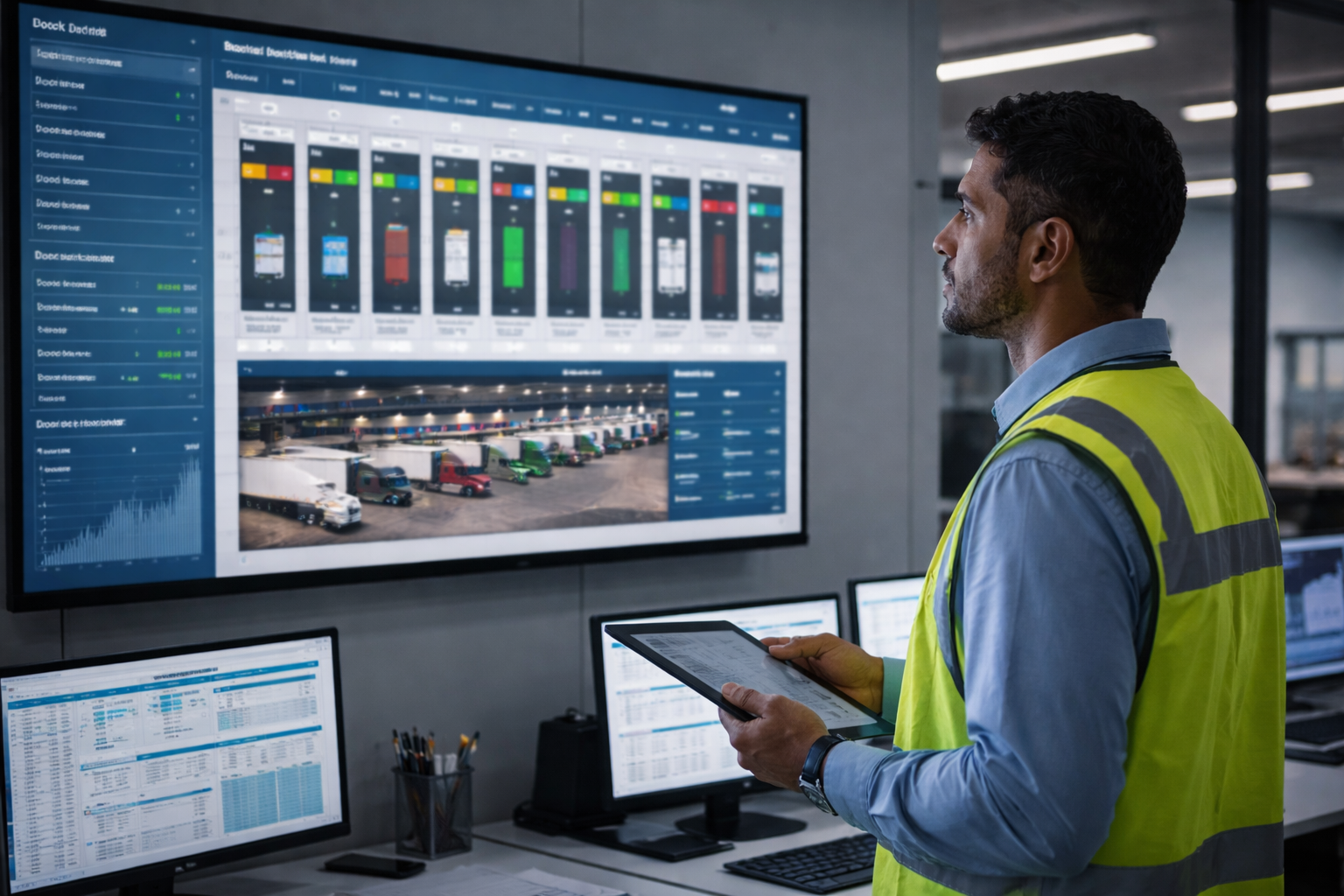
Managing a high-volume logistics yard with spreadsheets, walkie-talkies, and paper logs is no longer just "inefficient"—it’s a competitive liability. As global supply chains face increasing pressure from rising labor costs (up 9.5% in 2024) and volatile carrier availability, the yard has emerged as the final frontier for digital transformation. According to McKinsey & Company, companies that successfully digitize their yard and transportation operations can achieve a 30% increase in overall productivity.
Yard Management Software (also known as a Yard Management System or YMS) is the technology layer that bridges the visibility gap between the warehouse (WMS) and the road (TMS). This guide provides a strategic roadmap for logistics leaders looking to transition from analog chaos to digital precision in 2026.
For decades, the yard was treated as a "black hole." While WMS solutions tracked every SKU movement inside the four walls, and TMS solutions tracked every mile on the highway, the yard was left to manual processes.
Gartner research highlights that 27% of distribution centers report the receiving dock as their primary congestion point. This congestion isn't just an operational headache; it has massive financial implications. Demurrage and detention (D&D) fees can consume 10-20% of an organization's total shipping budget. In ports like New York, average accumulated charges can reach $2,478 per container after just 14 days.
Digital yard management software exists to eliminate these "unavoidable taxes" by providing real-time traceability and automated coordination.
A modern YMS is much more than a digital clipboard. It is an orchestration engine that synchronizes four main parts of the operation:
The foundation of a smooth yard is control over arrivals.
The gate is the first point of failure in most yards.
Imagine a "digital twin" of your facility.
As we enter the era of GenAI in logistics, YMS platforms are moving from reporting what happened to predicting what will happen.
Yard management software does not operate in a vacuum. Its value is exponential when integrated with your existing tech stack.
The WMS manages inventory; the YMS manages assets. When they talk:
The TMS manages contracts and routes; the YMS manages physical arrivals.
| Feature | Manual (Paper/Excel) | Automated (YMS) |
|---|---|---|
| Gate Entry | 15-20 minutes | < 2 minutes |
| Data Accuracy | 70% (Estimated) | 99.9% (Timestamped) |
| Visibility | Requires physical walk-through | Real-time Dashboard |
| D&D Fees | High & Hard to Dispute | Minimized & Data-backed |
| Communication | Radio/WhatsApp (Chaotic) | Automated Task Queues |
Companies moving from manual to automated typically see their ROI achieved within 6-9 months.
Background: A Tier-1 3PL provider in Central Mexico was handling 80 trucks per day across 40 docks. They were using a shared Google Sheet and radios to coordinate movements.
The Pain Point: "Ghost arrivals" (trucks that arrived but weren't logged) and "lost trailers" (empty trailers forgotten in the back of the yard) were costing them $8,000 per month in lost productivity and carrier penalties.
The Solution: Implementation of a centralized Yard Management Software with carrier self-scheduling.
The Outcome:
Transitioning to a digital yard shouldn't be a multi-month ordeal. Here is how Docklyx takes you from zero to digital in one business day:
You enter your facility details: number of docks, parking zones, and operation types (Inbound, Outbound, Transfer). You invite your internal users (Guards, Supervisors) and your primary carriers.
You send a link to your transport providers. They register and start booking appointments for the following day. No software installation is required for them; it’s all web-based.
Your guards download the Docklyx Guard App on a standard tablet. You run a quick "mock check-in" with a test trailer.
The first truck arrives. The guard scans the QR code. The warehouse supervisor sees the arrival on their dashboard. The dock is assigned. Every movement is recorded.
In 2026, the yard is no longer just a place where trucks wait. It is a strategic lever that can be used to lower costs, improve labor utilization, and build stronger partnerships with carriers. As McKinsey notes, the productivity gap between those who digitize and those who don't is widening.
If you are still using paper and Excel, you are losing money every single hour. Yard Management Software is no longer reserved for mega-DCs. It is becoming standard for facilities that care about efficiency and data.
Ready to see your yard in real-time?
Explore Docklyx Features → Calculate your Demurrage Savings → Start your 14-day Free Trial →
Docklyx digitizes the entire yard: appointments, check-in, docks, and real-time traceability.
Request free demo →One email per week. No spam.
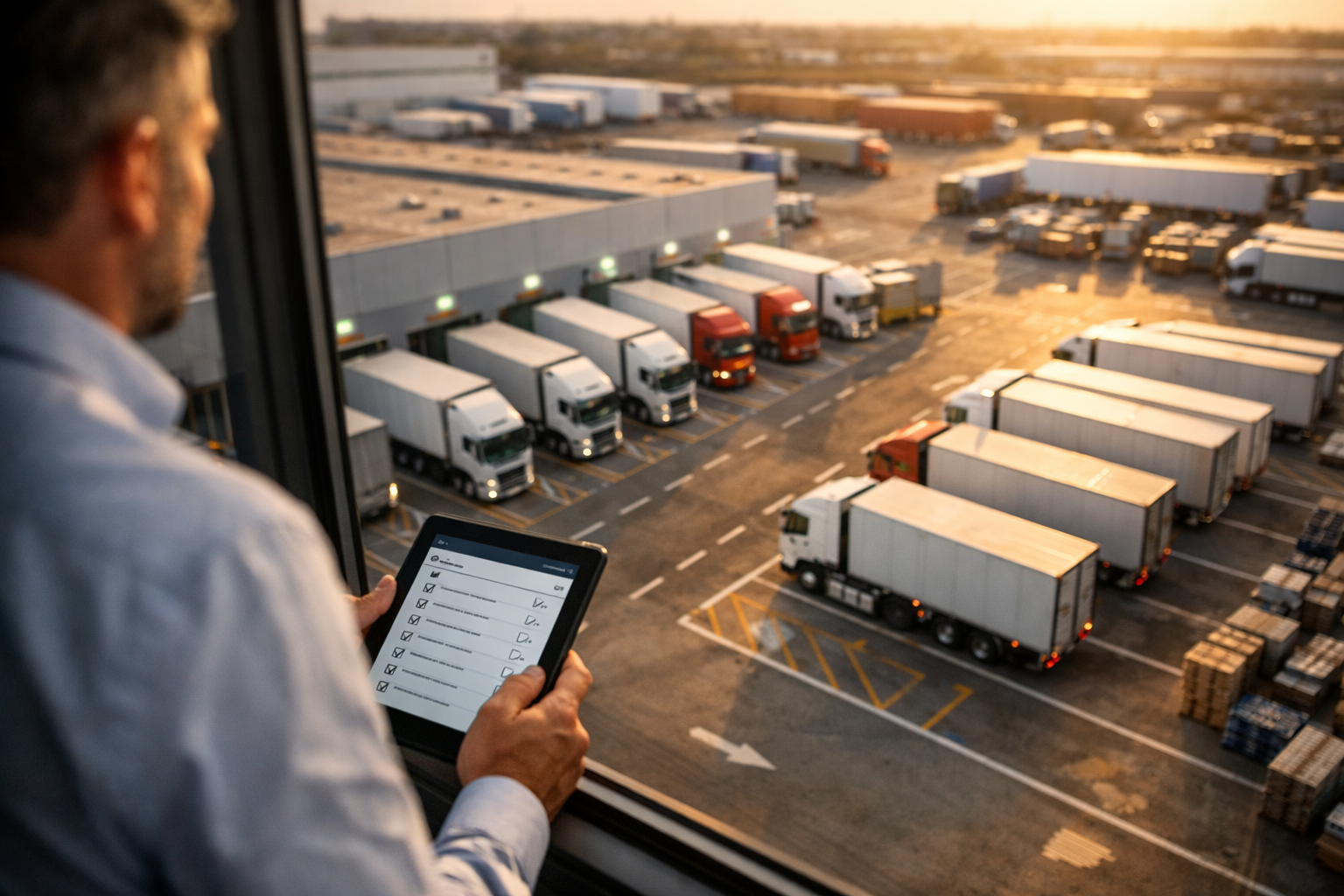
Buyer's guide for choosing a yard management system. 10-criteria checklist to evaluate vendors, avoid costly mistakes, and modernize your yard.
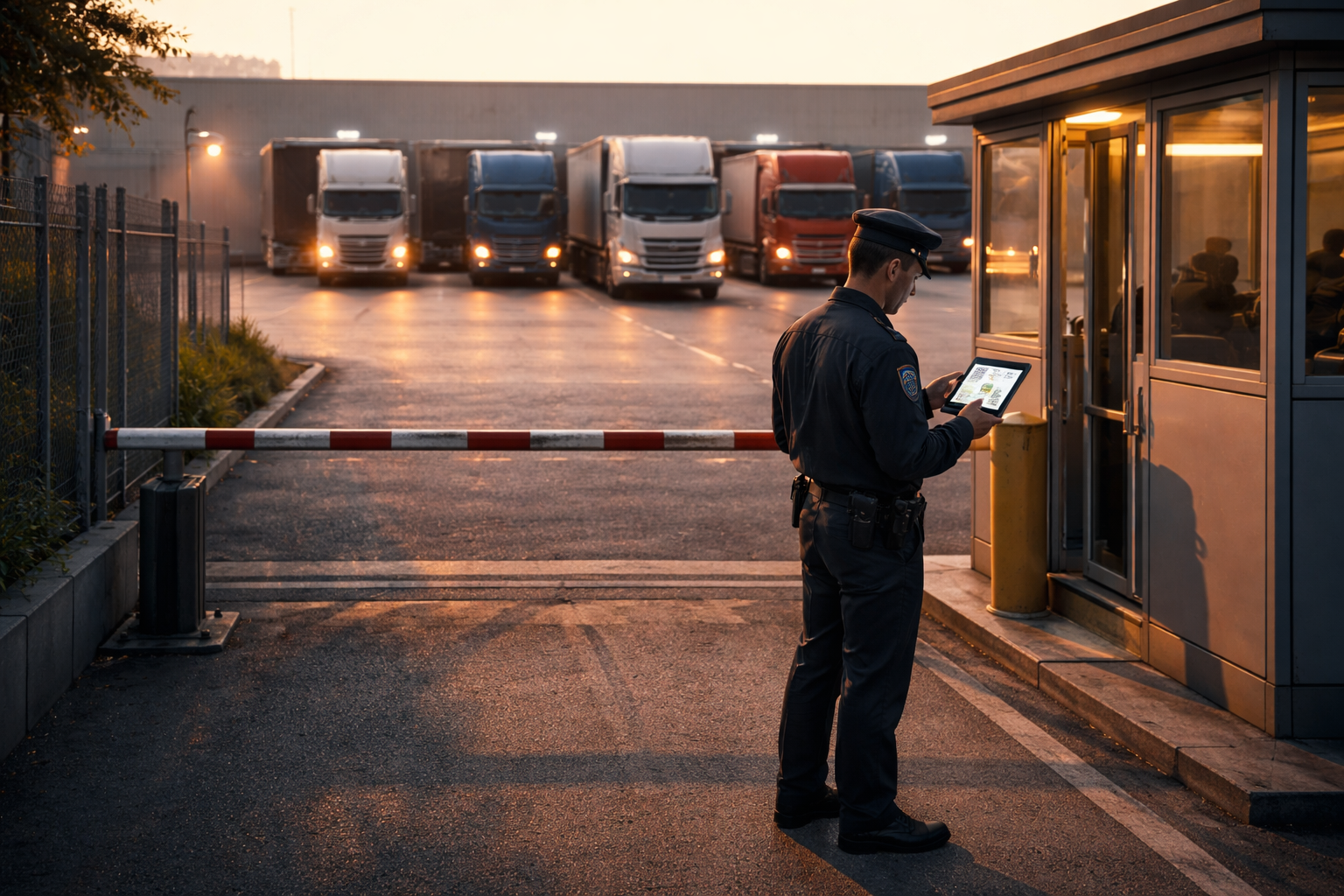
Automate dock appointments and check-in with WhatsApp Business API. Learn how to save 10+ hours weekly and eliminate yard congestion with Docklyx.

How AI optimizes logistics yards in Mexico: predictive dock assignment, anomaly detection, and automated gate check-in. Practical guide for 2026.