
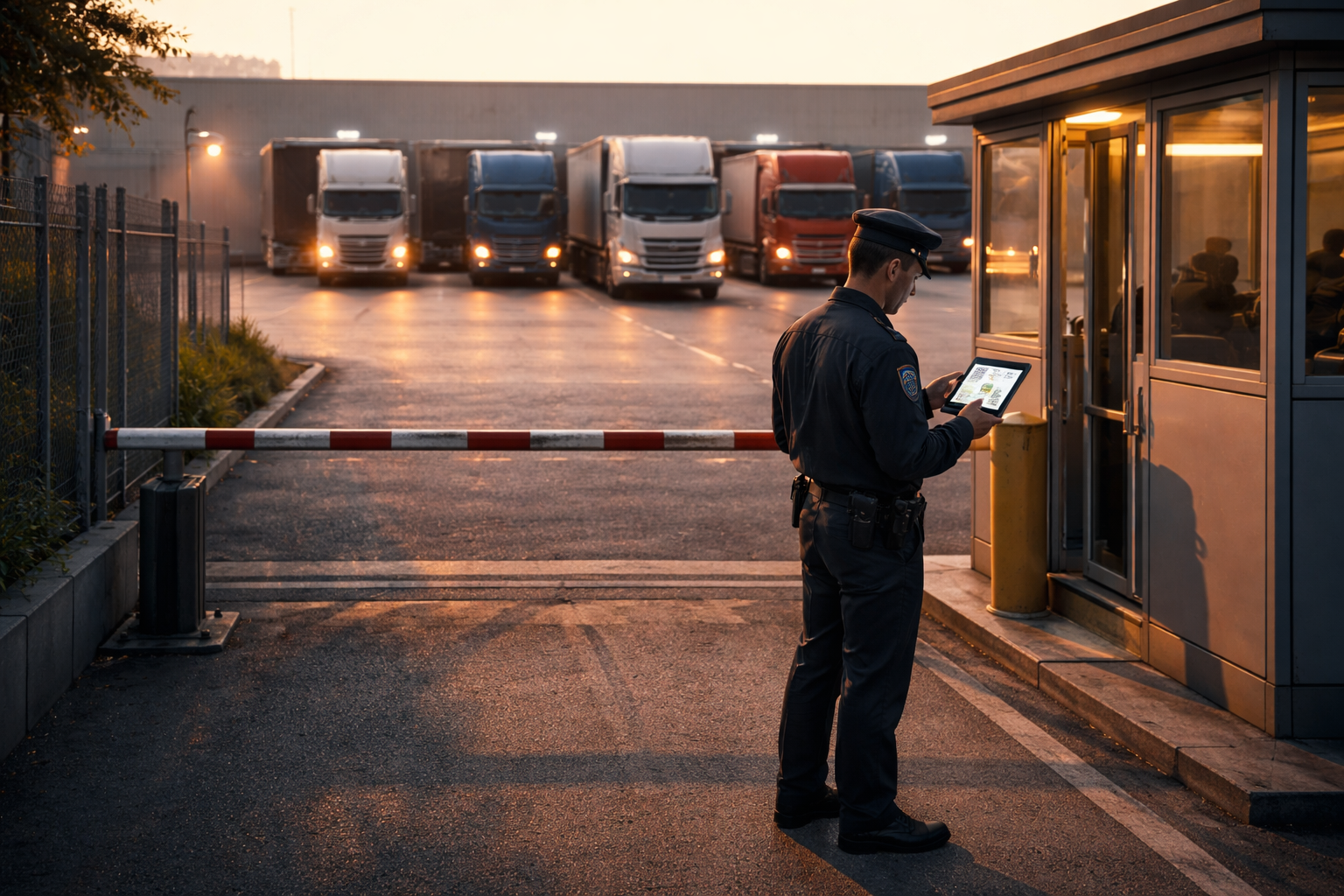
It is 7:14 AM at a major distribution center on the outskirts of Monterrey. The gate guard is juggling a phone in one hand and a tattered clipboard in the other. The "Monday Deliveries" WhatsApp group has 43 unread messages: a two-minute voice note asking for an early arrival, a blurry screenshot of a purchase order, three "I'm outside" texts with no context, and a handful of good-morning stickers. Meanwhile, a line of trucks stretches toward the highway, and the dock supervisor has no visibility into the incoming flow.
This scene repeats every day across Mexico and Latin America. The irony is that the tool for success is already in everyone's pocket: 93% of internet users in Mexico use WhatsApp, according to DataReportal (2025). The problem isn't the platform; it's the implementation.
In 2026, banks send statements via WhatsApp, and retailers confirm orders instantly. Yet, yard logistics often still runs on manual group chats that function like cluttered walkie-talkies. This article explores how to transition from chaotic groups to an automated, API-driven appointment system that leverages the channel your carriers already check 80 times a day.
Before we look at the automated future, we must acknowledge why the current "manual group chat" model fails at scale.
When coordination relies on a single group chat, information is lost instantly. A carrier might confirm an arrival at 6:00 AM, but if 20 other messages follow, that confirmation is buried. There is zero traceability. When a manager asks why a truck waited 4 hours, the answer—"Check the chat history"—is practically useless.
In mid-sized operations, the gate guard spends 30% to 50% of their shift answering repetitive questions:
According to a Gartner (2025) supply chain survey, 75% of operators identify the yard as their most difficult bottleneck. A DC handling 40 daily appointments that loses just 15 minutes per arrival due to poor coordination wastes 10 person-hours per day. In 2026 terms, that’s thousands of dollars in annual labor waste, plus the hidden costs of gate queues.
The solution isn't to stop using WhatsApp; it's to stop using the personal version of WhatsApp. By implementing the WhatsApp Business API, you can deploy a bot that interacts with carriers automatically.
This is the single most effective change you can make. The flow is simple:
The biggest frustration for truck drivers isn't the work—it's the waiting without knowing why.
For independent owner-operators who may not want to log into a complex web portal, conversational AI allows them to book by simply texting.
The Challenge: A major beverage distributor in Querétaro was using 12 different WhatsApp groups to manage 60 daily arrivals. They had a 15% "no-show" rate because carriers forgot their slots or lost the confirmation messages in the chat history.
The Solution: They implemented an API-driven bot integrated with their Dock Appointment Scheduling system.
The Results:
Implementing this in 2026 is seriously easier than in previous years, but it requires a structured approach.
You do not "download" the API. You access it through a Business Solution Provider (BSP) like Twilio, WATI, or Gupshup. These platforms handle the connection to Meta and provide the interface for your bot's logic.
Meta requires that all "proactive" messages (like appointment reminders) use pre-approved templates. These are categorized as:
To remain compliant with Meta’s policies, carriers must "opt-in" to receive messages. This is usually handled during the initial registration on your portal.
The return on investment for a WhatsApp-integrated YMS is typically seen in under 90 days.
| Item | Estimated Monthly Impact |
|---|---|
| Guard Labor Recovery | 2.5 hours/day saved = ~$600 USD |
| No-Show Reduction | 10% more capacity utilization = ~$1,800 USD |
| Detention Fine Avoidance | Faster transitions = ~$2,500 USD |
| Total Monthly Savings | $4,900 USD |
With the API costs totaling less than $50/month for a mid-sized operation, the ROI is mathematically undeniable. You can calculate your specific savings using our ROI tool.
Docklyx is built to be "WhatsApp-first." You don't need to hire developers or configure complex API endpoints. Here is the workflow:
When a carrier registers on the Docklyx portal, they are automatically asked for their WhatsApp number. They receive an instant "Welcome" message that verifies the connection.
As soon as an appointment is booked, Docklyx sends a beautiful, high-res QR code via WhatsApp. It includes the driver's name, unit number, and a link to the facility's safety video.
If a driver arrives and finds the gate closed, they can text the bot. The bot checks their appointment status and notifies the guard on their tablet: "Driver for Appointment #882 is at the gate."
Once the warehouse finishes the load, they hit "Complete" in the Docklyx dashboard. The driver instantly receives a WhatsApp: "Operation complete. Please proceed to the exit gate. Have a safe trip!"
In 2026, the complexity of the global supply chain demands more than just "communication"—it demands structured data. Manual WhatsApp groups provide communication, but they fail to provide the data needed to optimize a yard.
By transitioning to a WhatsApp-integrated YMS, you respect your carrier's time, protect your guard's productivity, and—most importantly—eliminate the chaos that leads to detention fines.
Is your DC still stuck in 2015 group chats?
Upgrade your logistics to WhatsApp API with Docklyx → Try the WhatsApp bot with Docklyx → Read how digital check-in improves yard security →
Docklyx digitizes the entire yard: appointments, check-in, docks, and real-time traceability.
Request free demo →One email per week. No spam.

Buyer's guide for choosing a yard management system. 10-criteria checklist to evaluate vendors, avoid costly mistakes, and modernize your yard.

Unlock yard efficiency with our 2026 Yard Management Software guide. Features, McKinsey stats, and a Docklyx walkthrough. Digitizing your DC starts here.

How AI optimizes logistics yards in Mexico: predictive dock assignment, anomaly detection, and automated gate check-in. Practical guide for 2026.