Operations
·13 min read
Cross-Docking Warehouse Operations Guide
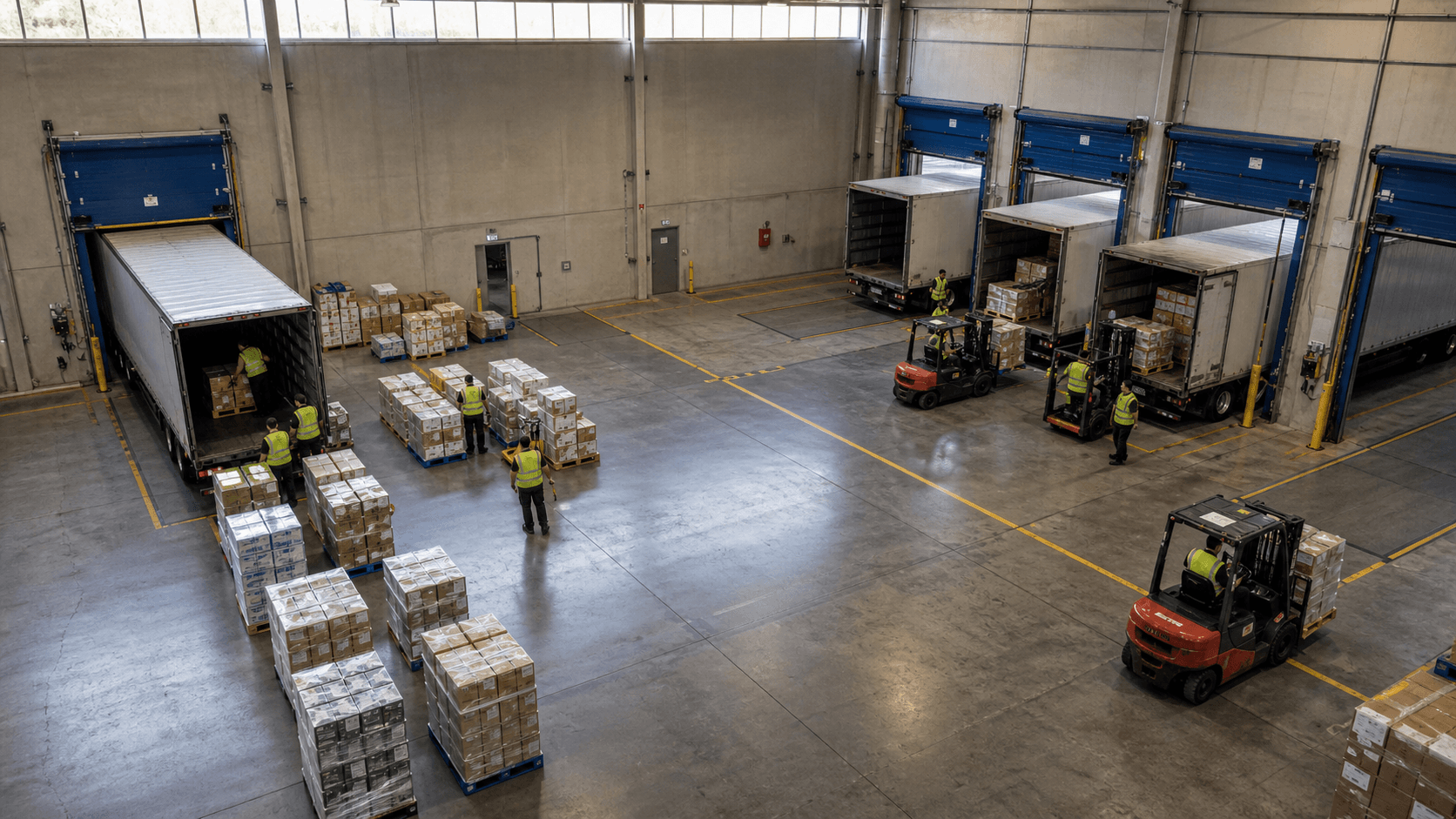
It's 9:15 AM. Dock 12 has a loaded outbound trailer for three retail stores, backed in since 8:50, waiting to depart. The problem is dock 3, on the inbound side: the truck carrying the last pallet of perishables for that trailer is 35 minutes late.
Nobody linked those two appointments. The inbound was logged separately. The outbound got its own window. The coordinator found out about the conflict when the outbound driver walked in to ask what was taking so long.
That is the core exposure of cross-docking without scheduling discipline: freight that bypasses storage has nothing to absorb a late arrival. In a conventional warehouse, a delayed inbound truck slows down a pick wave tomorrow. In a cross-dock, it holds up an outbound truck right now, at this dock, with a driver on the clock.
What cross-docking actually demands from your dock operation
Logistics textbooks describe cross-docking as a cost-reduction play: eliminate storage, cut handling touches, shrink the facility footprint. All true. What they underemphasize is what the operation demands at the dock level, and what happens when that demand isn't met.
The basic mechanic is simple enough. An inbound truck backs into a receiving dock. Freight is unloaded, sorted on the staging floor, and moved directly to the shipping dock where an outbound truck is waiting. The product never touches a rack. In a clean execution, total floor time runs under four hours for general freight, under two for perishables.
That window is tight. A conventional warehouse has racking inventory to absorb a delay. A cross-dock has a staging floor with fixed capacity and two clocks running at the same time: the inbound truck's dock window and the outbound truck's departure commitment. When those clocks fall out of sync, both sides of the dock pay.
Two types of cross-docking, two scheduling profiles
Knowing which type you run changes how you structure dock capacity.
Direct (pre-sorted) cross-docking means inbound freight arrives already sorted by outbound destination, typically by the supplier. The receiving dock unloads, the staging team transfers pallets directly to the right outbound lane, and the product ships. Dock-to-dock time can be 90 minutes. Major retail chains use this model for store replenishment: the supplier packs in store-ready sequence, the CEDIS routes it.
Indirect (sort-at-facility) cross-docking means inbound freight arrives mixed. The facility does the sorting, repackaging, or consolidation before anything reaches the outbound dock. This takes longer, requires more staging space, and demands tighter inbound scheduling because the sort step consumes time that has to be built into the outbound window.
Both models share one non-negotiable: inbound and outbound windows need to be planned as paired events, not independent appointments. That is the piece most cross-dock operations get wrong.
Why dock delays cascade differently in a cross-dock
A conventional DC absorbs the five cost components of dock delays through inventory buffers. Cross-docking removes that absorption, and each component lands harder as a result.
Blocked yard space is worse in a cross-dock because the inbound trailer cannot leave until its freight has been sorted and transferred to outbound. If the outbound is delayed, the inbound trailer stays at the dock longer. One disruption, two blocked doors.
Fewer trucks processed per shift compounds on both sides of the operation. A 30-minute delay on one inbound pushes the next inbound out 30 minutes. If that freight was needed for another outbound, that carrier's departure slips too. The disruption propagates in both directions simultaneously.
Labor costs run higher in a cross-dock because receivers and loaders need to be active at the same dock position at the same time. In a storage operation, the receiver drops a pallet at a location and the loader picks it whenever the wave runs. In a cross-dock, if the sort team is backed up because a prior inbound arrived late, you have loaders standing idle at the shipping dock waiting on freight that hasn't been sorted yet. You're paying for that wait.
Detention charges are a specific risk here. Carriers showing up for a cross-dock appointment expect a short dwell. They've sized their day around it. When the operation is running behind, the wait compounds fast, and carriers don't absorb it quietly. A retail CEDIS running high-frequency store replenishment can face $800–$2,000 MXN per incident in carrier-side detention when dock timing breaks down.
Cascade congestion moves faster in a cross-dock than in storage because every inbound appointment is tied to an outbound commitment. A 7:00 AM delay that looks manageable can show up as three misaligned windows by mid-morning.
Calculate the cost at your operation. The Dwell Cost Calculator models what dock delays cost you per month based on your dock count, daily truck volume, and average delay per window. Run it for your cross-dock flow specifically.
The scheduling discipline cross-docking requires
Every inbound appointment needs to be linked to the outbound it feeds. That's the requirement. The implementation is where most operations fall short.
Paired appointment windows
A cross-dock scheduler that treats inbound and outbound as separate queues is working against the operation. Each inbound appointment needs an expected floor-time — the time to sort and transfer freight to the outbound lane — that determines when the outbound truck can back in.
For a direct cross-dock with pre-sorted pallets, a standard model looks like this:
- Inbound truck arrives: T+0
- Dock-in, unload begins: T+10
- Freight on staging floor: T+40 (for a 20-pallet load)
- Transfer to outbound lane complete: T+60
- Outbound truck backs in: T+70
- Outbound departs: T+100–120
That 70-minute dependency means the outbound appointment can't be confirmed without knowing when the inbound is scheduled. If the inbound slips 30 minutes, the outbound needs to move too — unless another inbound truck already has compatible freight on the staging floor.
Most cross-dock failures aren't process failures or labor failures. They're scheduling architecture failures: inbound and outbound windows booked independently, with no mechanism to link them or surface when a delay on one side affects the other.
Buffer windows are insurance, not inefficiency
Running dock appointments at 100% of theoretical capacity is a mistake that's easy to justify on paper. If a dock takes 60 minutes to unload, schedule at 60-minute intervals. Seems right.
In practice, inbound arrivals don't come in with perfect consistency. Carriers run late. Freight quantities shift. A truck booked for 18 pallets shows up with 24. Without slack in the schedule, that one variance cascades through the rest of the shift.
Industry benchmarks from Saddle Creek Logistics put the right operating range at 80–85% of theoretical dock capacity, with buffer windows spread across the shift. That remaining 15–20% is what absorbs the inevitable inbound variance. Operations that ignore this spend their mornings at 100% and their afternoons recovering.
For guidance on sizing dock windows for your volume, the Dock Appointment Scheduling Guide covers the calculation in detail, including how to handle load composition variance.
The gate as an early warning system
In a cross-dock, the moment an inbound truck arrives at the gate is your earliest opportunity to catch an incoming problem. Most operations don't use it.
The guard logs the arrival. The coordinator gets a call, notes the time, moves on. Nobody checks what outbound appointment that inbound truck is connected to, or whether the arrival time already puts the window at risk.
A digitized gate check-in changes this. When the driver scans at the gate, the system logs the arrival timestamp, confirms the appointment, and compares that time against the expected dwell window. If the truck arrived 20 minutes late for a 60-minute cross-dock window, the system flags the paired outbound as at risk — before the inbound truck has even pulled into the dock.
Twenty minutes of warning is the difference between calling the outbound carrier to adjust their arrival, and having that conversation when they're already in the yard with nowhere to wait.
What the staging floor tells you about your scheduling
The staging floor is a live readout of your scheduling quality. Walk it at any point in the shift and you'll know whether your windows are aligned.
A well-run cross-dock keeps freight moving continuously through staging. Pallets arrive from inbound, get sorted, and move to the outbound lane within 30–60 minutes. The staging area is neither empty nor overflowing — both are signals.
An empty staging area means outbound trucks are arriving before inbound freight is ready. Carriers are waiting. Your dock is blocking but not producing.
An overflowing staging area means inbound freight arrived faster than the outbound side can absorb it — typically because an outbound appointment slipped or was missed, and now the floor is accumulating product with nowhere to go.
That overflow isn't a space problem. It's a dock coordination failure that showed up on the floor.
Case study: a retail CEDIS in Estado de México cuts dock-to-dock time by 38%
A retail distribution center in Estado de México ran a cross-dock flow for store replenishment: eight inbound docks, four outbound docks, about 60 trucks per day across two shifts, supplying 22 stores in the metro area.
Cross-dock cycle time averaged 5.2 hours gate-to-gate. Store receiving windows were fixed. When dock timing slipped, drivers either departed with incomplete loads or waited past their delivery commitment — neither outcome was acceptable.
The diagnosis wasn't a labor problem. Inbound and outbound appointments were booked in separate systems. When an inbound ran late, nobody connected that delay to the paired outbound until the outbound driver was standing in the yard asking where his freight was.
They made three structural changes:
- Unified dock scheduling with paired inbound-outbound windows in a single system
- Digitized gate check-in so late inbound arrivals automatically flagged their linked outbound windows
- Fifteen-minute buffer windows between every two consecutive inbound appointments
Six weeks later: dock-to-dock cycle time dropped from 5.2 hours to 3.2. Outbound on-time departures went from 67% to 91%. Staging-floor overflow incidents — product sitting more than two hours without an outbound assignment — fell from four per shift to fewer than one per week.
Same labor. Same docks. What changed was treating inbound and outbound windows as one coordinated event instead of two separate queues.
Total dwell cost reduction: roughly $38,000 MXN per month, mostly from eliminated carrier detention charges and recovered dock capacity that allowed three additional outbound departures per shift.
Cross-docking at peak season
Peak season puts cross-dock operations under a different kind of pressure than conventional warehouses face. A 50% volume spike that a storage DC absorbs by building reserve inventory becomes 50% more simultaneous dock activity on both sides of the operation.
The staging floor, already at designed capacity during normal operations, has no overflow relief. When peak volume exceeds staging capacity, freight lands in improvised positions, the sort team loses the organized flow it depends on, and dock-to-dock time stretches past the four-hour mark that keeps the operation viable.
The operations that absorb peak season without breaking are the ones running scheduling discipline as standard practice, not as something to scramble toward when volume spikes. A scheduler that handles 60 trucks cleanly can be adjusted for 90. One running on calls and spreadsheets at 60 doesn't survive the jump.
For a full protocol on cross-dock capacity preparation for volume surges, the Peak Season Dock and Yard Management Guide covers the buffers, yard staging configurations, and scheduling adjustments specific to Buen Fin and Hot Sale conditions.
How dock productivity per bay reads differently in a cross-dock
The standard productivity measure — trucks processed per dock per shift — means something different in a cross-dock than in a storage operation.
In a storage DC, each dock is essentially independent. A slow truck at dock 3 doesn't affect dock 7's output. In a cross-dock, dock 3 feeds dock 7. Dock 3's performance determines dock 7's output directly.
That dependency makes the performance spread across your docks more operationally consequential. A dock running at 60% of average in a storage operation is a local problem. In a cross-dock, it might be blocking a fully ready outbound dock on the other side of the staging floor.
Measuring dock productivity at the bay level — and seeing in real time which inbound bays are running behind and which outbound bays are idle — is what makes cross-dock scheduling decisions actionable. Without it, the coordinator is managing by instinct.
For the specific metrics to track at the dock level, Dock Productivity Per Bay covers how to instrument individual dock performance and what numbers point to a structural scheduling problem versus a one-off delay.
What cross-dock scheduling looks like inside Docklyx
Docklyx handles cross-dock scheduling through the same appointment system used for conventional dock operations, with paired-window logic added to link inbound and outbound appointments.
The coordinator sees inbound and outbound docks on one timeline. Each inbound appointment shows its paired outbound window and the expected staging floor time between them. When either window shifts, the impact on the linked appointment shows up immediately — no cross-referencing, no manual tracking.
At the gate, when an inbound carrier scans in, the system compares arrival time against the scheduled window. Late arrivals flag the paired outbound appointment automatically. The coordinator sees it on their dashboard before anyone makes a phone call.
For each truck, Docklyx records dock-in and dock-out timestamps. On cross-dock flows, this generates the actual floor time per inbound load: the elapsed time between the inbound truck's dock-out and the outbound truck's dock-in for the same freight. Over time, that data identifies which inbound carriers consistently run over their floor-time budget and how that tracks against outbound on-time rates.
When an inbound appointment is more than 15 minutes late and a linked outbound window opens within the next 60 minutes, the system alerts the coordinator. Before the outbound driver is in the yard. While there's still time to make a call.
The dwell cost report breaks out time at facility by visit type (cross-dock versus storage flow), so you can compare actual dock-to-dock times against your target windows, identify which carriers or load types consistently run over, and put a monthly MXN figure on those delays using your actual labor and carrier rates.
To see how many additional trucks per shift you could process by tightening cross-dock window discipline, the Dock Capacity Calculator models capacity impact against your dock count, shift length, and current average delay per appointment.
For a detailed look at how dock dwell time is measured and reduced across different operation types, including cross-dock flows, Dock Dwell Time: How to Measure and Reduce It covers the instrumentation and benchmarks.
Cross-docking is one of the most effective distribution strategies available to a CEDIS. It cuts storage costs, reduces handling, and moves product faster. But it runs on scheduling precision. There is no inventory buffer to absorb a late truck, a missed window, or a staging floor that fills up before the outbound side is ready. Every minute of dock misalignment shows up in carrier detention charges, incomplete outbound loads, and delivery windows that slip at the store level.
Docklyx gives cross-dock coordinators the paired scheduling view, gate integration, and alert layer to keep both sides synchronized. Setup takes less than one shift, and the scheduler runs alongside your existing WMS.
Start free for 21 days — no credit card required
Related reading
- Dock Appointment Scheduling: Step-by-Step Guide — how to build the appointment structure that cross-dock paired windows depend on.
- Dock Dwell Time: How to Measure and Reduce It — the dock-level metric that separates cross-dock performance from storage-flow benchmarks.
- Dock Productivity Per Bay — how to instrument individual dock performance and read the signals that indicate inbound-outbound misalignment.
- Peak Season Dock and Yard Management — cross-dock scheduling protocol for volume surges and promotional periods.
Ready to eliminate queues in your operation?
Docklyx digitizes the entire yard: appointments, check-in, docks, and real-time traceability.
Request free demo →Get logistics insights
One email per week. No spam.
Related articles
Operations
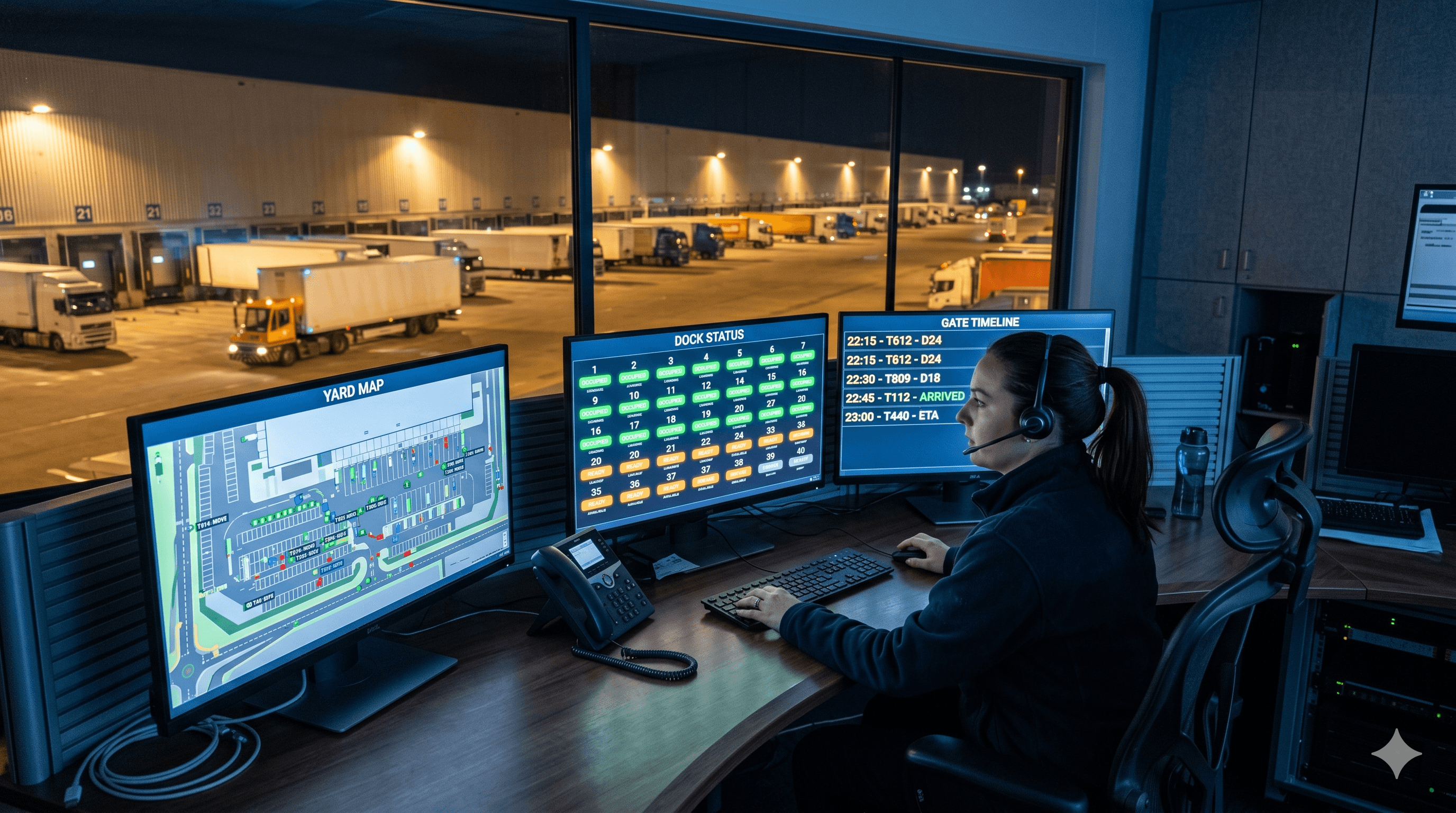
Real-Time Visibility for Warehouse Operations
You can't optimize what you can't see. Learn how real-time yard visibility cuts decision latency and unlocks every other operational improvement.
12 min
Operations
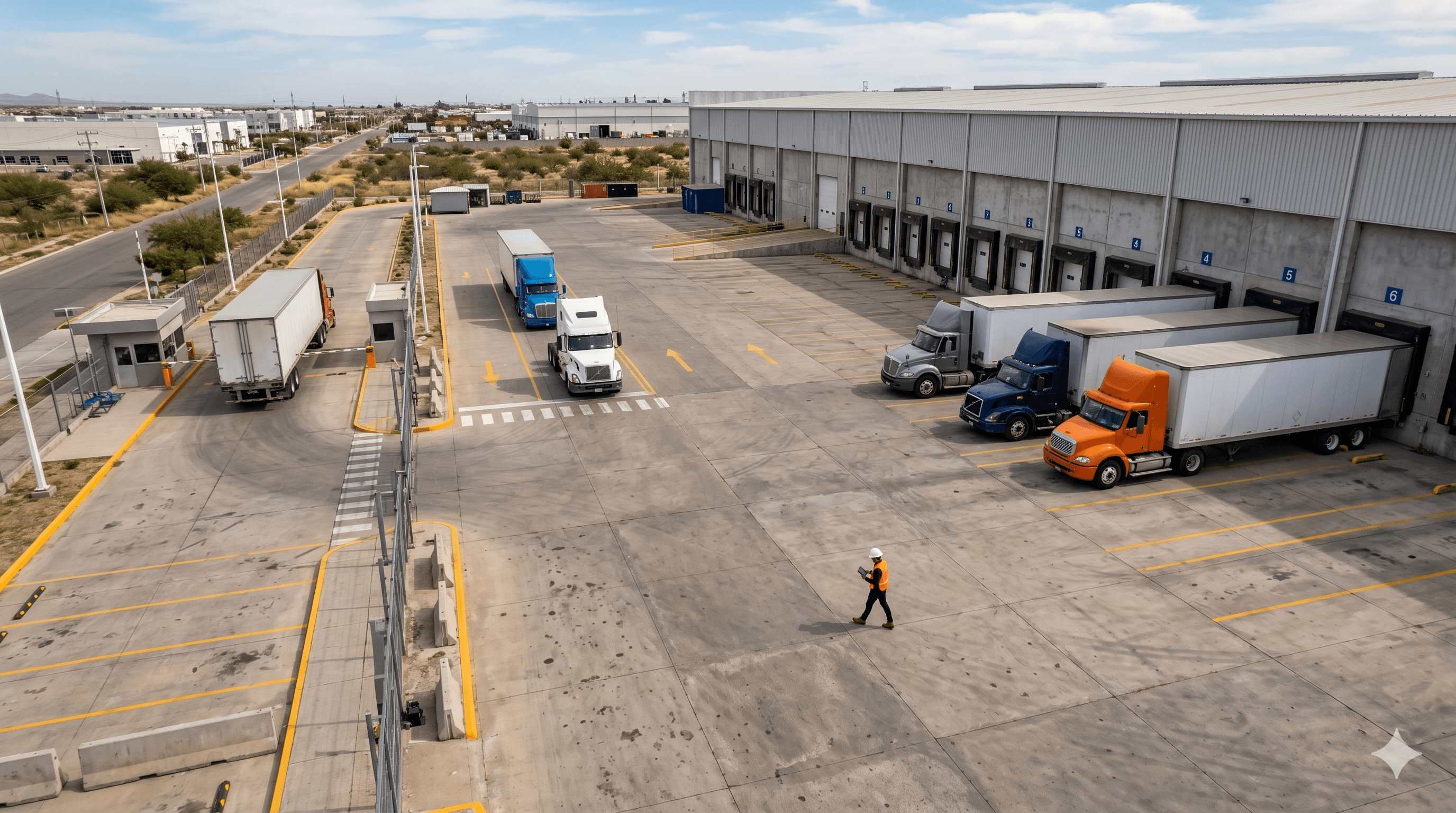
How to Reduce Truck Turnaround Time at Your DC
Cut gate-to-gate truck cycle time at your distribution center. 5 concrete strategies for CEDIS operators to reduce turnaround time and boost throughput.
12 min
Operations
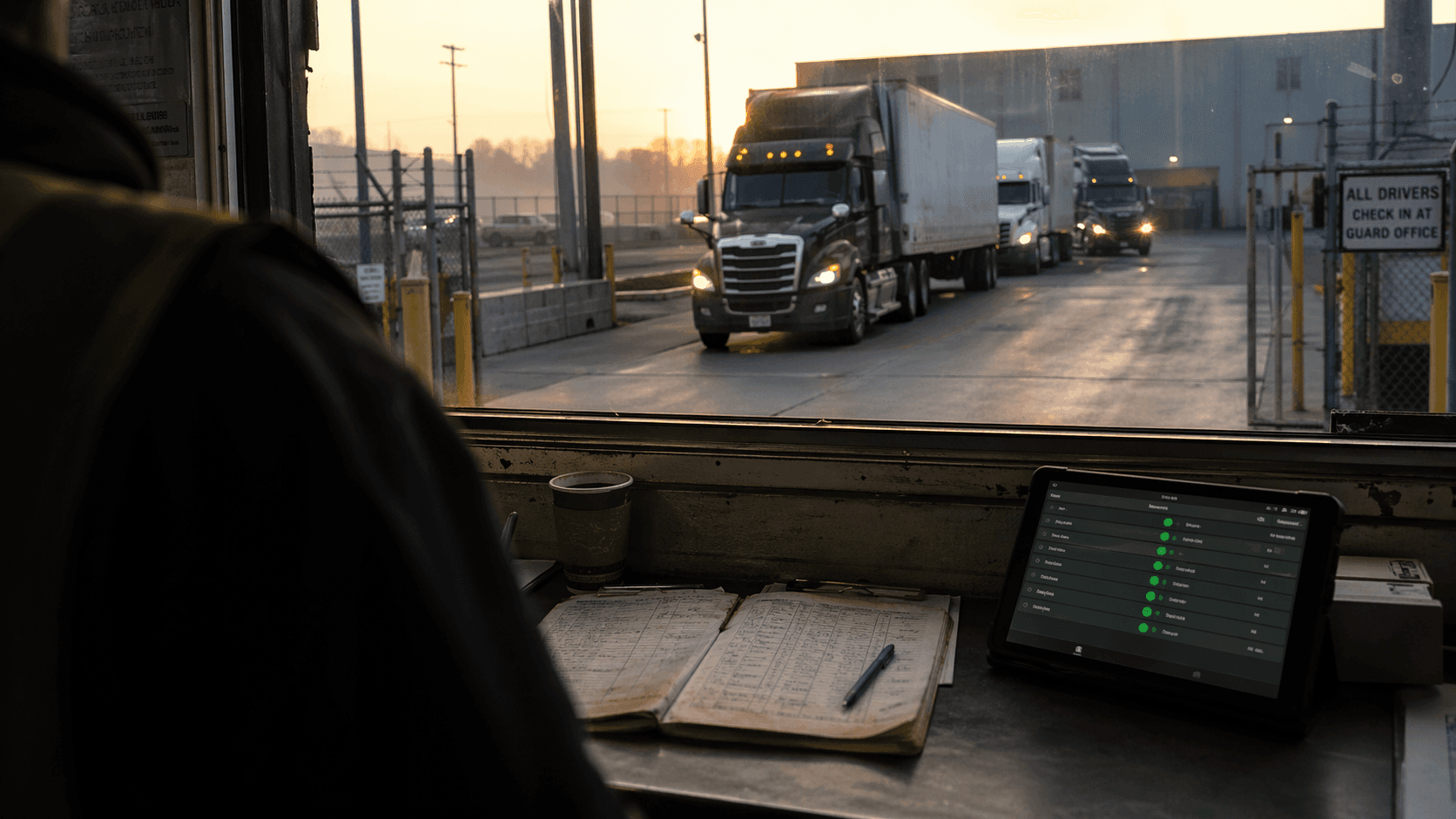
A Day at the Gate: Your DC Guard's Real Workflow
Follow a distribution center guard through a full shift and see how digital check-in transforms gate operations.
12 min