
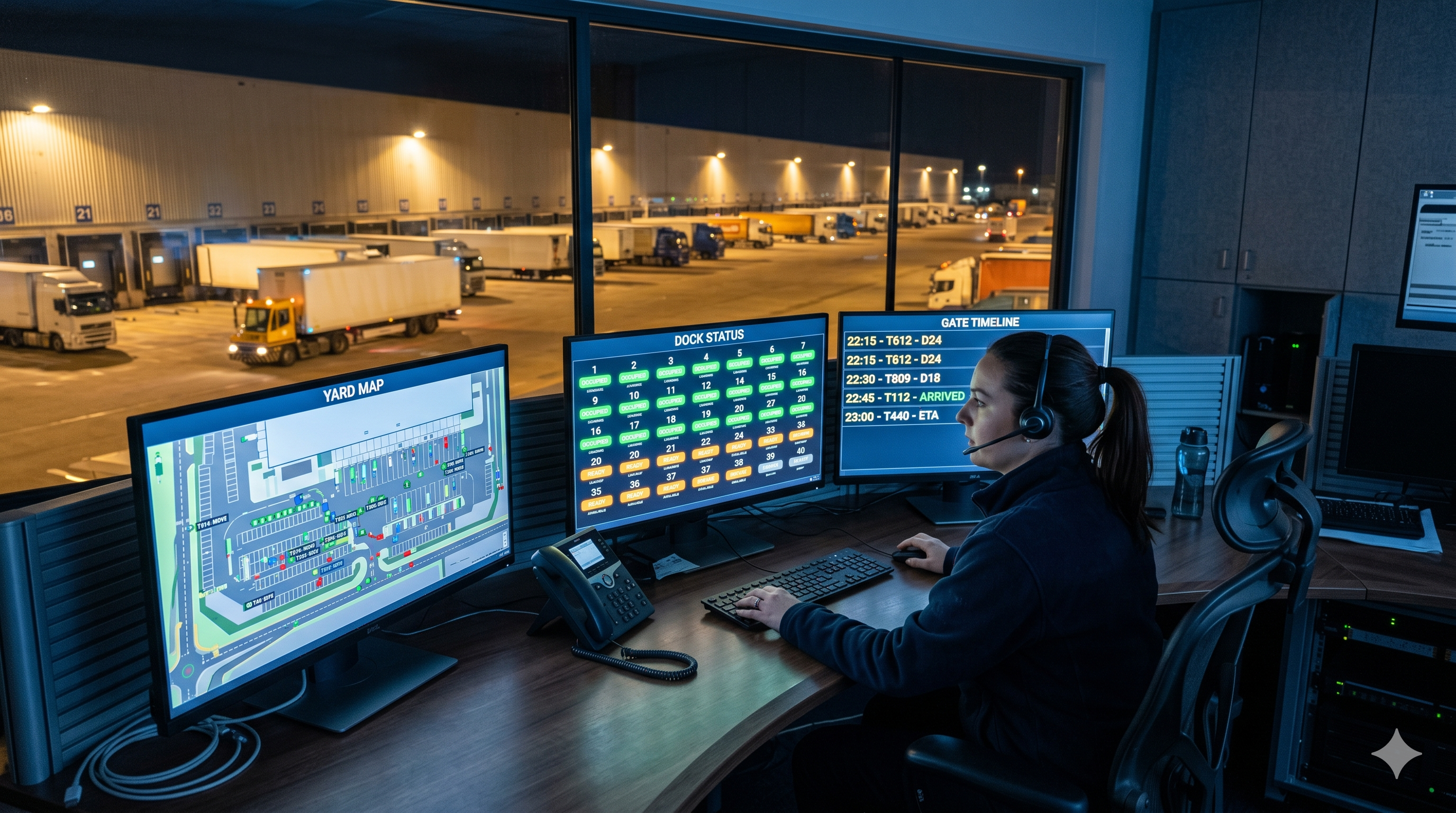
Picture this: it's 10:40 AM. Dock 4 just cleared. Your receiving supervisor knows it cleared. The driver who finished unloading knows it. The jockey who pulled the trailer knows it. The coordinator at the main office does not.
That coordinator has three carriers waiting in the queue. One of them is already 40 minutes past their appointment window. Another is carrying refrigerated product that needs a cold dock, and dock 4 is the only one with that configuration. But the coordinator doesn't know dock 4 is free. So they wait for the supervisor to finish and call. The supervisor is dealing with a forklift issue and hasn't called yet. The carrier with the refrigerated product waits.
Eighteen minutes later, the coordinator finds out. By then, dock 4 has been idle for 18 minutes and the refrigerated carrier has been sitting in the yard for 58 minutes.
That 18-minute gap is decision latency. It's the time between an event happening and the right person knowing about it. In paper-based and phone-relay operations, this latency compounds at every layer. And that's exactly where trucks per shift get lost.
The word gets used loosely. In practice, real-time warehouse visibility means knowing the answer to four questions without making a single phone call:
If any of those four answers requires a call, a walk, or a logbook search, you have a visibility gap. That gap has a cost whether you measure it or not.
In a paper-based gate, the guard writes down the arrival: plate, driver, company, time. Sometimes. If there's a queue, the time might be off by 10 minutes. If the driver's name is unusual, it might be misspelled. If two trucks arrive at once, one entry might get skipped.
But the data is locked in the logbook. The coordinator can't see it. The dock supervisor can't see it. What arrives at the gate is a fact that lives in a single notebook and reaches the rest of the operation only by phone call.
With real-time gate tracking, the carrier scans a QR code at the gate, or the guard scans it, and that moment is logged to the millisecond. The coordinator sees it on their screen immediately. The dock assignment that was pre-scheduled shows up automatically. The event and the awareness of that event happen within the same second.
The yard is where visibility collapses in most operations. There are trucks parked in various states: some waiting for a dock, some being maneuvered by jockeys, some loaded and waiting to depart, some in the wrong position because the first assignment fell through. The coordinator knows roughly what they were told. The jockey knows what they can see. Nobody has the full picture.
This gap creates two compounding problems. First, truck placement decisions get made on stale information. A truck ends up parked in a spot that blocks the intended dock for an incoming carrier. Nobody realizes until that carrier arrives and finds the path obstructed. The jockey has to reposition. That takes time, and that time costs dock capacity.
Second, when a dock clears, the next assignment has to be made with a mental model of the yard that may already be wrong. "I think the Grupo Bimbo trailer is near dock 6" is not the same as seeing its exact position on a live map.
Real-time yard tracking removes that guesswork. Every truck's position and status is visible on a single screen. Jockeys update status when they move a trailer. The coordinator sees the current state, not the state from the last phone call.
Dock visibility is where decision latency does the most damage, because docks are the production constraint. If you have 8 docks and lose 18 minutes of capacity on 4 of them per shift because nobody knew they were clear, you've effectively operated with 6.8 docks. Fewer trucks get processed. The queue grows. The cascade begins.
According to research from the Aberdeen Group, warehouses with real-time dock monitoring recover an average of 2.5 hours of dock capacity per day versus operations running on verbal relay. That's roughly 30% more dock-hours without building a single new door.
You don't need more infrastructure. You need less latency.
Most operations don't capture departure timestamps with any precision. The truck leaves. Someone might note it. Usually it's inferred from the dock status change, whenever that gets updated. This matters because departure data closes the loop on every metric that warehouse managers care about: dock dwell time, time at facility, appointment adherence, carrier reliability.
Without precise departure timestamps, your KPIs are approximate. You know roughly how long trucks spend at your facility. You don't know which carriers are consistently running over. You don't know which dock configurations produce shorter dwell times. You're flying on averages when you could be making decisions on exact data.
Let's put numbers to it. Take a mid-size operation: 6 docks, 35 trucks per day.
In a phone-relay operation, assume each dock clearance takes 15 minutes on average to communicate and act on: the supervisor finishes the current task, calls the coordinator, the coordinator calls or radios the jockey, the jockey repositions, the next carrier gets assigned. One "communication cycle" per dock turnover.
If each dock turns 5 times per shift and the operation runs 2 shifts, that's 60 dock turnovers per day. At 15 minutes of communication latency per turnover, you're losing 900 minutes of dock time daily, 15 hours total. Across a 6-dock operation, that's 2.5 hours of dead dock capacity per dock per day.
Not downtime from equipment failures or labor shortages. Pure information delay.
A real-time system cuts that communication cycle from 15 minutes to under 60 seconds. The dock clears, the system registers it, the coordinator sees it, the next assignment goes out, all in under a minute. You get your 15 dock-hours back.
For that 6-dock, 35-truck operation, recovering 2.5 hours of dock capacity per dock per day translates to processing 4–6 additional trucks per shift. That's a measurable revenue impact, not a rounding error.
Want to run this for your operation? The Docklyx Dwell Cost Calculator lets you input your dock count, daily volume, and current average cycle time to see exactly how much latency is costing you per month.
A retail distribution center in the Bajío region, 6 docks, 35 trucks per day, three shifts, had a coordination problem they'd normalized. The morning shift coordinator ran a tight operation by phone. She knew most of the carriers, had their numbers memorized, and kept a personal mental model of which docks were running which shipments.
Her mental model was always 15–20 minutes behind reality. When she left the shift, the handoff took 30 minutes of verbal briefing. When she was on break, nothing moved without her. The operation was efficient by one person's knowledge, not by the system's design.
They implemented real-time dock and yard visibility. The change they noticed first wasn't on any dashboard. It was that the shift handoff went from 30 minutes to 5. The incoming coordinator looked at the live screen, saw the current state, and started making assignments. No briefing needed.
Within three weeks, average assignment latency had dropped from 18 minutes to 45 seconds. Trucks processed per shift increased 22%. The morning coordinator said the biggest change was that she stopped fielding calls from the yard asking what was happening, because everyone could already see it.
The total dwell cost reduction was roughly $31,000 MXN per month. They hadn't changed their carrier mix, dock configuration, or staffing levels. They changed what everyone could see.
Real-time visibility is the prerequisite for every other improvement you want to make.
You can't optimize dock assignments by cargo type if you don't know in real time what's in your yard. You can't enforce appointment windows if you can't see arrival timestamps the moment they happen. You can't route jockeys efficiently if the jockey and coordinator have different pictures of the yard. You can't hold carriers accountable on dwell time if your departure data is imprecise.
Every KPI you want to track, dock dwell time, trucks per dock per shift, appointment adherence, carrier reliability, requires real-time data as its foundation. Analytics are only as good as the events they're built on.
Without visibility, you're improving based on what happened. With visibility, you're optimizing what's happening now.
If you want to know which metrics to prioritize, our logistics yard KPIs guide covers the specific numbers most CEDIS operations should be watching.
You can run this test right now. Without making a phone call:
If you can't answer all four in under 30 seconds, you have a visibility gap. The question is only how expensive it is at your current volume.
For a structured evaluation of where your visibility gaps are costing you most, the Yard Operations Audit walks through each operational layer with specific diagnostic questions. Most operations that complete it find 2–3 concrete gaps they weren't measuring.
This is what changes, layer by layer.
At the gate, carriers arrive with a QR code generated when they booked their appointment. The guard scans it. The system logs the entry timestamp, confirms the appointment, and pushes the dock assignment to the coordinator's screen. If the carrier arrives without an appointment, the system flags it rather than letting them enter unrecorded. Entries are timestamped to the second and immediately visible to every role in the operation. See how the digital check-in flow works in practice.
In the yard, the live map shows truck positions, status (waiting, assigned, loading, departure-ready), and time in each state. When a truck has been waiting longer than its threshold, the coordinator sees a visual alert, no manual tracking required. Jockeys update positions directly from their device when they move a trailer.
At the dock, status changes the moment loading starts or finishes. The coordinator doesn't have to call the supervisor. The supervisor doesn't have to remember to call. The dock clears and the system reflects it. The next assignment in the queue can go out within seconds.
At departure, when a truck scans out at the gate, the timestamp closes the loop on every metric for that visit: total time at facility, dock dwell time, time between dock-in and dock-out, adherence to the appointment window. That data is exportable, filterable, and feeds weekly KPI reports automatically.
Gate, yard, dock, departure, all visible from one screen, for everyone who needs it, updated in real time.
Once every role has an accurate, current picture of the operation, every other improvement compounds. You can't reduce truck turnaround times at your facility without it. If you're working on that specific metric, our turnaround time guide covers the levers in detail once visibility is in place.
When you're ready to quantify the capacity you're recovering, the Dock Capacity Calculator shows exactly how many additional trucks per shift you can handle once the information latency is gone.
Docklyx gives you gate, yard, and dock visibility from a single dashboard. Setup takes less than one shift. No hardware investment. The guard scans QR codes on the same phone they already carry. The coordinator sees the live yard map the moment they log in. Carriers adopt the appointment portal in the first week because the incentive is clear: arrive with an appointment, enter immediately.
Start free for 21 days — no credit card required
Docklyx digitizes the entire yard: appointments, check-in, docks, and real-time traceability.
Request free demo →One email per week. No spam.
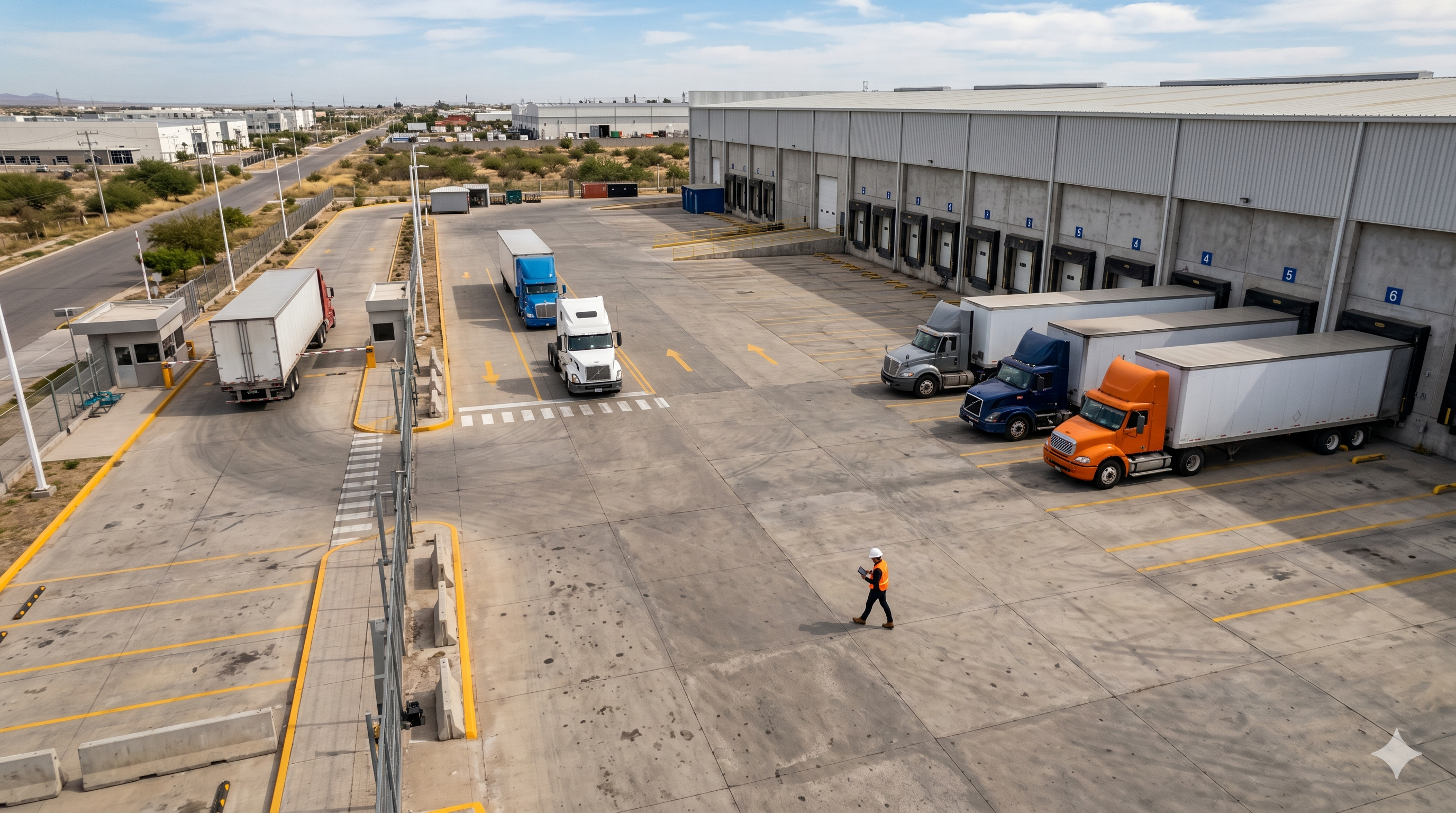
Cut gate-to-gate truck cycle time at your distribution center. 5 concrete strategies for CEDIS operators to reduce turnaround time and boost throughput.
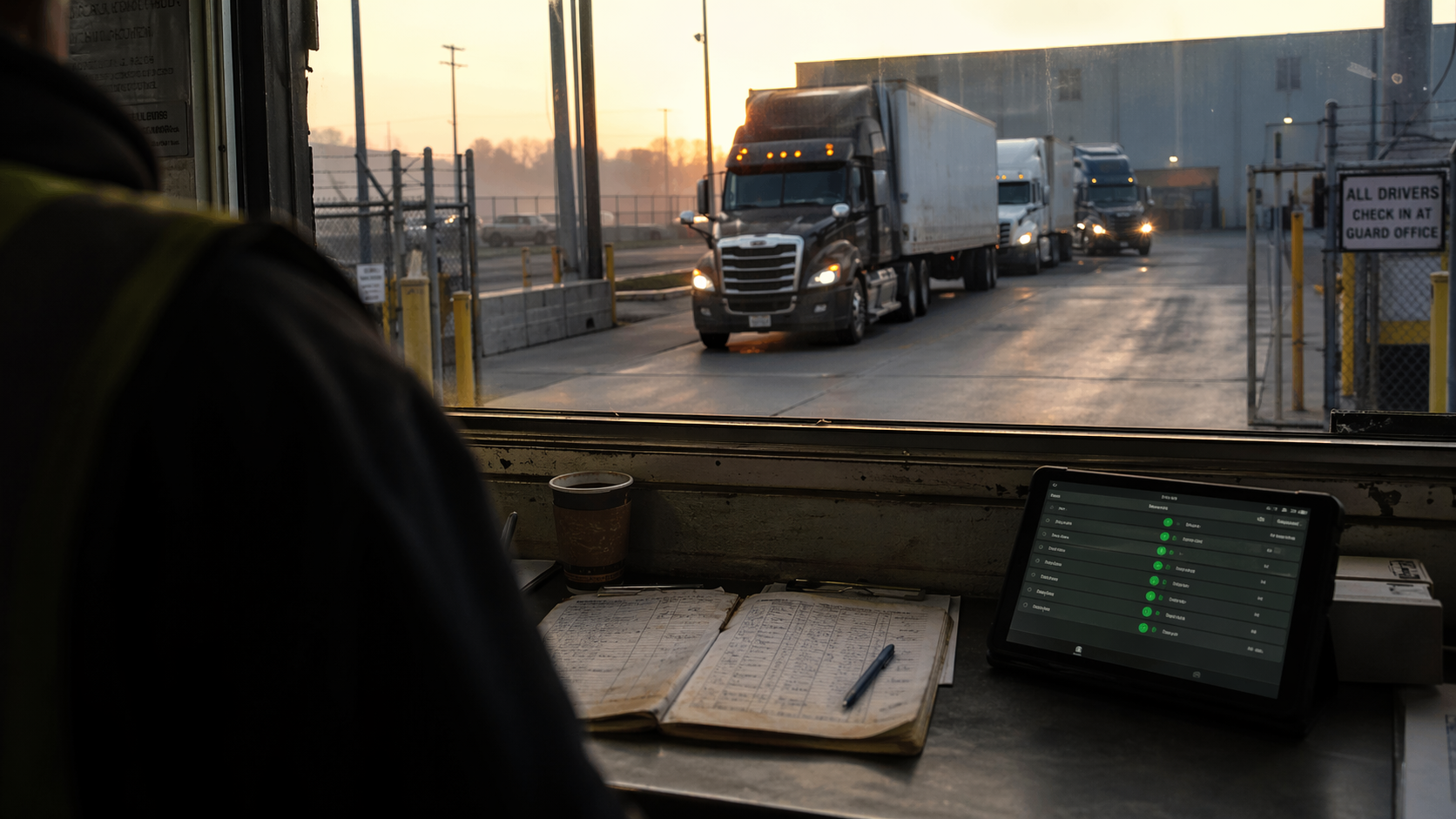
Follow a distribution center guard through a full shift and see how digital check-in transforms gate operations.
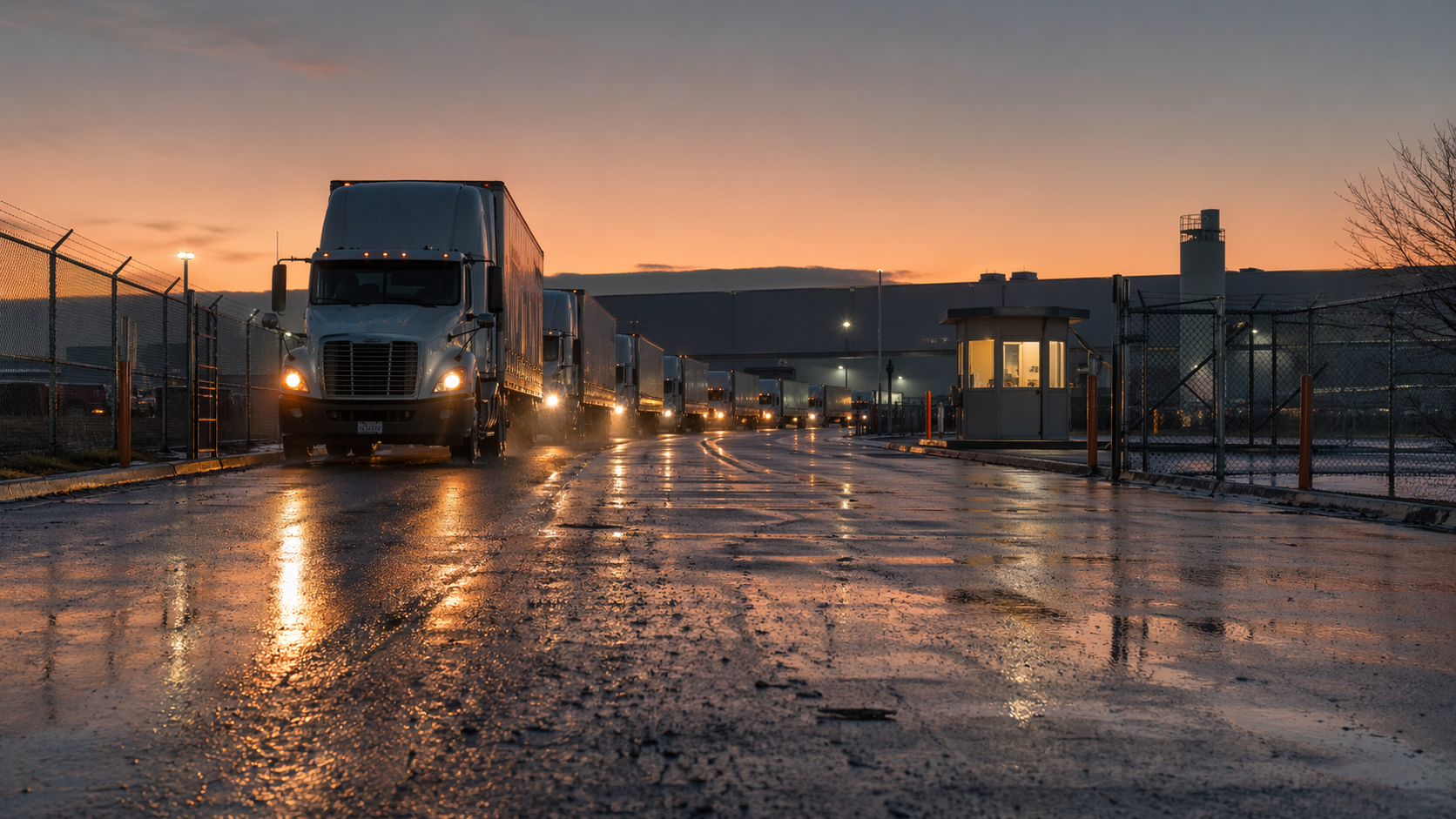
Prepare your distribution center for peak season surges: dock scheduling, yard staging, and gate check-in strategies to absorb volume spikes.