
In the busy logistics of 2026, the security gate is much more than an access control point; it is where inefficiency shows up first. However, in most Distribution Centers (DCs) across North America and Mexico, this critical node still operates under 20th-century processes: a paper logbook, a pen chained to the counter, and a guard trying to decipher the handwriting of dozens of tired drivers.
This disconnect feels old because it is old, and it costs real money. According to a Gartner (2025) study on "middle mile" modernization, inefficiencies at access control points can reduce a warehouse's processing capacity by up to 22%. In an environment where nearshoring demands just-in-time deliveries, manual registration is the anchor holding back your growth.
Digital check-in has moved from being a "nice-to-have" innovation to an practical requirement. This guide explains how paper slows the operation down and how gate digitalization can transform your logistics.
To understand the value of digital check-in, we must first dissect the cost of the traditional method. A typical manual registration at a security gate follows this flow:
This process usually takes 12 and 18 minutes per truck. In a DC receiving 50 units a day, that means 15 hours of accumulated dead time daily at the entrance alone.
In 2026, digital check-in is a fast validation flow. A tablet alone does not fix much. What matters is tying the truck's arrival to the warehouse plan.
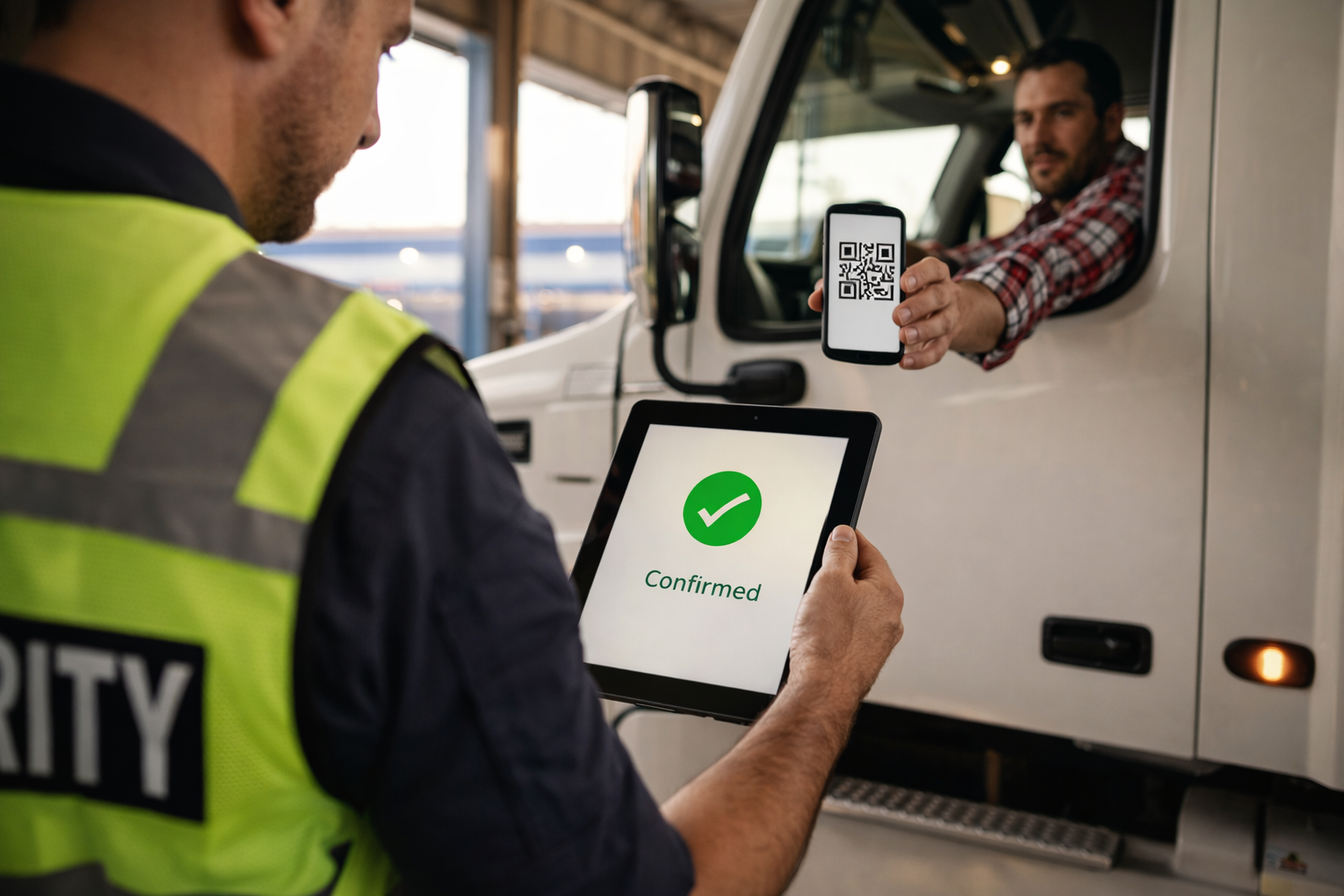
At the center of this process is the QR Code. When booking an appointment through yard management software, the carrier receives a digital confirmation. Upon arrival at the gate, the guard scans this code, and in less than 2 seconds, the system cross-references the data with the purchase order, assigned dock, and security protocols.
When a truck checks in digitally, the system automatically notifies the receiving supervisor and forklift operators. That removes surprises, and the warehouse can prepare the unloading zone even before the truck finishes parking. This is essential for improving logistics yard KPIs.
The main headache in logistics finance is "wait time" charges. With digital check-in, you have an immutable, geolocated timestamp. If a carrier claims an unjustified wait, digital data is irrefutable proof of when they actually entered and exited.
We invite you to dive deeper into this topic in our article on how to avoid demurrage fines.
The system can also connect to access control lists. If a specific driver or license plate has restrictions due to previous incidents in other DCs in the network, the guard receives an instant red alert before allowing entry.
In a market short on drivers, what happens at the gate matters. An agile process, where the driver doesn't have to leave their unit and receives clear instructions on their phone, positions your DC as a "preferred loading site."
Company: 3PL logistics operator specializing in electronics.
Initial Situation: The security gate was the main bottleneck. On high-demand days, the truck queue blocked access for other companies in the industrial park, generating municipal fines and constant complaints. The average registration time was 14 minutes.
Intervention: They implemented the Docklyx Gate Module, integrating check-in with a mandatory appointment portal for all their carriers.
90-Day Results:
Here is what the flow looks like in daily use:
The carrier enters our portal and reserves a time window. They upload the truck plate and the driver's name. Docklyx generates a digital access pass with a QR code sent via WhatsApp to the driver.
The guard uses the Docklyx Gate App on an industrial tablet. When the truck arrives, they scan the QR through the windshield (the driver does not need to step down).
Instead of paper "checklists" for entry (seal status, box cleanliness, tires), the guard takes photos directly with the tablet. These photos are permanently linked to the entry record. If a truck leaves with damage it didn't have upon entry, the evidence is one click away.
Once authorized, the driver receives an automated message on their phone with a yard map and their final destination. This eliminates "lost" units circling the yard looking for their dock.
Upon exit, the process repeats. The system automatically calculates total dwell time and, if there were any handling charges, generates the record for instant billing.
In 2026, keeping logbooks at the security gate adds risk you do not need. Digital check-in improves the process, tightens control, and gives the operation a clean data trail.
YMS technology has democratized access to these tools. You do not need to run a Fortune 500 company to modernize the gate.
Are you ready to see how your security gate becomes an efficiency engine?
Discover the Docklyx Gate App. Request a personalized demo here.
Docklyx digitizes the entire yard: appointments, check-in, docks, and real-time traceability.
Request free demo →One email per week. No spam.