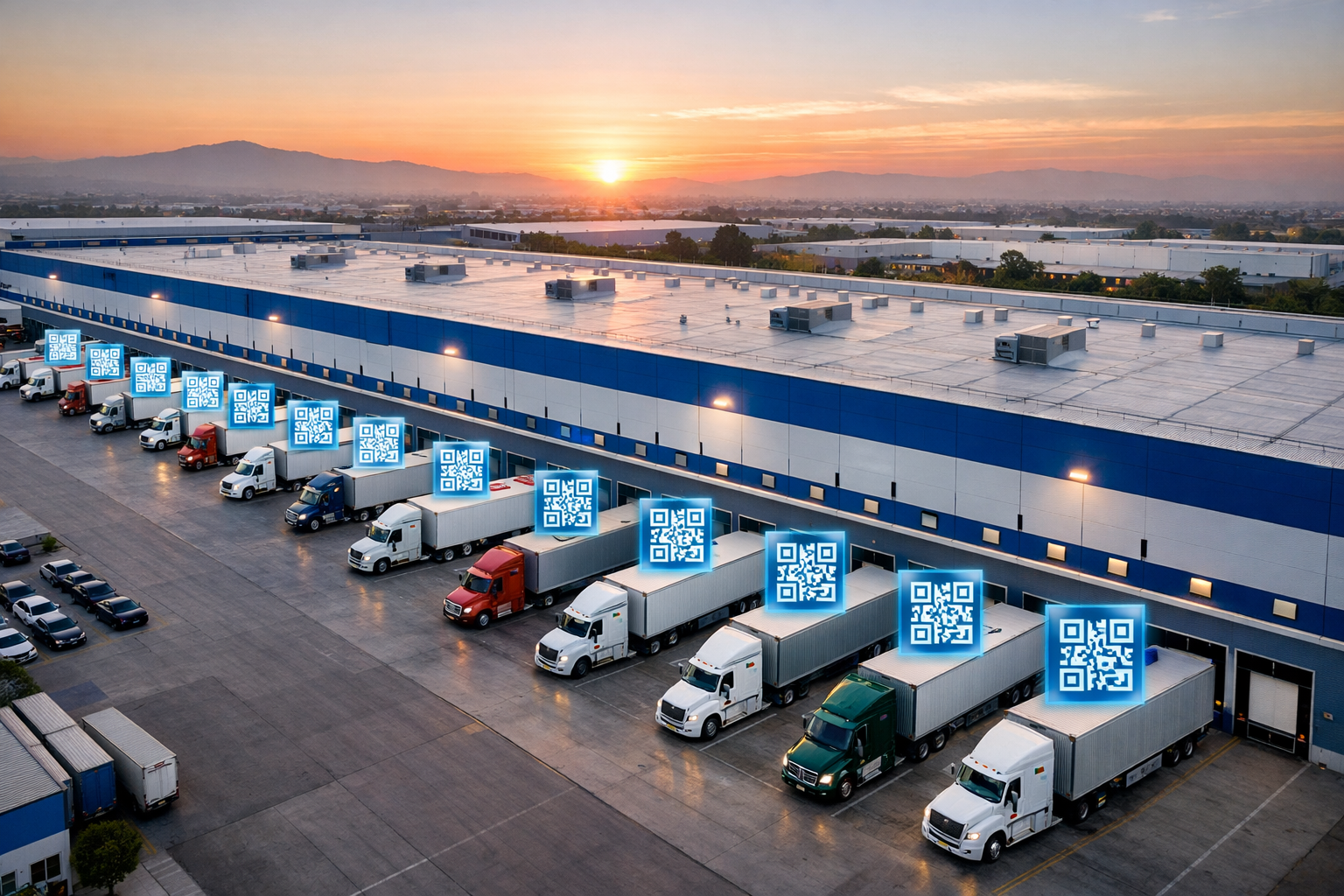
The yard of a CEDIS or warehouse is one of the most underestimated bottlenecks in the logistics chain. Trucks queuing for hours, blocked docks, guards logging arrivals on paper, carriers with no idea which dock they have been assigned. According to industry data, 75% of operators acknowledge the yard is a bottleneck in their operation. If this sounds familiar, you need to understand what a Yard Management System (YMS) is and how it can transform your operation.
A Yard Management System is a software platform designed to digitize, coordinate, and optimize all activities that take place within the yard of a warehouse or distribution center — from the moment a carrier requests an appointment to the moment the unit leaves the facility after completing its loading or unloading.
Unlike a WMS (Warehouse Management System), which manages what happens inside the warehouse, a YMS focuses on what happens outside: the yard, the docks, the gate, the staging areas, and the flow of carriers through the facility. And unlike a TMS (Transportation Management System), which loses visibility once the unit arrives at the facility, a YMS takes control at precisely that point.
The YMS acts as the brain of the yard: it knows how many units are on site, what state each one is in, how long they have been waiting, and when each dock will become available. In a market where logistics accounts for 8.6% of Mexico's GDP (INEGI, 2025) and logistics costs can reach up to 60% of a company's sales (Expansion, 2026), eliminating yard inefficiencies is not optional — it is a competitive necessity.
A robust YMS covers the following operational functions:
The typical flow at a CEDIS with a YMS works as follows:
1. Appointment booking — The carrier or the purchasing department schedules an appointment through a web portal or mobile app. Basic details are entered: unit number, supplier, cargo type, and estimated number of pallets.
2. Automatic confirmation — The system validates dock availability and confirms the appointment with a unique QR code.
3. Arrival at the gate — The guard at the gate scans the carrier's QR code. The system validates identity, unit number, and appointment status. In under 30 seconds, the unit has authorized access. Without a YMS, this process takes 5 to 15 minutes per unit.
4. Dock assignment — The system directs the carrier to their assigned dock. If the dock is not yet available, the unit waits in the staging area with a digital ticket that tracks wait time.
5. Dock operation — The time the unit spends at the dock is automatically recorded from the moment it connects until it disconnects. Best-in-class operations achieve turnaround times under 60 minutes; the industry average exceeds 2 hours, and 40% of appointments stretch beyond that limit (Arrivy, 2025).
6. Exit — The guard records the departure. The system calculates the total time on site and makes it available for reports and audits. If the unit exceeded the allowed time, the system can automatically generate a detention charge.
One of the most common points of confusion in logistics is the relationship between these three systems. They are not competitors — they are complementary, and each one covers a different part of the supply chain.
| Feature | YMS | WMS | TMS |
|---|---|---|---|
| Zone of control | Yard, docks, gate | Warehouse interior | Routes and transport |
| Primary focus | Unit flow and dock management | Inventory, picking, packing | Routes, rates, carrier selection |
| Key processes | Appointments, check-in, dock assignment, detention | Receiving, storage, order fulfillment | Route planning, carrier management |
| Visibility | Which units are in the yard and where? | What product is there and where is it? | Where is the cargo going and when does it arrive? |
| Primary user | Yard manager, guard, carrier | Warehouse manager, floor operators | Transportation planner, logistics team |
The blind spot that a YMS solves: When a TMS schedules a shipment, it loses visibility the moment the unit arrives at the facility. The WMS only "sees" the goods when they physically enter the warehouse. Between those two moments, there is a gap that can last hours where nobody knows what is happening. The YMS fills exactly that gap.
Think of it this way: the TMS manages the journey, the YMS manages the arrival and the stay, and the WMS manages what happens inside. Without a YMS, you have an operational blind spot between the road and the warehouse. To understand how this optimization integrates with the full DC operation, see our guide on yard management software.
The measurable results reported by operators who adopt a YMS are compelling. Here are the most relevant, backed by data from real-world implementations:
Detention is the most painful hidden cost in the logistics yard. 39% of deliveries experience detention (YardView, 2025), and 72% of drivers report waiting more than 2 hours per week. Detention costs have risen 25–30% over the last two years. The FMC documented that 9 ocean carriers collected approximately $15.4 billion in detention and demurrage charges between April 2020 and March 2025.
With a YMS, these numbers change dramatically:
You can calculate the potential impact on your operation with our guide to calculating ROI for a yard management system.
By coordinating appointments and dock assignments, units no longer queue up in a disorganized way. Data from C3 Solutions shows a 30% increase in dock productivity and a 25% reduction in yard trucks needed to move trailers.
The difference between a scheduled and unscheduled operation is dramatic. A drop-and-hook operation takes 15 to 30 minutes; a palletized live-load can take 60 to 90 minutes. Without a schedule, these operations overlap and generate queues that propagate across the entire yard. Learn more about optimizing this dynamic in our guide to dock management at distribution centers.
All records (appointments, check-ins, dock assignments, exits) are digitized. Fewer errors, less lost information, and faster audits. Terminal Industries reports an 85% reduction in gate transaction times by digitizing the entry process. Tompkins Ventures documents a 50% reduction in check-in delays and trailer hunt time across the yard.
Managers, supervisors, and guards all see the same yard status in real time, from any device. This shared visibility eliminates radio calls to ask "is dock 5 free yet?" and enables decisions based on data, not assumptions.
Knowing in advance which dock to go to, receiving notifications when it is ready, and not having to wait without information reduces carrier friction and improves supplier relationships. In a market where 94.5% of fleets charge detention fees but fewer than 50% manage to collect them (ATRI), reducing wait times is a benefit for both sides.
A YMS generates data that simply did not exist before: average yard time by supplier, by dock, by shift. Dock occupancy by hour. Demand peaks by day of the week. These yard logistics KPIs are the foundation for negotiating with carriers, justifying infrastructure investments, and planning shifts. You can also see a concrete example in our case study on detention reduction.
The global Yard Management System market is booming. According to Straits Research, the market reaches $4.56 billion in 2026 and is projected to hit $10.65 billion by 2034, with a compound annual growth rate (CAGR) of 11.2%. ABI Research is even more aggressive in its projections: it estimates YMS revenues will reach $4.9 billion by 2032, with a CAGR of 30.5% (GlobeNewsWire, 2026).
What is driving this growth? Several factors converge:
The message is clear: yard management is moving from a manual process to a software category with multi-billion-dollar investment. Companies that do not digitize will be at a competitive disadvantage.
The cost of a YMS varies significantly depending on the vendor, the scale of the operation, and the features included. Here is a general overview of the market:
Traditional enterprise solutions (SAP Yard Logistics, Oracle, Manhattan Associates): These platforms typically require six-figure annual licenses, 6- to 18-month implementation projects, and dedicated consulting teams. They are viable for large corporations with multiple DCs and consolidated IT budgets, but out of reach for mid-sized operations.
Specialized cloud solutions (C3 Solutions, YardView, FourKites): These typically charge between $1,500 and $5,000 USD per month depending on the number of docks, gates, and users. Implementation usually takes weeks, not months. They offer a good balance between functionality and cost.
Docklyx: Our plans range from $4,999 to $14,999 MXN per month, designed specifically for the Mexican market. This includes appointment scheduling, digital check-in, AI-assisted dock assignment, a real-time dashboard, and detention control. Implementation is completed in days, not months. If you want to understand how the options compare, see our guide on yard management software.
How to evaluate the real cost: Do not look only at the monthly subscription. Consider the cost of implementation, team training, necessary integrations (WMS, TMS, ERP), and ongoing support. Most importantly: compare the cost of the software against the cost of not having it. If your operation loses $50,000 MXN per month in detention charges, unproductive waits, and coordination errors, a $9,999 MXN YMS pays for itself in the first month.
Not every warehouse needs a YMS from day one. These are the indicators that the time has come to implement one:
If you identify three or more of these points, the return on investment from a YMS is typically visible within the first three months of operation. To run the exact calculation, use our guide to calculating ROI for a yard management system.
A Yard Management System is not a technological luxury — it is the digital infrastructure your yard needs to operate professionally, measurably, and at scale. In a $4.56 billion market growing at 11.2% annually, yard management has moved from a manual process to a critical software category.
In Mexico, the convergence of nearshoring (which could add $35 billion in annual exports), the pressure to reduce logistics costs that reach up to 60% of sales, and the availability of accessible solutions make 2026 the year to digitize your yard.
Companies that have already implemented a YMS are seeing concrete results: 52% less detention, 30% more dock productivity, 85% less time at the gate. Those still relying on paper and radio are losing money every day that passes.
Implementing a YMS like Docklyx allows you to move from paper logs and radio coordination to a fully digitized yard operation, with real-time data and complete traceability of every movement.
The yard no longer has to be the bottleneck. It can be a competitive advantage.
Ready to digitize your yard? Try Docklyx free for 14 days →
Docklyx digitizes the entire yard: appointments, check-in, docks, and real-time traceability.
Request free demo →One email per week. No spam.
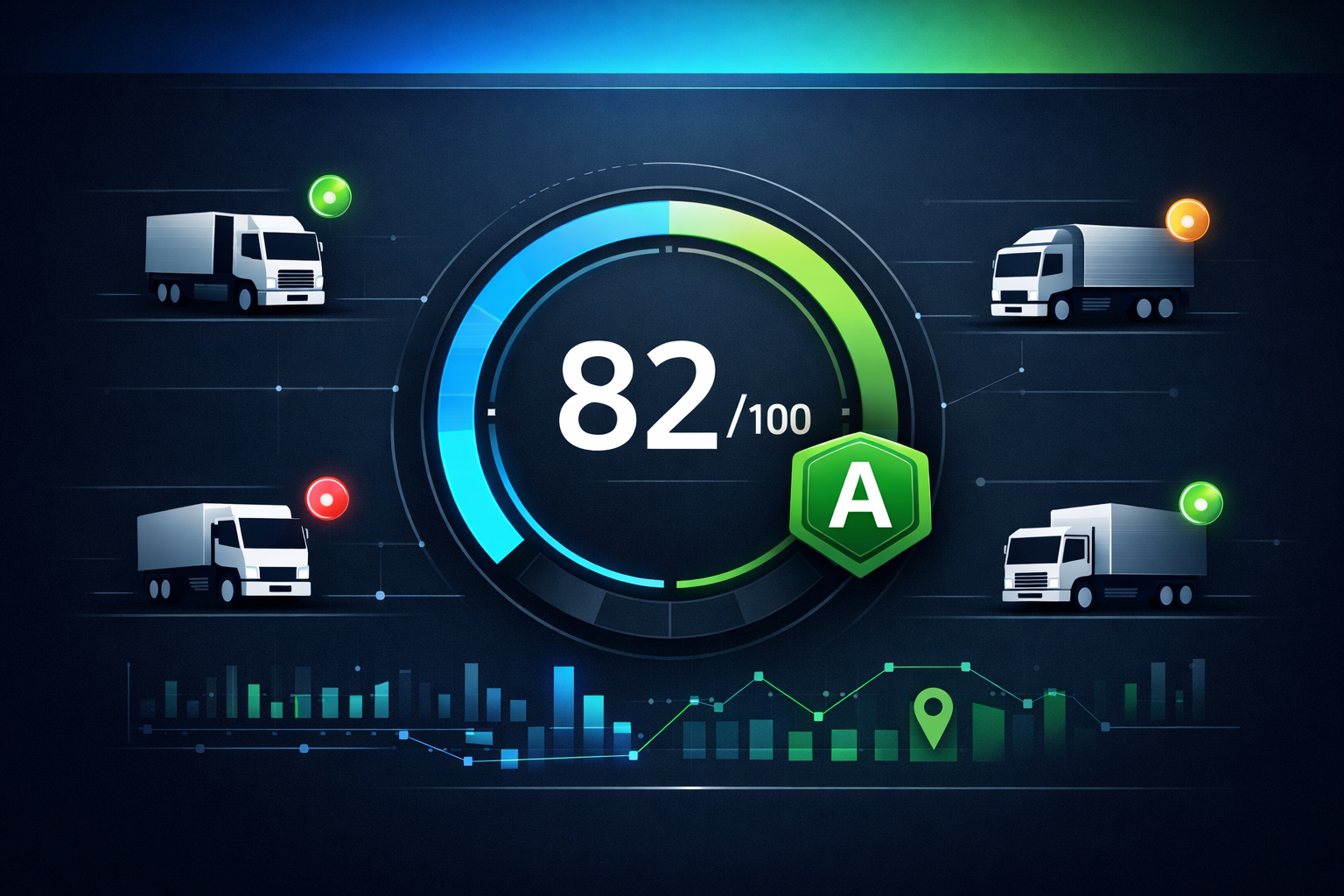
How AI carrier scoring works: punctuality, no-shows, dwell time, and dock priority. Practical guide for warehouse operators.

Compare YMS vs WMS vs TMS for your DC, avoid overlap, and choose the rollout order that cuts delays. Read the decision guide.