
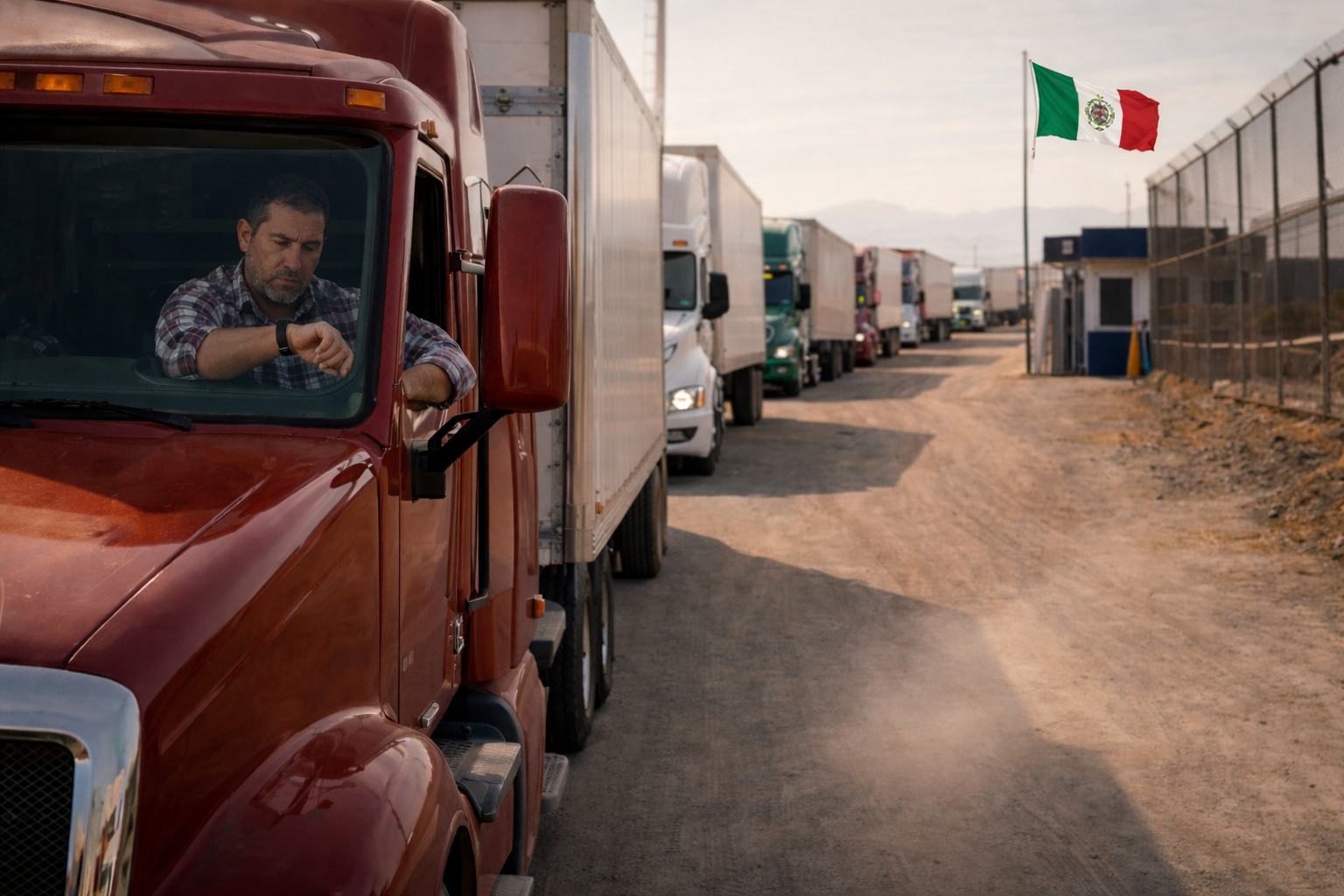
In Mexico's complex 2026 logistics ecosystem—where nearshoring has saturated transport arteries and distribution centers (DCs) are operating at peak capacity—there is a silent enemy draining millions from balance sheets: demurrage.
What used to be treated as a normal operating cost now hits margins much harder. With rates ranging from $150 to $210 USD per day after the free period, and a logistics inflation that has accumulated a 72.6% increase over the last decade (Milenio, 2025), ignoring yard efficiency is no longer an option.
This guide explains what demurrage means in Mexico, how it hits profitability, and how teams are reducing it with better yard control.
The term demurrage has its roots in maritime law, but in modern Mexican land logistics, it specifically refers to the charge applied by carriers or shipping lines when a transport unit (container or trailer) remains stationary inside your facility beyond the agreed time.
It helps to separate two concepts that are often confused but have different legal and financial implications in today's logistics contracts:
In the daily life of a DC in Monterrey, Guadalajara, or the State of Mexico, when we talk about "detention fees" or "waiting time charges," we refer to that counter that starts running from the moment the carrier crosses the security gate until they leave your premises.
To gauge the scale of the problem, we must look at current figures in the Mexican market. According to projections for 2026, operating costs are under unprecedented pressure:
Most companies in Mexico lose money because they don't know how to audit their carriers' invoices. Calculating demurrage follows a logical structure that you must master to regain control of your operation.
[Total Yard Time] — [Free Time] = Billable Time [Billable Time] × [Demurrage Rate] = Total Charge
Imagine an operation receiving a raw material shipment in a 40ft container:
Calculation: (6h - 2h) = 4 billable hours. Impact: 4h × $450 = $1,800 MXN for a single unit.
If your DC receives 40 units per day and 30% suffer a similar delay, you are losing $21,600 MXN daily, or over $500,000 MXN per month. Many teams pay this inefficiency tax without noticing how quickly it compounds. Want to calculate your exact exposure? Use our YMS ROI Calculator to get a data-backed estimate in minutes.
After working with logistics yards, we keep seeing the same pattern: demurrage isn't a transport problem, but a symptom of internal execution failures.
Running without an appointment system creates avoidable chaos. When all carriers arrive at 8:00 AM trying to be first, they saturate the security gate. The result is familiar: a queue toward the highway, frustrated drivers, and demurrage charges starting before the truck even sees an andén.
By 2026, a paper logbook at the gate is still common, but it is hard to defend. A manual registration takes, on average, 12 to 15 minutes. Multiply that by 50 trucks and you have 10 hours of dead time just at the entrance. Leading companies have switched to digital check-in, reducing this time to less than 90 seconds.
Often, the warehouse team doesn't know a critical carrier has arrived at the gate. Or worse, the guard assigns a dock that is already free but hasn't been reported as such by the floor supervisor. This disconnection creates "ghost times" where the dock is empty while the truck is waiting.
If a shipment arrives with damage or shortages, the unit remains blocked at the dock while waiting for a manager's decision. Without an alert system that escalates these incidents instantly, a resolution that should take 10 minutes ends up taking 3 hours, impacting the rotation of the entire queue.
Many carriers arrive at the facility without complete documentation or with invoice errors. If this validation happens only when the truck is physically at the gate, blocking is inevitable. The better approach is documentary pre-clearance, validating everything digitally before the unit reaches the premises.
The cost of demurrage doesn't end with the invoice. In a transport market as tight as Mexico's, your reputation as a "shipper of choice" affects your service capacity.
Carriers now use data to rate their customers. If your DC is known for 4-hour wait times, carriers will:
You become a shipper of choice by respecting the carrier's time, not by negotiating prettier contracts.
To illustrate the impact of these strategies, consider the case of a leading distributor in Western Mexico (Guadalajara).
Initial Situation:
Intervention: They implemented a Yard Management System (YMS) focused on three pillars: mandatory appointment portal, QR code check-in, and real-time control dashboards for the warehouse.
Results at 90 Days:
This case shows that the ROI of digitalizing the yard is measured in weeks, not years. You can read the full analysis of this case study here.
Docklyx is software built around the way high-volume Mexican operations actually run. Here's how the workflow to eliminate waiting time fees works:
Instead of receiving trucks without context, you publish your capacity windows. The carrier reserves their slot autonomously. Docklyx automatically validates if the carrier has a valid purchase order before allowing the booking.
When the driver arrives at the security gate, they scan a QR code from their phone or present a printed code. The guard only verifies the license plate and the driver's name.
Docklyx automatically assigns the optimal dock based on business rules: customer priority, product type, and proximity to the putaway location. The driver receives a notification on their phone (via WhatsApp or SMS) indicating which dock to head to.
In the traffic office, a dashboard shows every unit with a color code (Green, Yellow, Red) based on its free time. If a unit reaches 80% of its free time without finishing unloading, Docklyx sends an automatic alert to the warehouse supervisor.
At the end of the month, you generate performance reports by carrier and by dock. You no longer argue about invoices based on "I think"; you have precise gate-in and gate-out data with digital timestamps.
In 2026, the DC is no longer just a place for storage; it's a node of flow. Companies that master the management of their yards and docks will have a massive structural advantage over those still trapped in manual processes.
Demurrage is an avoidable cost. Every peso you save in detention fees is a peso that goes directly to your company's net profit.
Is your DC ready to stop paying unnecessary fines?
Discover how Docklyx can transform your yard in 24 hours. Schedule a demo here. Time is money.
Docklyx digitizes the entire yard: appointments, check-in, docks, and real-time traceability.
Request free demo →One email per week. No spam.
Learn to measure dock dwell time accurately, compare benchmarks by operation type, and apply 5 strategies to reduce it. Practical guide for DC operators.
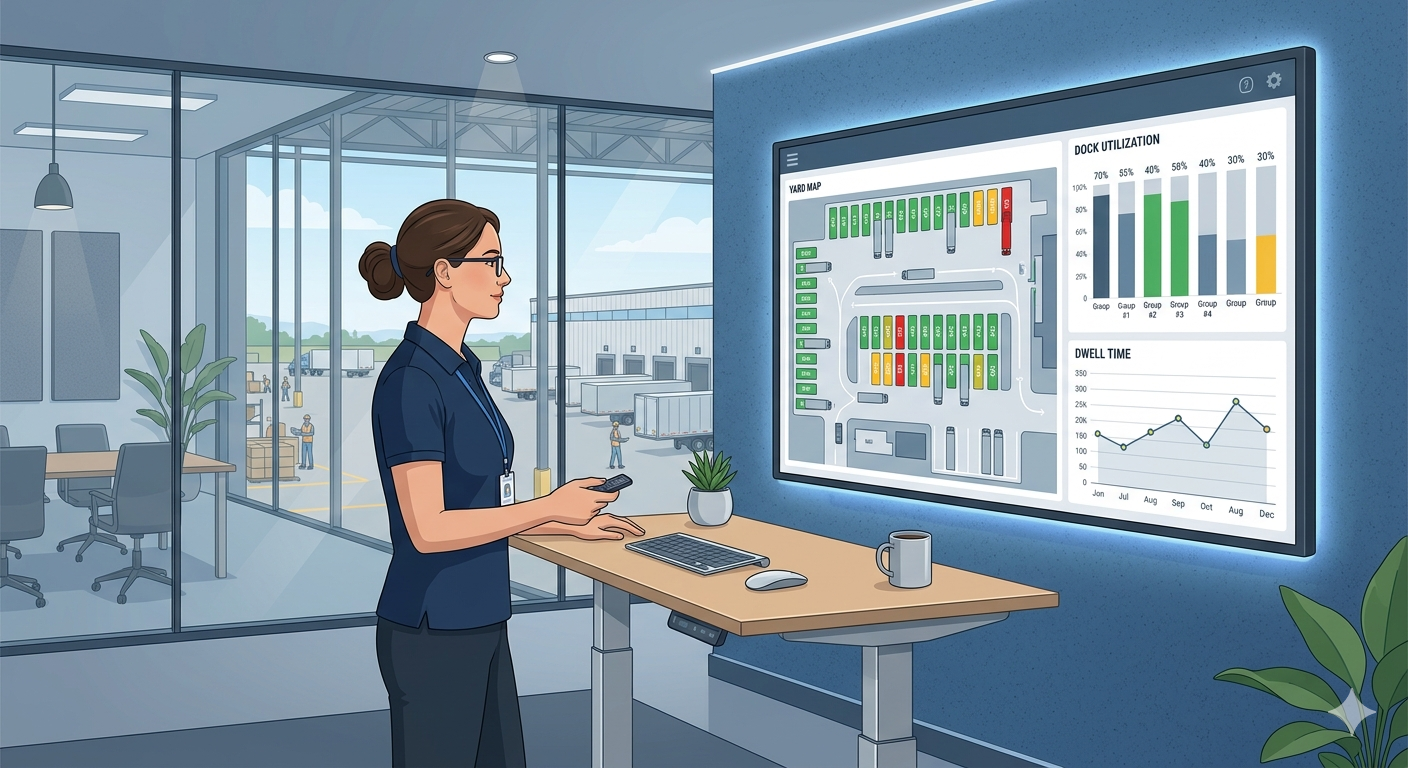
Master logistics yard KPIs with real-time data, McKinsey benchmarks, and a Docklyx walkthrough. Reduce demurrage and boost dock efficiency today.