
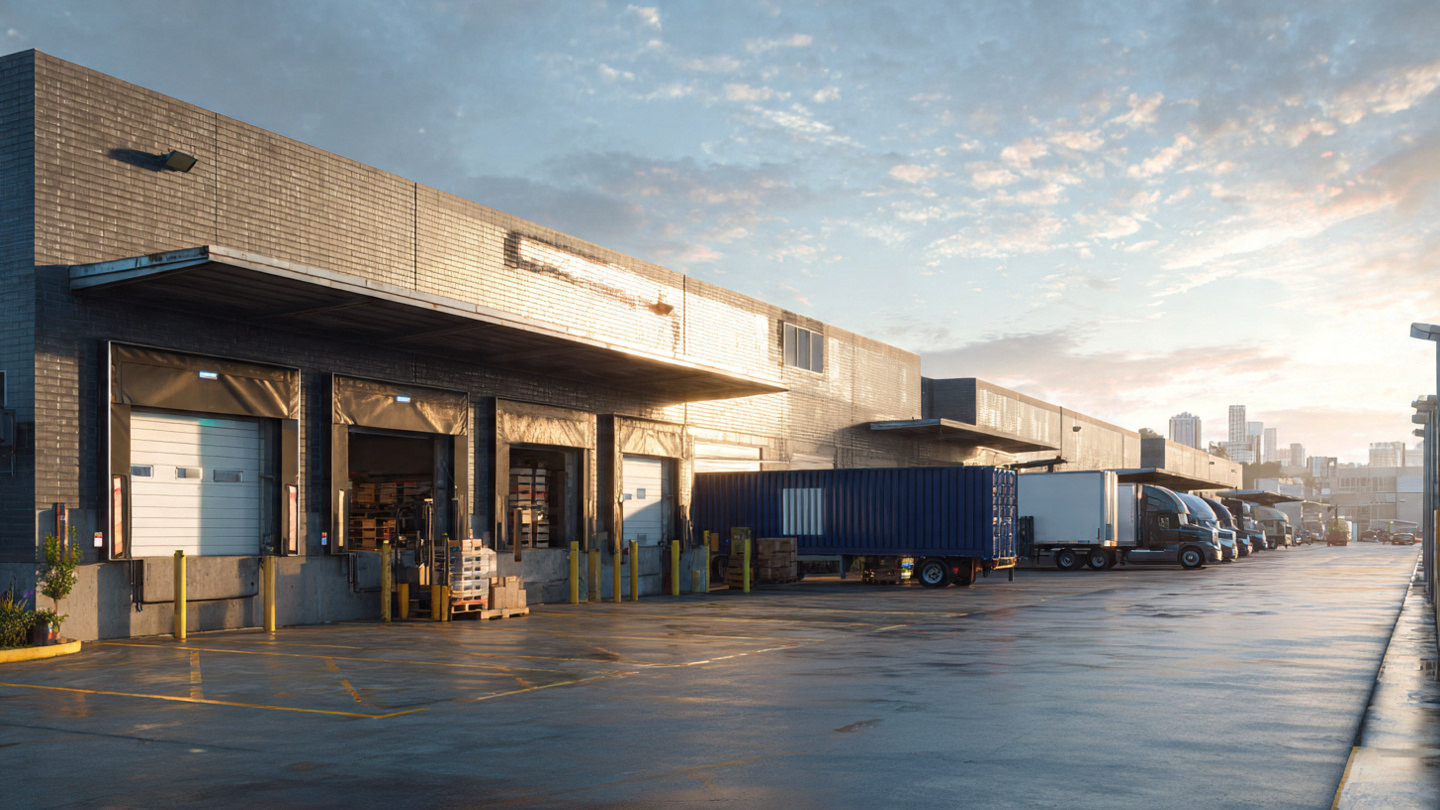
A dock is not a parking spot. That should not need saying, but plenty of warehouses still treat it like one. A truck finishes unloading and the door stays occupied because nobody released it. Another one backs in before receiving is ready and sits there 40 minutes with no crew attending it. By the end of the shift, the dock was full all day but only moved half the volume it should have.
The worst part is that the cost almost never lands in one obvious place. You do not get an invoice that says, "blocked dock inefficiency: $52,000 MXN this month." What you get instead is overtime, a messy end-of-day close, a frustrated team, fewer trucks processed, and sometimes penalties for holding a carrier unit too long. The loss is real; it is just scattered.
That is why so many operators underestimate it.
When a dock gets blocked, the warehouse pays five times. You lose usable space, lose throughput, burn labor, expose yourself to waiting-time penalties, and create a domino effect that spreads through the rest of the shift. This piece is meant to make that cost visible enough to act on.
The broader market is already treating facility delays as a serious business issue. The American Transportation Research Institute (ATRI) reported that drivers experienced detention in 39.3% of their stops in 2023 when facility time ran beyond two hours (ATRI, 2024). And the 2025 MHI Annual Industry Report says 55% of supply chain leaders are increasing investment in technology to improve resilience and visibility (MHI, 2025). That shift is not theoretical. Operators are spending because the old way of absorbing dock delays is expensive.
A productive dock is simple to identify: a truck is actively loading or unloading, the team knows what freight is being handled, and the turnover to the next slot is clear.
A wasted dock looks different:
From a distance, both situations show an occupied position. From an operations standpoint, they are nothing alike.
That distinction matters because many teams measure saturation, not true productivity. They see all doors full and assume the facility is running at maximum output. Sometimes it is. Sometimes it is just full of waiting.
In manual operations, dock waste usually slips in through the same four gaps.
Sometimes it arrives without an appointment. Sometimes it technically has an appointment, but there is no real policy for early arrivals, late arrivals, or reshuffling. Either way, the unit ends up occupying yard or gate space until somebody decides what to do with it.
If the guard has to call or radio someone to confirm whether a truck can move in, the gate becomes a bottleneck. Not because the work is complicated, but because it depends on several people answering at the right time.
If receiving does not know what is coming, when it is arriving, or how urgent it is, a truck can reach the door and still wait. The dock is technically occupied, but nothing is actually moving.
This one shows up everywhere. The truck finishes, but the dock does not change status right away. The next truck stays out because the handoff is verbal instead of visible. Fifteen or twenty minutes disappear between turns, then the site wonders why the close ran long again.
To keep this grounded, let us use the base model from this content series.
Base example: 8 docks, 45 trucks per day, 20% arriving outside their window, and 45 extra minutes per affected truck.
That produces:
That capacity is physically there — installed and paid for. It just disappears in practice.
The first layer is not cash yet. It is lost capacity. If you lose 154 dock-hours per month, that space was no longer available for another truck.
Many facilities ignore this because there is no line item attached to it. But the opportunity cost is obvious: if your dock does not turn, the warehouse processes less volume with the same infrastructure.
You do not need to build another dock to suffer as if you were short one. You just need to waste the one you already have.
Using a conservative assumption of about one effective dock hour per truck, those 154 lost dock-hours translate to roughly 154 trucks per month that could not be handled in their intended slot.
Framing matters here. This is not the carrier's idle cost. This is what it costs the warehouse to leave volume on the table when the capacity was already installed.
That shows up as:
The exact financial value depends on your product mix and what a missed slot does to your operation. That is why it makes more sense to run your own numbers in the Docklyx ROI calculator or go deeper with how to calculate ROI for a yard management system.
This is where the money becomes easier to see. With the same base model, the monthly labor impact is about $38,700 MXN.
| Role | Daily calculation | Monthly estimate |
|---|---|---|
| Idle receiving team | 3 people x $55/hr x 7 hrs | ~$25,400 MXN |
| Coordinator handling calls | 200 min/day x $65/hr | ~$4,800 MXN |
| Guard managing the queue | 1 extra hr x $50/hr | ~$1,100 MXN |
| Jockey repositioning waiting trucks | 1.5 hrs x $60/hr | ~$2,000 MXN |
| Overtime at close | 1.5 hrs of team time x $55/hr | ~$5,400 MXN |
| Subtotal | ~$38,700 MXN |
What makes this easy to miss is that the cost is spread across several roles. Nobody sees the full number while the shift is happening. But the warehouse still pays it.
Soft CTA: If you already have a rough sense of your lost dock-hours, plug them into the Docklyx ROI calculator and compare the monthly loss against the cost of the software. The business case usually becomes obvious once the waste is grouped into one monthly number.
Not every carrier contract works the same way, but many warehouses already deal with penalty clauses when a truck stays on site too long. In the base example, we assume 2 trucks per day affected at $300 MXN per hour for 0.75 hours, which comes out to roughly $9,900 MXN per month.
This layer can swing a lot. Some facilities will see something closer to $3,000 MXN. Others, especially during peak periods or with strained carrier relationships, can move beyond $15,000 MXN.
The important part is not to confuse this with the whole problem. Carrier charges are only one layer. If you focus only on what the carrier invoices, you miss the internal waste already absorbed by your operation.
This is the cost everybody feels and almost nobody logs.
A blocked dock at 9:00 a.m. does not only affect one truck. It affects the next truck, the one behind it, the coordinator who starts reshuffling, the team that ends the day late, and the supervisor who begins making reactive decisions. Congestion is rarely additive. It compounds.
A conservative 15% multiplier on top of the previous layers is a reasonable way to represent that knock-on loss. In the base example, the domino effect adds another $6,300 to $8,100 MXN per month.
With the base model, the monthly range looks like this:
| Layer | Monthly estimate |
|---|---|
| Labor cost | ~$38,700 MXN |
| Waiting-time penalties | ~$3,000 to $15,000 MXN |
| Direct subtotal | ~$42,000 to $54,000 MXN |
| Domino effect (+15%) | ~$6,300 to $8,100 MXN |
| Estimated total | ~$48,000 to $62,000 MXN/month |
That money does not come from one dramatic failure. It leaks out through repeated small delays that the facility has learned to tolerate.
There is also a risk layer beyond cost. When truck overflow pushes vehicles outside controlled space or into poorly managed waiting areas, exposure goes up. Overhaul's Mexico cargo theft reporting shows theft remains concentrated in a limited set of states and corridors, which makes unmanaged dwell time more sensitive than many sites assume (Overhaul, 2024). The point is not to exaggerate. It is to recognize that an ordered yard is usually a safer one too.
Because nobody sees it as one KPI.
The yard lead sees a queue. The guard sees pressure. The coordinator sees calls. Receiving sees delays. Finance sees overtime. Leadership hears complaints. Everyone is looking at the same leak from a different angle, but without one shared timeline it is hard to prove that the root cause was dock misuse.
There is also a culture problem. Many facilities have normalized waiting for so long that it feels like a fixed part of warehouse life. It is not. It is just badly measured time.
A consumer goods warehouse in Central Mexico, running 9 doors and roughly 50 trucks per day, kept describing the same issue every morning: long gate queues, pressure on receiving, and a shift that closed late more often than not. The internal explanation was simple: "we need more docks." Once the team mapped the shift in detail, the actual problem looked different.
After tightening appointment flow, validating arrivals at the gate, and making dock status visible in real time, the site cut dead time between turns and recovered usable capacity without adding infrastructure. The biggest change was not more space. It was finally using the space they already had.
Once the operation has clear rules and real-time visibility, the shift behaves differently.
No trick to it. Just operational sequence.
If you want the system view behind it, read what a yard management system is, dock management for distribution centers, and digital gate check-in. Together they show why blocked docks are rarely one person's fault. They come from weak coordination between roles.
This is where the article turns practical.
Docklyx reduces blocked-dock cost through three operating moves:
Carriers schedule against real warehouse capacity. That keeps the problem from forming at the entrance. If there is no room in a time window, the system does not pretend there is.
The guard validates arrival, records the timestamp, and confirms destination in one flow. Gate time drops and the evidence is stored.
The team can see which truck is in the yard, which one is at the dock, which one is done, and which one is next. The dock stops depending on memory, whiteboards, and phone calls.
Yes, things get more orderly. But what actually changes is the dead time between one truck and the next. That is where the savings come from.
If your operation looks close to the base example, you already have a reference point. If it does not, plug in your own numbers:
Run it in the Docklyx ROI calculator. If you want to validate it with live data, start a 21-day free trial and measure the difference with your own facility instead of debating it in theory.
An occupied dock is not always a productive dock. When it is not productive, your warehouse is still paying for it.
Docklyx digitizes the entire yard: appointments, check-in, docks, and real-time traceability.
Request free demo →One email per week. No spam.
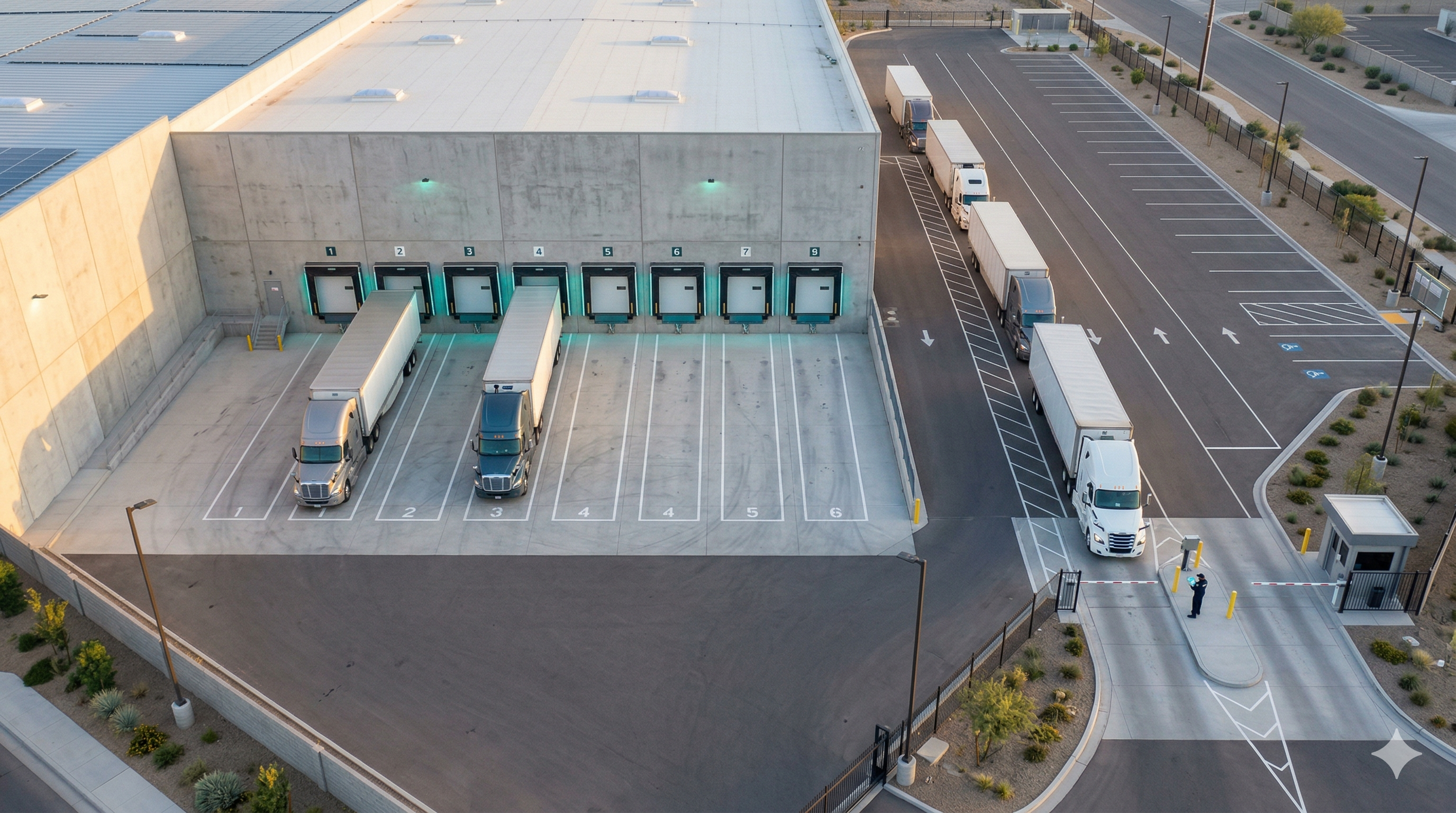
Implement dock appointment scheduling at your warehouse. Step-by-step guide covering time windows, policies, check-in, and measurement.
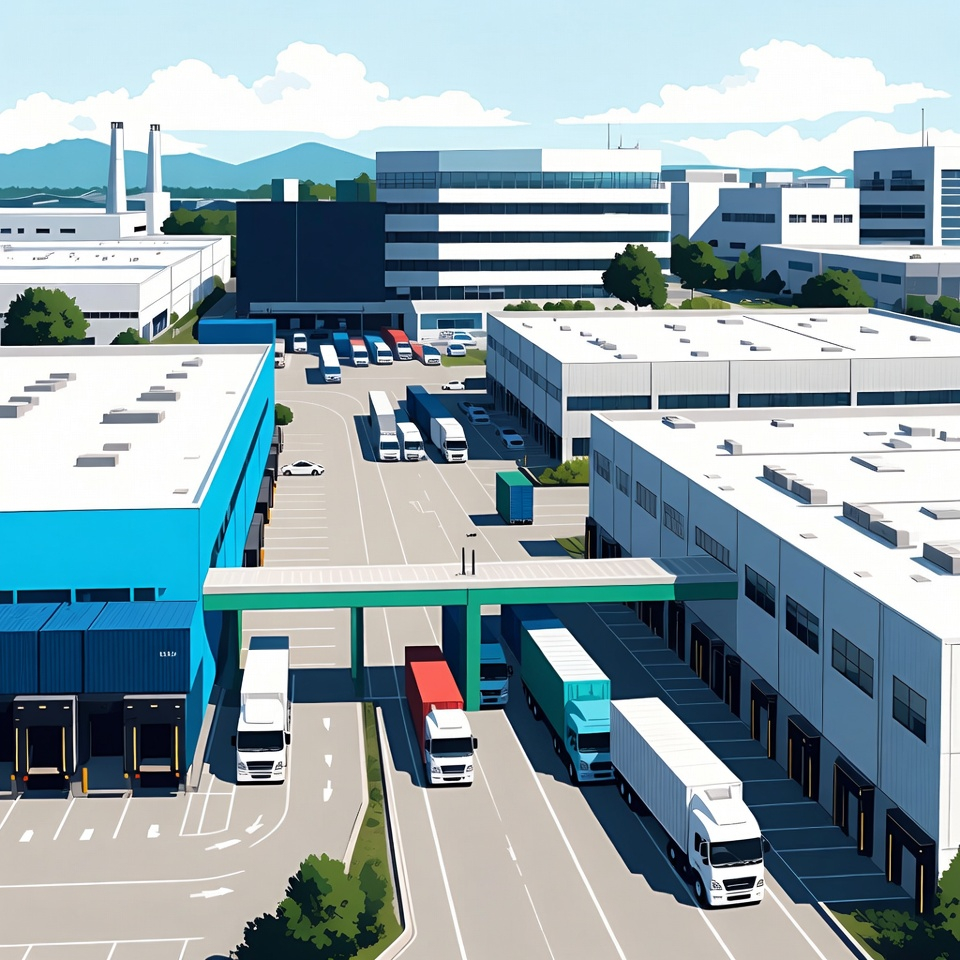
Nearshoring is flooding Mexican docks with volume. Learn how to prepare your distribution center for the new operational reality.
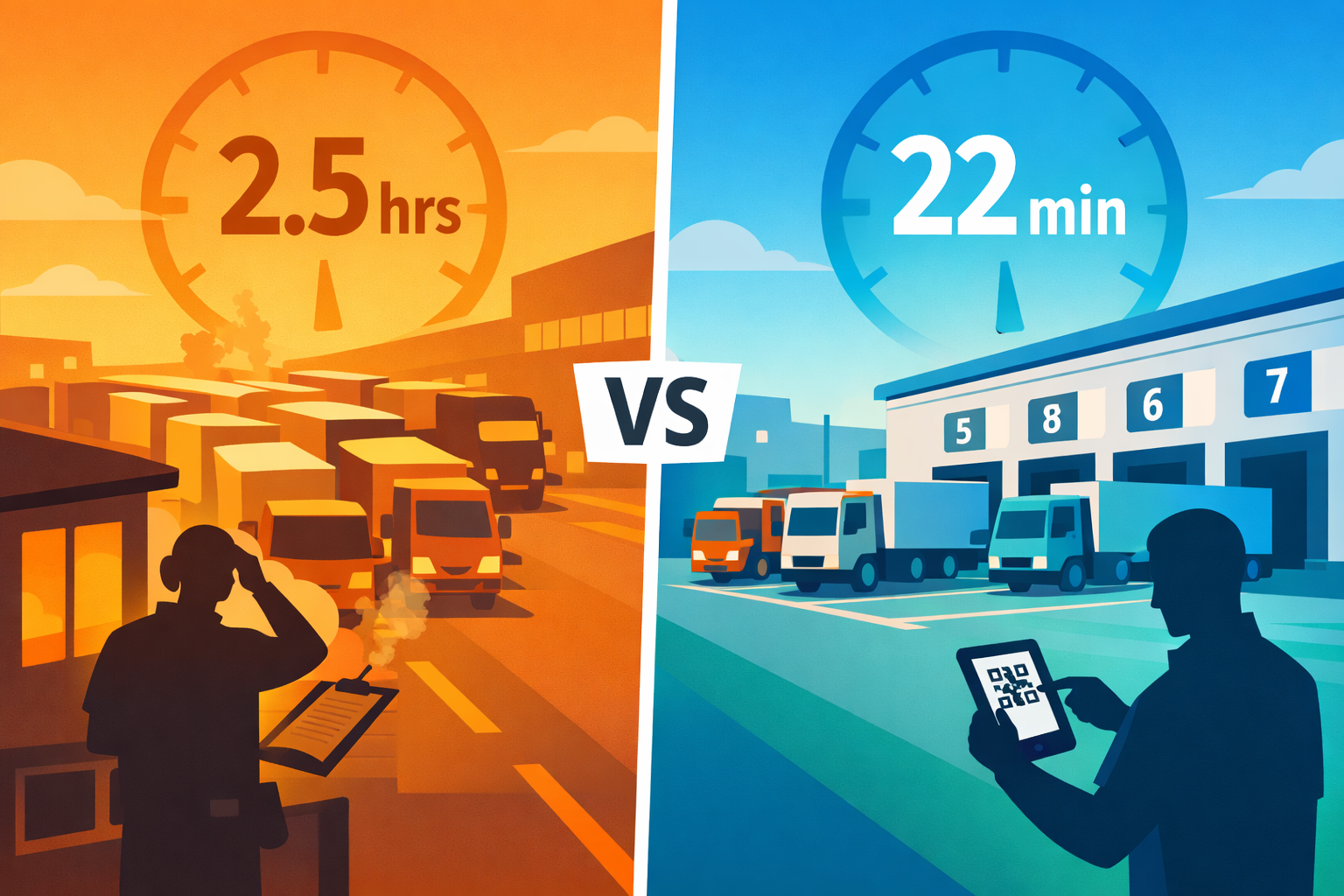
Compare dock appointment scheduling against FCFS with data, a side-by-side table, and a phased transition guide for distribution centers.