
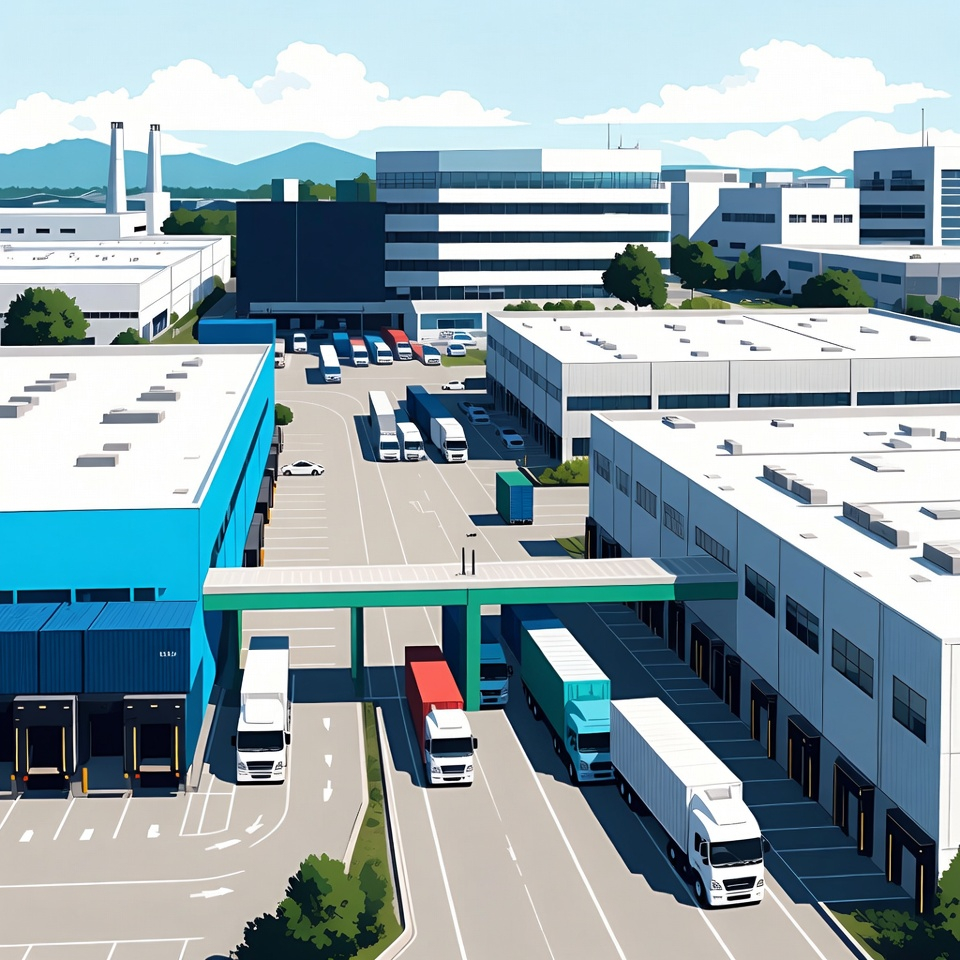
If you operate a distribution center in Mexico, nearshoring is no longer a headline you skim past. It is a force that is already reshaping your daily operations — from the number of trucks lining up at your gate every morning to the service-level agreements your multinational clients expect you to meet by next quarter.
Between January and September 2025, Mexico received a record USD $40.9 billion in foreign direct investment, a 14.5% year-over-year increase. Manufacturing captured 54% of that total. Behind every new factory, every expanded production line, and every freshly signed supplier contract sits a distribution center that needs to absorb more volume, faster, with fewer errors. That distribution center might be yours.
This article breaks down how the nearshoring boom translates into concrete operational pressure at the dock and yard level — and what you can do about it before the second wave hits even harder.
To understand why your yard is getting busier, you need to understand the scale of what is happening around your facility.
Mexico now has 477 active industrial parks with 103 more under construction. Industrial vacancy nationwide has dropped below 1% — a figure that would have seemed impossible five years ago. In key corridors like Monterrey, Saltillo, and the Bajio region, vacancy is effectively zero. New tenants are not just leasing space; they are building to suit, which means permanent, growing operations that will generate inbound and outbound freight for years.
The IMMEX program — Mexico's framework for manufacturing and export operations — now covers over 6,300 companies that collectively generate between 66% and 68% of Mexico's manufacturing exports. These are not small players. They are Tier 1 and Tier 2 suppliers serving automotive, aerospace, electronics, and medical device OEMs that demand precision logistics.
Trade volume between the United States and Mexico is projected to increase by $315 billion by 2033. That is not a rounding error — it is a structural shift. Every dollar of that increase flows through a supply chain that touches warehouses, cross-docks, and distribution centers on both sides of the border.
And the momentum is not slowing down. A 2025 Gartner survey found that 80% of chief operating officers plan to expand their use of nearshoring over the next three years. The question is not whether more volume is coming. The question is whether your operation is ready to handle it.
The macro numbers are impressive, but what matters to you is what happens between 5 AM and 6 PM at your facility. Here is how nearshoring translates into operational reality at the dock level.
When a new manufacturing tenant moves into the industrial park next to your DC, they do not just bring one truck a week. They bring a network of suppliers, each with their own carriers, their own scheduling habits, and their own expectations. A single automotive nearshoring operation can add 15 to 30 new carrier relationships to your facility within its first quarter.
Each new carrier means a new driver who does not know your yard layout, a new dispatching team that may or may not respect your appointment windows, and a new set of documentation requirements. Your guard at the gate, who used to recognize most trucks by sight, is now processing unfamiliar units all day.
Multinational clients do not operate on the "arrive whenever and wait in line" model that is still common at many Mexican DCs. They operate on just-in-time and just-in-sequence delivery protocols. A 30-minute delay on an inbound shipment of automotive components can halt an assembly line that burns $10,000 per hour of downtime.
This means the tolerance for gate queues, yard congestion, and dock delays has collapsed. What used to be an inconvenience is now a contract violation. If your facility consistently misses receiving windows, you lose the account — it is that simple.
Nearshoring-driven volume often pushes DCs from single-shift to double-shift or even 24/7 operations. A facility designed for 30 trucks per day at a comfortable pace suddenly needs to handle 50 or 60. The physical infrastructure — docks, yard space, gate lanes — does not change. The pressure on every square meter of your operation intensifies.
This is where hidden costs start compounding. Overtime for guards, wear on dock equipment, increased demurrage charges during shift transitions, and fatigue-driven errors in dock assignments all accelerate when volume outpaces your operational processes.
Nearshoring does not create new problems. It amplifies the ones you already have. Here are the five that hurt the most.
A paper-based check-in process that takes 10 minutes per truck is manageable when you receive 20 trucks a day. When that number jumps to 50, you are looking at over 8 hours of continuous check-in labor — and that assumes zero complications. In practice, the first truck arrives at 5 AM, the guard starts at 6, and the queue is already six deep before the gate opens.
The fix is not hiring more guards. The fix is eliminating the manual steps entirely. A digital check-in system can reduce per-truck processing from 10 minutes to under 2 minutes, which at 50 trucks per day recovers over 6 hours of gate throughput.
This sounds counterintuitive: more trucks should mean more dock activity, not less. But when there is no system coordinating which truck goes to which dock and when, the result is chaos. Trucks sit in the yard waiting for a dock that is technically free but no one communicated it. Docks sit empty between loads because the transition process depends on a radio call that never came.
The metric that exposes this is dock idle time between turns. In operations without a dock scheduling system, this gap averages 25 to 40 minutes per transition. Multiply that by 14 docks and 3 turns per dock per day, and you are losing the equivalent of 3 to 5 full dock-days of capacity every single day.
More trucks plus longer wait times equals more detention fees. The math is unforgiving. If your average dwell time increases by just 30 minutes across 50 daily units, and the average detention rate is $500 MXN per hour, you are generating an additional $12,500 MXN per day — over $275,000 MXN per month — in charges that did not exist before the volume increase.
Most operations do not even track this number accurately. Without digital timestamps at the gate and dock, there is no way to validate carrier invoices or dispute inflated charges. We covered this in depth in our guide on what demurrage is and how it impacts Mexican operations.
When your yard held 15 trailers, your operations team could walk outside and count them. When it holds 35, and units are arriving and departing on overlapping schedules, visual management fails. You lose track of which trailers are loaded, which are empty, which are waiting for paperwork, and which have been sitting there for two days because someone forgot to dispatch them.
This lack of visibility is not just an inconvenience — it is a safety and compliance risk. Nearshoring clients audit their supply chain partners. If you cannot produce a real-time view of yard status and historical dwell-time data, you fail the audit. If you fail the audit, you lose the contract.
Tracking the right yard KPIs is the first step toward regaining that visibility.
Carriers talk. When your facility develops a reputation for long wait times, your best carriers start declining loads to your DC or adding surcharges. In a nearshoring market where carrier capacity is tightening across northern Mexico, losing preferred carrier access is a serious competitive disadvantage.
The operations that retain carrier loyalty are the ones that can guarantee predictable turnaround times. That requires appointment-based scheduling, real-time dock status communication, and digital proof of entry and exit times that protects both parties.
Feeling the pressure already? If your operation is handling nearshoring volume with the same tools you used three years ago, the gap is only going to widen. See how Docklyx works and whether it fits your operation.
If your DC serves or wants to serve nearshoring clients — automotive OEMs, electronics manufacturers, medical device companies — you need to understand what their logistics teams evaluate when selecting and retaining distribution partners.
They want to know, at any moment, how many units are in your yard, how long they have been there, and when their specific shipment will reach a dock. "I'll check and call you back" is not an acceptable answer. They expect a dashboard or API feed, not a phone call.
Nearshoring clients measure whether trucks arrive and are processed within their scheduled windows. They track this monthly and benchmark you against their other DC partners. If your compliance rate drops below 85%, you are on a watch list. Below 75%, you are being replaced.
Paper-based proof of delivery, handwritten gate logs, and manually timestamped dock records do not meet the documentation standards of ISO-certified and C-TPAT-compliant supply chains. Clients expect digital timestamps, photographic evidence, and exportable reports.
The most critical question a nearshoring client asks is: "If we increase volume by 40% next quarter, can you handle it without proportionally increasing your costs to us?" If the answer depends on hiring more guards, renting more yard space, and adding manual overhead, the answer is no. If the answer depends on software that scales with volume, the answer is yes.
Preparing for nearshoring is not a capital expenditure project that takes 18 months. It is a series of operational upgrades that can be implemented in weeks. Here is the priority order.
Replace the clipboard with a digital check-in process. This is the single highest-impact change you can make. It reduces gate processing time, creates timestamped records, and eliminates the "he said, she said" disputes with carriers over arrival times.
A good digital check-in system captures driver ID, truck plates, trailer number, and appointment reference in under two minutes. The guard's role shifts from data entry to verification.
Moving from first-come-first-served to appointment-based dock scheduling is what separates operations that survive nearshoring from those that drown in it. Appointments spread volume across the day, reduce peak congestion, and give your team predictability.
This does not mean rigid, inflexible time blocks. Modern scheduling systems allow for buffer windows, priority lanes for time-sensitive loads, and automatic rescheduling when delays occur.
You need to know what is in your yard right now — not what was there when someone last walked the lot. A yard management system gives you a digital map of every trailer position, its status, and its dwell time.
This visibility is not just for your team. It is what you show to nearshoring clients during audits. It is what your dispatchers use to plan dock assignments. It is what your finance team uses to validate or dispute detention invoices.
Once you have digital timestamps at the gate and dock, you can measure the metrics that matter: gate-to-dock time, dock dwell time, dock idle time between turns, and total turnaround time. These are the KPIs that world-class yards track.
The goal is not perfection on day one. The goal is a baseline you can improve against. Operations that start measuring these metrics typically find 20% to 30% improvement within the first 60 days simply by making the data visible to the team.
Your yard does not operate in isolation. The dock schedule needs to reflect warehouse readiness. The gate needs to validate against the TMS appointment. Understanding how a YMS fits alongside your WMS and TMS is critical to avoiding the "digital island" problem where each system operates independently and the gaps between them create the same manual overhead you were trying to eliminate.
Let us talk numbers, because that is what your CFO will ask for.
The global yard management system market was valued at $2.34 billion in 2024 and is projected to reach $7.27 billion by 2033. That growth is not driven by hype — it is driven by measurable returns. Operations that deploy YMS technology consistently report 35% to 45% reductions in detention fees and significant improvements in dock throughput.
A mid-size distribution center in the Monterrey metropolitan area serves as a consolidation hub for auto parts destined for nearshoring assembly plants along the northern border. The facility operates 14 docks and was handling a growing volume of inbound and outbound shipments driven by new nearshoring clients.
Before digitization, the operation ran on paper gate logs, radio-based dock coordination, and a whiteboard in the operations office that was perpetually out of date. The operations manager could not answer basic questions — how many trucks were in the yard, which docks were available, or why a specific trailer had been sitting in spot 7 for two days.
The team deployed a digital yard management system over a two-week implementation period. No construction. No hardware beyond tablets for the gate guards. The system digitized check-in, automated dock assignments based on appointment priority and dock compatibility, and provided a real-time yard map accessible from any device.
Results after 90 days:
| Metric | Before | After | Change |
|---|---|---|---|
| Average dwell time | 3.2 hours | 1.9 hours | -40% |
| Monthly demurrage charges | $120,000 MXN | $42,000 MXN | -65% |
| Trucks processed per day | 35 | 52 | +49% |
| Gate check-in time | 12 minutes | 2.5 minutes | -79% |
| Dock idle time between turns | 35 minutes | 12 minutes | -66% |
The 65% reduction in demurrage charges alone saved over $930,000 MXN annually. The throughput increase from 35 to 52 trucks per day meant the facility absorbed a 49% volume increase without adding a single dock or hiring additional yard staff.
The operations manager summarized it simply: "We did not change our infrastructure. We changed our visibility. Once we could see what was actually happening in the yard, the fixes were obvious."
For a deeper look at how detention fees add up and what drives them, see our full case study on demurrage reduction.
Here is a simplified ROI framework you can apply to your own facility:
Current monthly demurrage spend (if you do not know the exact number, estimate: average daily trucks x percentage delayed beyond free time x average hourly rate x average excess hours x 22 working days)
Conservative reduction: 35% in the first 90 days
Annual savings: Monthly demurrage x 0.35 x 12
For a facility processing 40 trucks per day with a 20% delay rate and $800 MXN average hourly detention cost, the math looks like this:
And that only accounts for demurrage. It does not include the value of increased throughput, reduced guard overtime, improved carrier relationships, or the ability to onboard new nearshoring clients without expanding physical infrastructure.
For a more detailed calculation tailored to your operation, check our guide on how to optimize your distribution center.
The first wave of nearshoring was about announcements: new factories, billion-dollar investments, ribbon-cutting ceremonies. The second wave — the one happening right now in 2026 — is about execution. Those factories are operational. Those production lines are running. And the freight they generate is arriving at distribution centers across Mexico every single day.
This second wave is different because it compounds. The auto parts plant that started with 10 trucks per week in 2024 is now sending 10 trucks per day. The electronics assembler that leased 5,000 square meters expanded to 15,000. The medical device manufacturer that tested the nearshoring model with one SKU now has forty.
The distribution centers that prepared — that digitized their gates, scheduled their docks, and built real-time yard visibility — are absorbing this growth without proportional cost increases. They are the ones winning contracts, retaining carriers, and expanding their client base.
The distribution centers that did not prepare are drowning in queues, bleeding demurrage charges, and losing nearshoring clients to competitors who can offer the operational precision that multinational supply chains demand.
The gap between these two groups is not closing. It is widening. Every month without digital yard operations is a month of compounding disadvantage: higher costs, lower throughput, weaker carrier relationships, and missed contracts.
The infrastructure around your DC has already changed. Industrial parks are full. Carrier capacity is tightening. Client expectations have permanently shifted upward. The only variable left is your operation.
The good news is that the operational upgrades required are not massive capital projects. They are software implementations that can be deployed in days, not months. The dock management tools available today are purpose-built for the exact challenges nearshoring creates at the yard level.
The volume is already here. The question is whether your yard is ready for it.
Is your DC already feeling the nearshoring pressure? Try Docklyx free for 14 days
Docklyx digitizes the entire yard: appointments, check-in, docks, and real-time traceability.
Request free demo →One email per week. No spam.
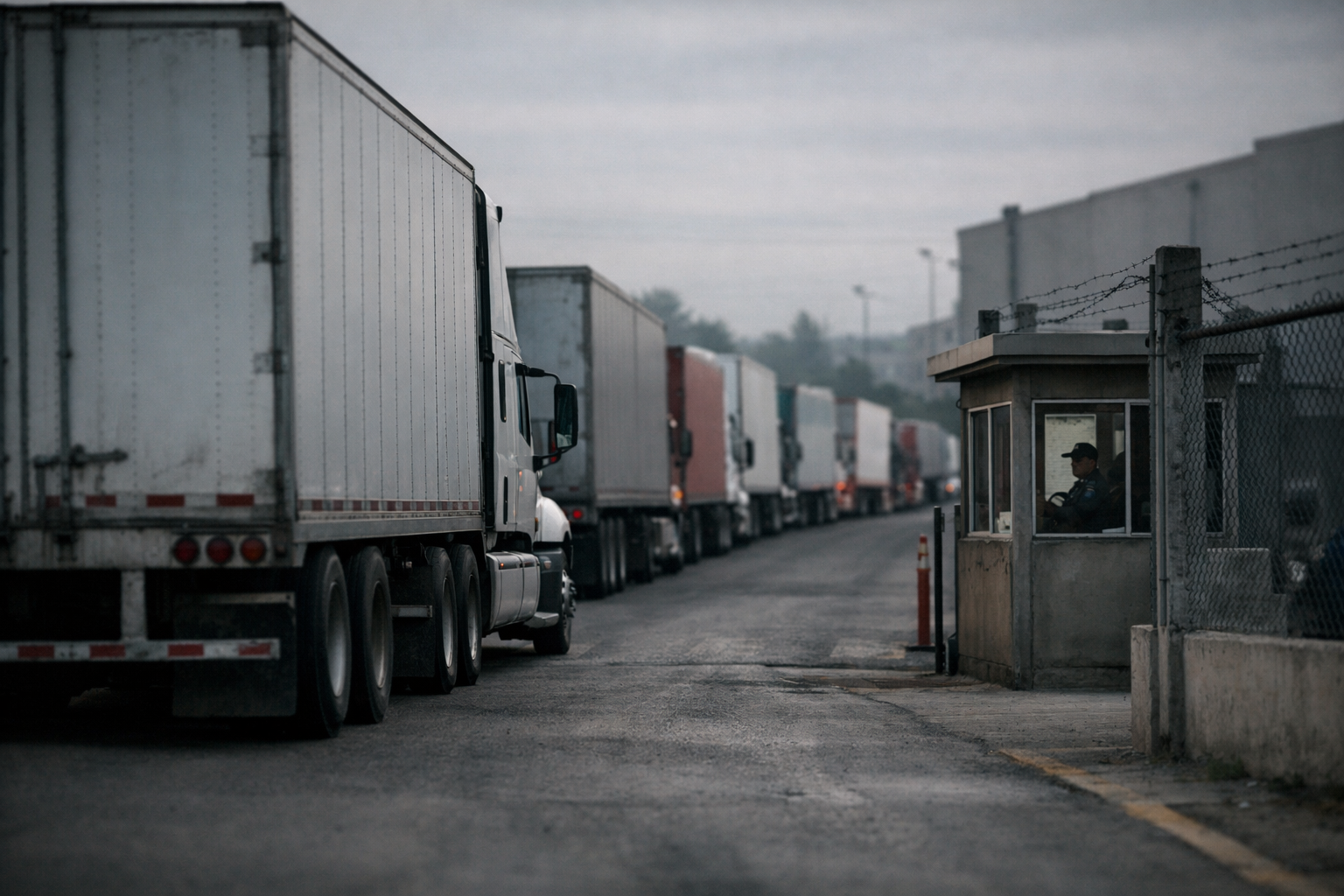
Discover the hidden costs of gate queues in 2026. From demurrage to driver churn, learn how to optimize your DC and eliminate the wait with Docklyx.
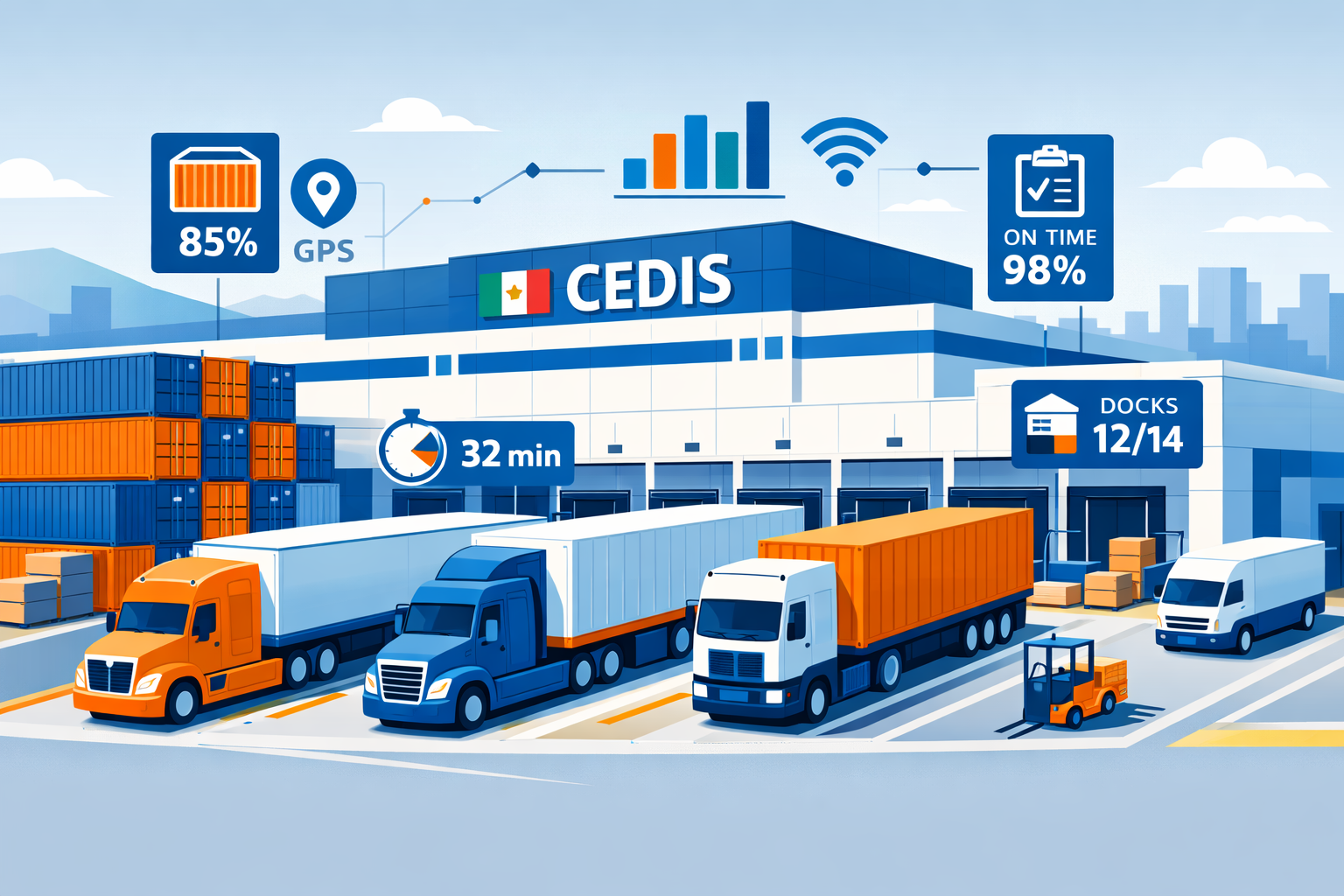
Cut wait times and demurrage fines in your Mexico DC. 2026 yard and dock guide with YMS technology. Schedule a Docklyx demo today.
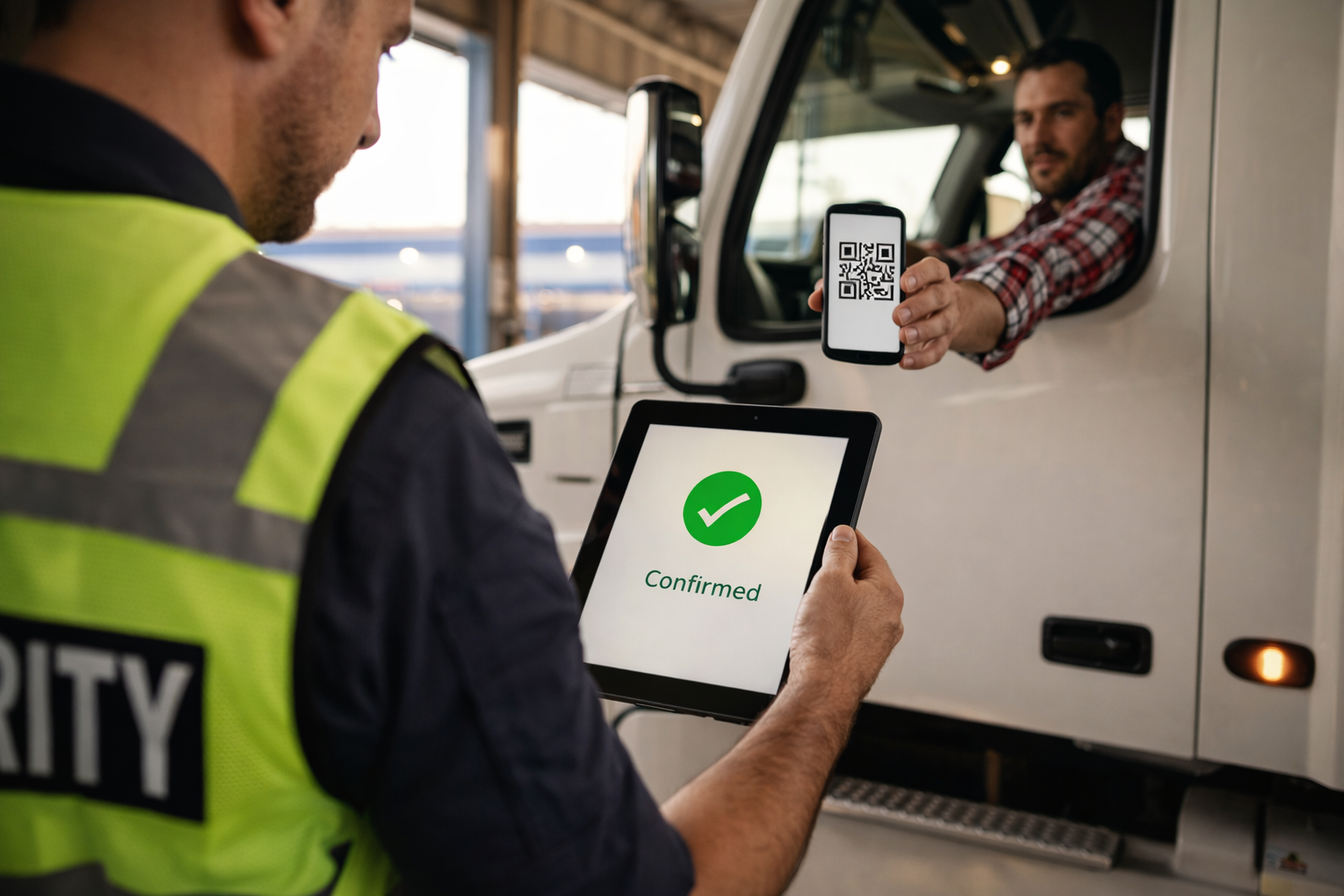
Learn how to implement a yard management system in under 24 hours without operational downtime. Step-by-step guide with real 2026 data.