Docklyx
Product
PricingBlogContact
ESLog inStart free
Docklyx

Product

  • Product
  • Features
  • Pricing

Company

  • About
  • Contact

Resources

  • Blog
  • Guides

Legal

  • Privacy
  • Terms
  • Cookies

© 2026 Docklyx. All rights reserved.

Made in Mexico 🇲🇽

← Back to blog
operations
March 26, 2026·20 min read
#costs#detention#queues#gate#distribution-center

Hidden Costs of Gate Queues: 6 Risks for Your DC

Hidden Costs of Gate Queues: 6 Risks for Your DC

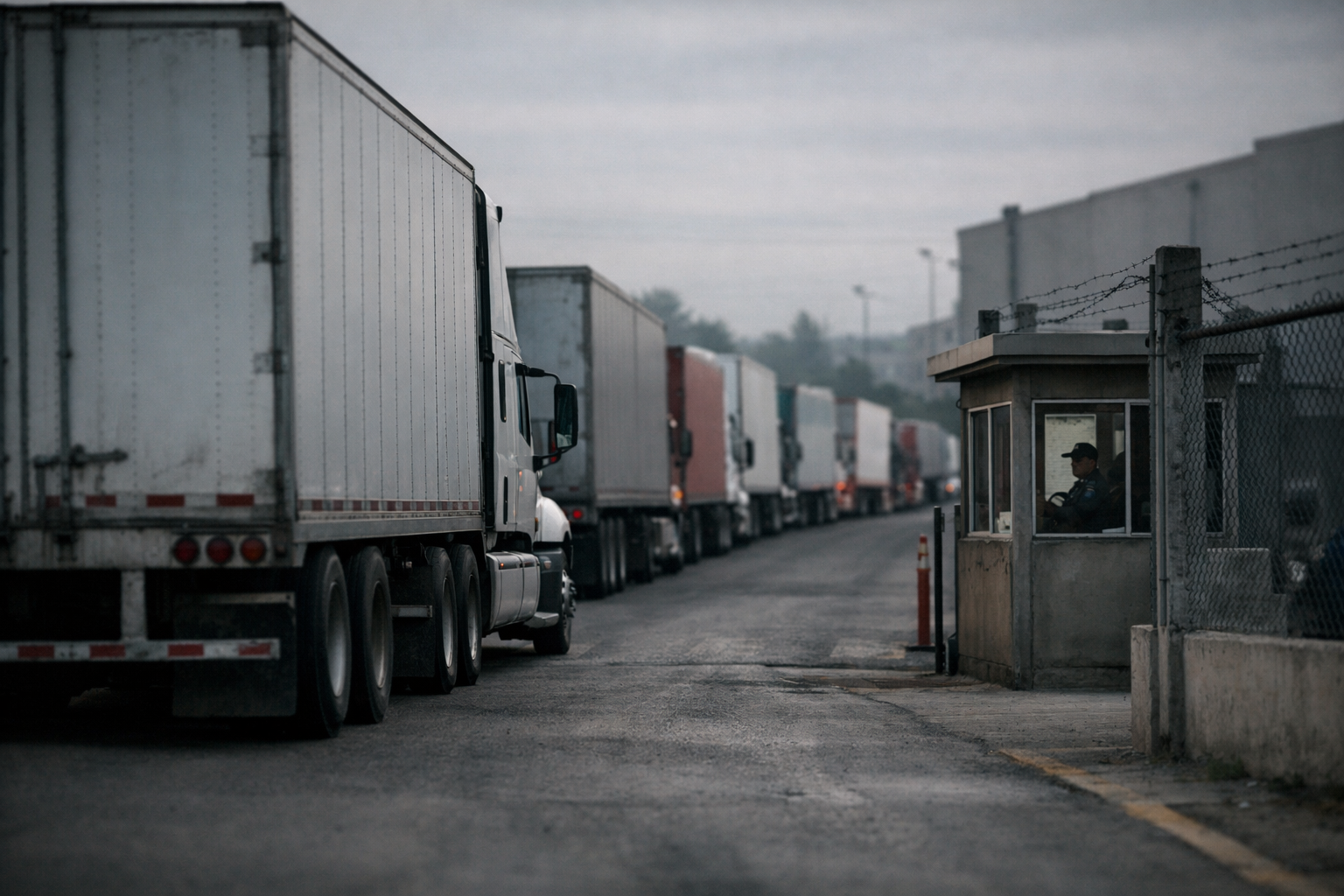
There is a number that almost no operations manager knows with precision: how much each hour of queuing costs their distribution center (DC). We are not talking about freight, warehousing, or payroll. We are talking about the "Invisible Tax" of logistics—the cost generated between the moment a truck arrives at your gate and the moment it finally starts loading or unloading at the dock.

In 2026, as nearshoring continues to push record volumes through Mexican and North American DCs, the "wait and see" approach to yard management is no longer sustainable. According to ATRI (American Transportation Research Institute), truck detention at shipping and receiving facilities represents a $15.1 billion annual economic loss in the United States alone. In Mexico, where diesel prices have surged and carrier capacity is tighter than ever, the impact is proportionally even more devastating.

If your operation receives 30 units per day and the average wait time is 2 hours, you are generating between $30,000 and $96,000 MXN daily in hidden costs. These costs never appear on a standard P&L, but they are eroding your margins every single hour.


1. Direct Detention & Demurrage (D&D) Costs

The most visible hidden cost is the detention fee. Most carrier contracts in 2026 allow for 2 hours of "free time" for loading or unloading. Every minute beyond that is billable.

The Financial Reality:

  • Average Penalty: $75 to $300 USD per hour.
  • Regional Highs: In congested hubs like Mexico City or Monterrey, these fees are applied aggressively to compensate for driver time lost in traffic.
  • The Data Gap: Gartner notes that companies without a Yard Management System (YMS) struggle to dispute up to 60% of these charges because they lack objective, timestamped evidence.

Without a digital record of when a truck hit the gate vs. when it reached the dock, you are at the mercy of the carrier's invoice.


2. Driver Productivity & Churn

A truck that isn't moving is a truck that isn't making money. But in 2026, the cost isn't just about the machine; it's about the human. The industry is facing a chronic driver shortage.

McKinsey & Company reports that drivers who are consistently detained at facilities are 3x more likely to leave their carrier. When a driver spends 4 hours at your gate, they lose the ability to complete their next "leg" of the journey. This disrupts the carrier's entire network.

  • The Result: Carriers will eventually "blacklist" your facility or apply a "hassle surcharge" to your freight rates. You may think you have a great rate, but the market is silently adjusting for your facility's inefficiency.

3. Fuel Waste & Environmental (ESG) Impact

An idling truck burns approximately 1 gallon (3.8 liters) of diesel per hour.

  • The Cost: At current fuel prices, a queue of 10 trucks waiting for 3 hours a day translates to over $1,500 MXN of burned fuel daily.
  • The Carbon Footprint: For companies with ESG (Environmental, Social, and Governance) targets, idling is a major obstacle. A single hour of idling produces roughly 20 pounds of CO2. In 2026, sustainability reporting is becoming mandatory for large enterprises. A queue at your gate is a direct hit to your carbon reduction goals.

4. The "Domino Effect" of Dock Congestion

A gate queue is rarely just a gate problem; it’s a symptom of a dock coordination failure.

  • When the gate is slow, the warehouse staff doesn't know which trailers are ready. They may leave a dock empty for 20 minutes because they "didn't know the truck was outside."
  • This creates a feedback loop: empty docks lead to longer queues, and longer queues lead to rushed, error-prone check-ins at the gate.
  • Gartner indicates that 27% of DCs see the receiving dock as their most congested area. This congestion reduces your overall facility throughput by up to 15%.

5. Security Risks & Cargo Theft

In regions where logistics security is a high priority, like Mexico's "Tred Diamond" area, a truck parked outside a secure perimeter is a sitting duck.

  • The Waiting Zone Risk: When your yard is full and trucks spill out onto the public shoulder or nearby streets, they are outside your security cameras and guard patrols.
  • Check-in Errors: When a guard is overwhelmed by a queue of 15 trucks, they are more likely to skip critical security steps—like verifying seal numbers or driver IDs. This is exactly when high-value cargo theft occurs.

6. Labor Overtime & Guard Fatigue

If your check-in process is manual (clipboard and radio), each unit takes roughly 12-15 minutes to process.

  • During a "peak" window where 10 trucks arrive at once, your guard is suddenly facing 150 minutes of work. This leads to overtime pay for guard shifts and increased errors.
  • The Solution: A digital check-in system reduces this to under 2 minutes, allowing your existing staff to handle 6x the volume without stress.

Case Study: CPG Manufacturer (Anonymized)

The Problem: A major snacks manufacturer in Central Mexico was seeing queues of up to 25 trucks every morning between 7:00 AM and 9:00 AM. Their average dwell time was 5.2 hours. They were paying over $450,000 MXN per month in detention fees.

The Solution: They implemented a digital gate portal and dock appointment scheduling. Carriers were required to book a window 24 hours in advance.

The Results:

  • Queue Reduction: The morning "bottleneck" was eliminated. Arrivals were spread throughout the 24-hour cycle.
  • Detention Savings: Fees dropped by 85% in the first 60 days.
  • Safety: The facility eliminated all "spillover" parking on the public highway, reducing their insurance risk profile.
  • ROI: The system paid for itself in less than 3 weeks.

Walkthrough: How Docklyx Eliminates the Queue in 3 Steps

If you want to regain control, here is how Docklyx transforms your gate from a bottleneck into a data-driven entry point:

Step 1: Mandatory Appointment Booking

Instead of "first come, first served," you provide your carriers with a self-service link. They must book a slot based on your actual warehouse capacity.

  • Why it works: You control the flow before the truck even leaves the carrier's yard. If you only have 5 docks available at 10:00 AM, the system only allows 5 bookings.

Step 2: Digital "Express Lane" Check-in

When the driver arrives, they don't get out of the truck to talk to a guard with a clipboard. They show a QR code from their phone (or a printed sheet).

  • The Process: The guard scans the code using the Docklyx Guard App. The system automatically verifies the appointment, records the arrival timestamp, and tells the guard exactly which parking spot or dock the truck should go to.
  • Result: Gate time drops from 15 minutes to 90 seconds.

Step 3: Real-Time Dock Visibility

The moment the truck is checked in, the warehouse supervisor sees it on their screen. They can prioritize the load based on the cargo's urgency.

  • The Coordination: If a dock becomes free, the supervisor "calls" the truck from the app. The driver receives an SMS: "Proceed to Dock 4 now."
  • Result: No more "lost" trucks in the yard or empty docks waiting for a radio call.

Conclusion: The Cost of Waiting vs. The Cost of Digitizing

In 2026, the data is clear: the cost of your trucks waiting in a queue is far higher than the cost of the technology required to eliminate it. As McKinsey notes, the productivity gap between the "digital leaders" and the "analog laggards" is growing by 30% every year.

The queue at your gate isn't an inevitable part of logistics; it’s a choice. You can choose to keep paying the "Invisible Tax," or you can choose to take control of your yard.

Is your DC ready to move to the fast lane?

Stop the queues—Get a 14-day Free Trial of Docklyx → Calculate your hidden costs with our ROI Tool → Learn how digital check-in improves security →

Ready to eliminate queues in your operation?

Docklyx digitizes the entire yard: appointments, check-in, docks, and real-time traceability.

Request free demo →

Get logistics insights

One email per week. No spam.

Related articles

Nearshoring in Mexico: How It Impacts Your DC Operations
operations

Nearshoring in Mexico: How It Impacts Your DC Operations

Nearshoring is flooding Mexican docks with volume. Learn how to prepare your distribution center for the new operational reality.
nearshoringdistribution-centerlogistics
Mar 30, 2026·10 min
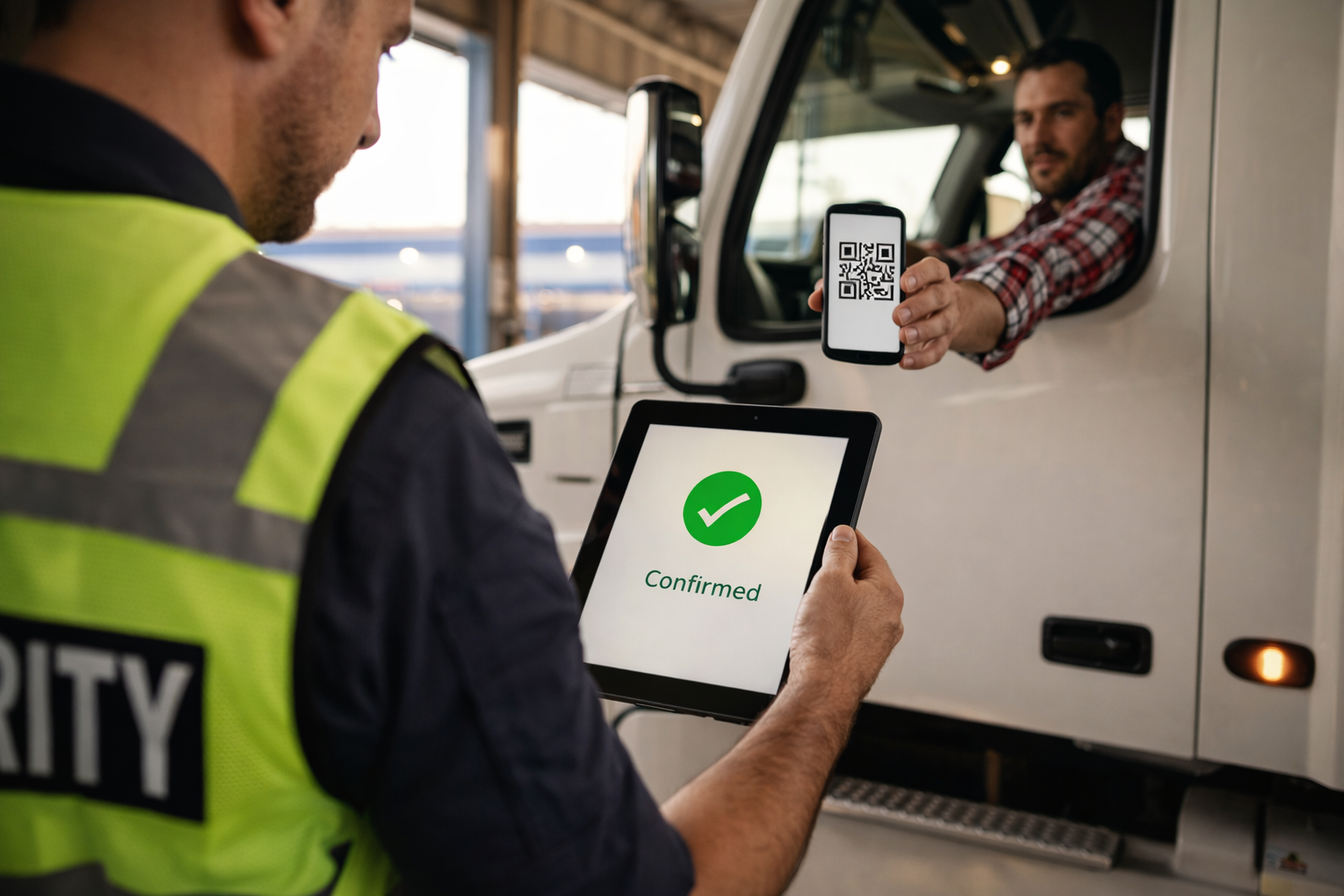
Aerial view of a Mexican distribution center yard with trucks organized at loading docks
operations

Optimize Your Mexico DC: Yard & Dock Guide 2026

Cut wait times and demurrage fines in your Mexico DC. 2026 yard and dock guide with YMS technology. Schedule a Docklyx demo today.
yard-managementlogisticsdock-scheduling
Mar 17, 2026·25 min
How to Implement a YMS in One Day (2026 Guide)
operations

How to Implement a YMS in One Day (2026 Guide)

Learn how to implement a yard management system in under 24 hours without operational downtime. Step-by-step guide with real 2026 data.

implementationymsyard-logistics
Mar 15, 2026·22 min