
In the first quarter of 2026, AI agents completed more than 3 million autonomous tasks across supply chains globally — covering appointment confirmations, dock reassignments, freight negotiations, and carrier notifications. None of those tasks required a human to approve each individual action.
That is agentic AI: artificial intelligence that doesn't just analyze and recommend, but decides and acts autonomously within limits defined by the organization.
For most distribution center operations managers, the question is no longer whether this technology exists. It does, it's in production, and it's generating measurable results. The real question is what it means concretely for the daily operation of a DC or warehouse with multiple loading docks.
This guide answers that question without unnecessary theory.
The most common confusion when talking about agentic AI is equating it with the AI tools many warehouses already use: dashboards with predictions, alerts when a truck has been in the yard too long, automated performance reports. Those tools are valuable, but they belong to a previous generation of AI.
The fundamental difference lies in who acts after the system detects something.
In a traditional AI (reactive) system, the cycle is: the system detects → the system alerts → a human decides → a human acts. The system is a highly sophisticated observer, but it still depends on someone making the decision and executing the action.
In an agentic AI system, the cycle changes: the system detects → the system decides → the system acts. The human remains in the loop for oversight and complex exception cases, but is no longer the bottleneck for every routine decision.
According to EY's analysis on agentic AI and supply chains, this transition represents the most significant shift in logistics automation since WMS adoption in the 1990s — not because the technology is more complex, but because it fundamentally changes where human work happens.
AI agents operate on a three-phase cycle that Owlery AI documents as the standard architecture for agentic systems in logistics:
This cycle happens in seconds — not in the minutes or hours the process takes when it depends on whoever is available at that moment.
Not all operations benefit equally from AI agents. The logistics yard has specific characteristics that make it especially well-suited for this type of automation.
A DC with 14 docks can generate between 60 and 120 decision events per shift: arrivals, assignments, reassignments, status changes, notifications. Most of those decisions follow predictable patterns — if dock 3 is freed and a refrigerated truck with an appointment in the next 20 minutes is waiting, dock 3 gets assigned to that truck. That logic doesn't need a supervisor. It needs a system that executes it at exactly the right moment.
According to Velostics, a truck waiting idle in the yard costs between $25 and $100 per hour in detention and demurrage charges, not counting the impact on carrier relationships. When those wait times happen because no one made the dock reassignment decision in time, the cost is directly attributable to human latency in the process.
Agentic AI eliminates that latency. The decision happens the moment the system detects the condition — not when a supervisor finishes reviewing email.
Nearshoring is driving sustained growth in logistics capacity demand across North America. Mexico Business News reports that logistics investment continues accelerating, but the supply of experienced yard supervisors isn't growing at the same pace. Agentic AI enables a leaner team to manage a higher volume of operations without losing control.
When a carrier doesn't show up — a no-show that in medium-volume operations accounts for 8% to 15% of daily appointments — the dock sits empty. In a non-automated operation, the supervisor has to detect the no-show, evaluate which waiting truck is the best candidate for the freed dock, and manually execute the reassignment.
With an AI agent, that process happens in seconds: the system detects the absence, evaluates waiting candidates based on their carrier scoring grade, cargo type, and estimated operation time, and assigns the dock to the optimal candidate. The supervisor receives a notification of what happened — not a request to make a decision.
When a truck arrives late and its appointment window has passed, there's a conflict: the dock was reassigned or is in use. The agent scans in real time for the next available window compatible with the operation type, proposes it to the carrier via automatic message, and confirms it without human intervention if the carrier accepts within a defined time limit.
AI scheduling platforms document confirmation rates above 95% and exception rates below 5% when the process includes automatic rescheduling proposals in real time, compared to the manual process where the carrier has to call or message to coordinate the new window.
A carrier whose grade drops from B to C is not just a data point in a monthly report — it's a signal that that carrier's upcoming operations have a higher probability of generating delays, no-shows, or dock incidents. An AI agent detects that grade change the moment it occurs and triggers an automatic sequence: a notification to the carrier with their new grade and improvement recommendations, an alert to the operations team to put the account on active monitoring.
This response — which manually would require someone to review the scoring report, identify the change, and draft the communication — happens automatically without anyone having to initiate it.
Appointment confirmations, reminders 2 hours before arrival, dock change notifications, incomplete documentation alerts: in a conventional operation, all these communications depend on someone on the team sending them. In an operation with agentic AI, the system executes them automatically based on system events, without anyone having to write or send anything.
The efficiency impact is direct: IBM documents that automating transactional communications in logistics reduces cycle times from days to hours or minutes, freeing the operations team for tasks that genuinely require human judgment.
You've digitized the gate. The next step is automating the decisions your operations team makes every shift. See how Docklyx applies agentic intelligence from day one →
A logistics operator with 14 docks in the greater Monterrey metropolitan area, specializing in consumer goods distribution, faced a classic problem: the operations team spent 45 to 60 minutes per shift confirming appointments, detecting no-shows, reassigning docks, and notifying carriers about changes. During high-pressure shifts, those tasks fell behind because the supervisor was handling another situation in the yard.
The result: average wait times of 2.3 hours per unit, a 12% no-show rate, and demurrage charges totaling between MXN 18,000 and 22,000 per month.
After implementing a system with agentic automation rules — automatic carrier scoring, autonomous reassignment on no-shows, and automatic available-window notifications — the results in the first 60 days were:
The yard supervisor described the change: "Before, I managed the yard. Now the system manages the yard and I manage the exceptions."
| Capability | Traditional AI (Reactive) | Agentic AI |
|---|---|---|
| No-show detection | ✅ Alerts supervisor | ✅ Reassigns automatically |
| Time window management | Fixed schedule, manual adjustments | Automatic proposal and confirmation |
| Carrier communication | Manual or semi-automatic | Event-triggered in real time |
| Carrier scoring | Periodic report | Real-time update + automatic alerts |
| Dock assignment decision | Fixed rules or human judgment | Dynamic optimization across multiple variables |
| Human intervention | On every decision | Only for exceptions outside parameters |
| Improves over time | No | Yes, the model learns from each operation |
The boundary between both generations moves fast. According to Deloitte, by 2027 70% of organizations that adopted predictive AI will have incorporated agentic capabilities as a natural extension of their existing systems.
No. The supervisor shifts from making high-volume routine decisions to overseeing the system and managing exceptions that exceed automated parameters. The role doesn't disappear — it moves toward tasks requiring contextual judgment that no system can replicate.
Not necessarily in the first phase. The most effective yard AI agents operate on the data the yard management system itself already generates: check-in records, appointment history, carrier scoring, and dock status. WMS or TMS integration expands capabilities in later phases.
The breakeven point is typically yards with more than 20 daily appointments and at least 3 active docks. Below that threshold, agentic automation delivers value, but the return takes longer. Above it, every shift without automation is supervisor time and avoidable demurrage charges.
Well-implemented agentic systems log every action and the reasoning behind it, making it possible to identify and correct logic errors. Human intervention thresholds are also explicitly defined: the agent acts autonomously for cases within normal parameters and escalates to the supervisor when the situation exceeds configured limits. The human remains the safety net for exception cases.
Docklyx is not a future promise. The agentic capabilities described in this article are already operating in the platform, integrated into the daily flow of dock management.
Carrier scoring updates in real time. Every check-in, no-show, operational incident, and departure automatically changes the carrier's grade without anyone touching it. The system detects the event, calculates the impact, and updates the grade (A–F) immediately. No overnight batch process, no manual entry.
When a carrier doesn't arrive within the configured tolerance window, Docklyx automatically generates a ranked list of candidates for the freed dock — ordered by carrier grade, cargo type, and estimated operation time. The supervisor sees the optimal proposal and confirms with a single click, or the system can confirm on its own if that's how it's configured.
When a carrier's grade drops a category, the system automatically sends them a notification with their new score, current grade, and improvement recommendations. The operations team gets an internal alert at the same time. Nobody had to review a report or draft a message.
The status of every dock — available, occupied, in check-in — updates in real time from system events. The dashboard shows what's happening now, not what someone updated 20 minutes ago.
A leaner team can handle more docks and more carriers without losing control, because the decisions that used to wait on a supervisor now get resolved by the system.
DCs running agentic AI handle more volume with less manual intervention. The ones that aren't are paying for that gap shift by shift.
Start your 24-hour setup with Docklyx →
Related articles:
Docklyx digitizes the entire yard: appointments, check-in, docks, and real-time traceability.
Request free demo →One email per week. No spam.
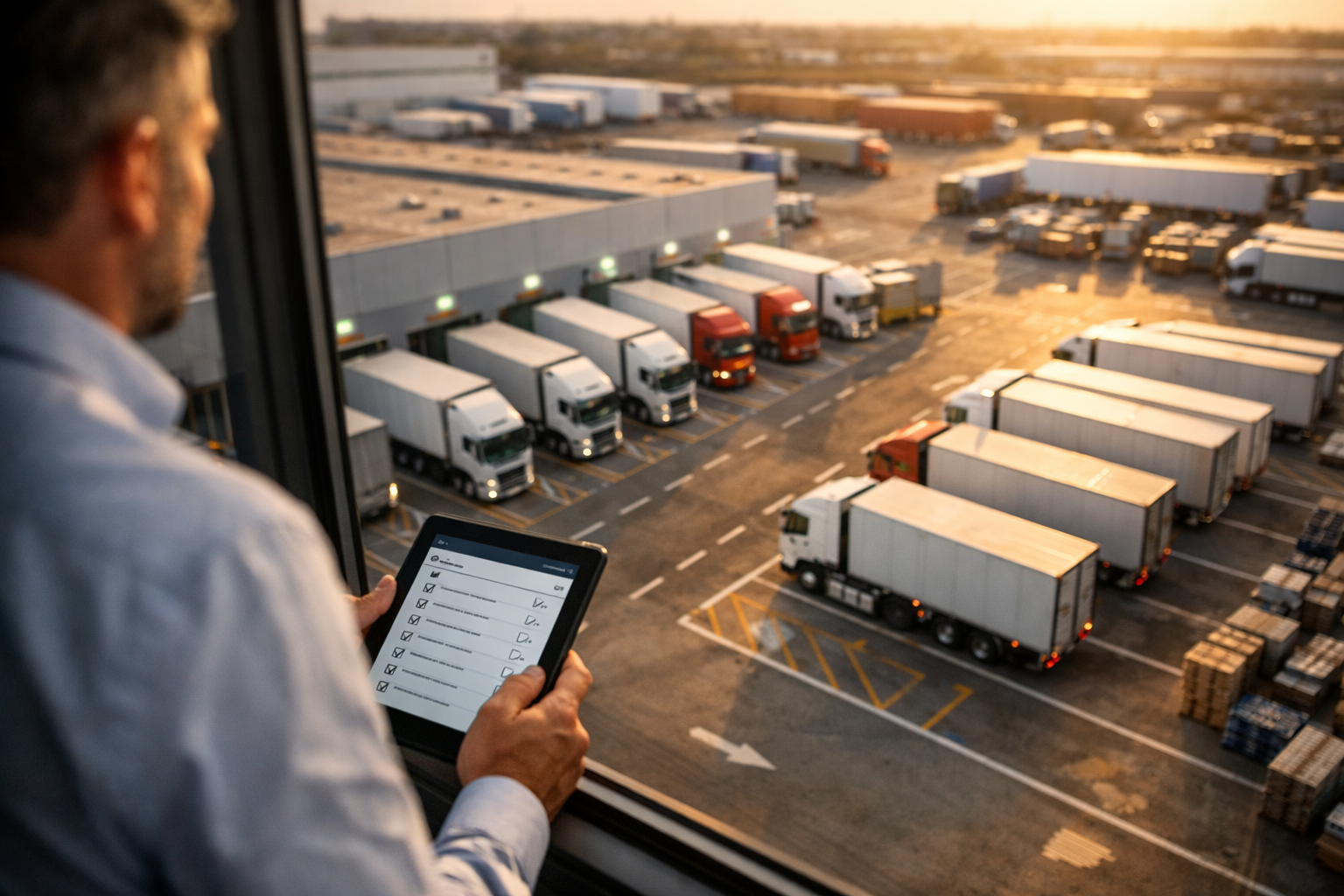
Buyer's guide for choosing a yard management system. 10-criteria checklist to evaluate vendors, avoid costly mistakes, and modernize your yard.
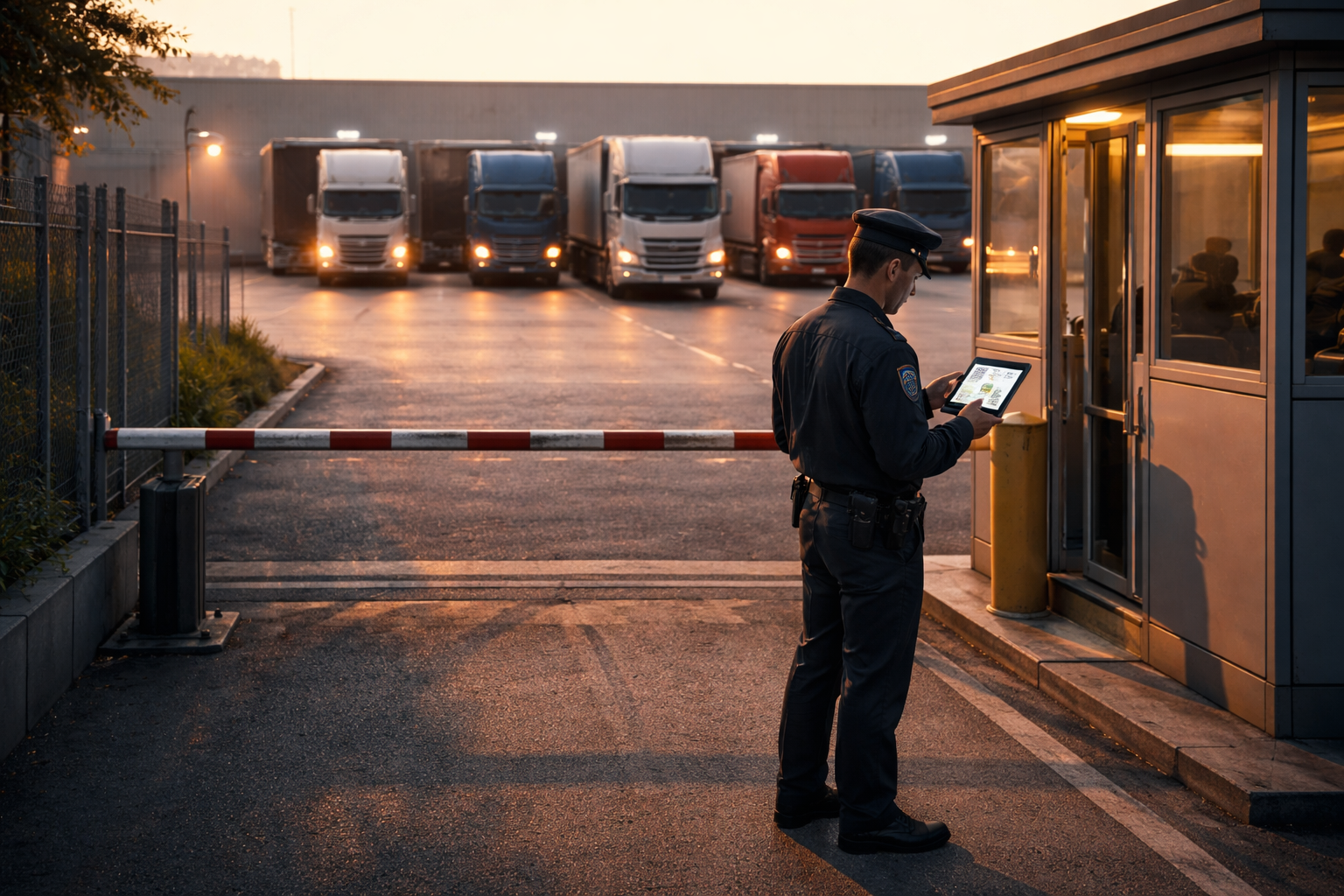
Automate dock appointments and check-in with WhatsApp Business API. Learn how to save 10+ hours weekly and eliminate yard congestion with Docklyx.
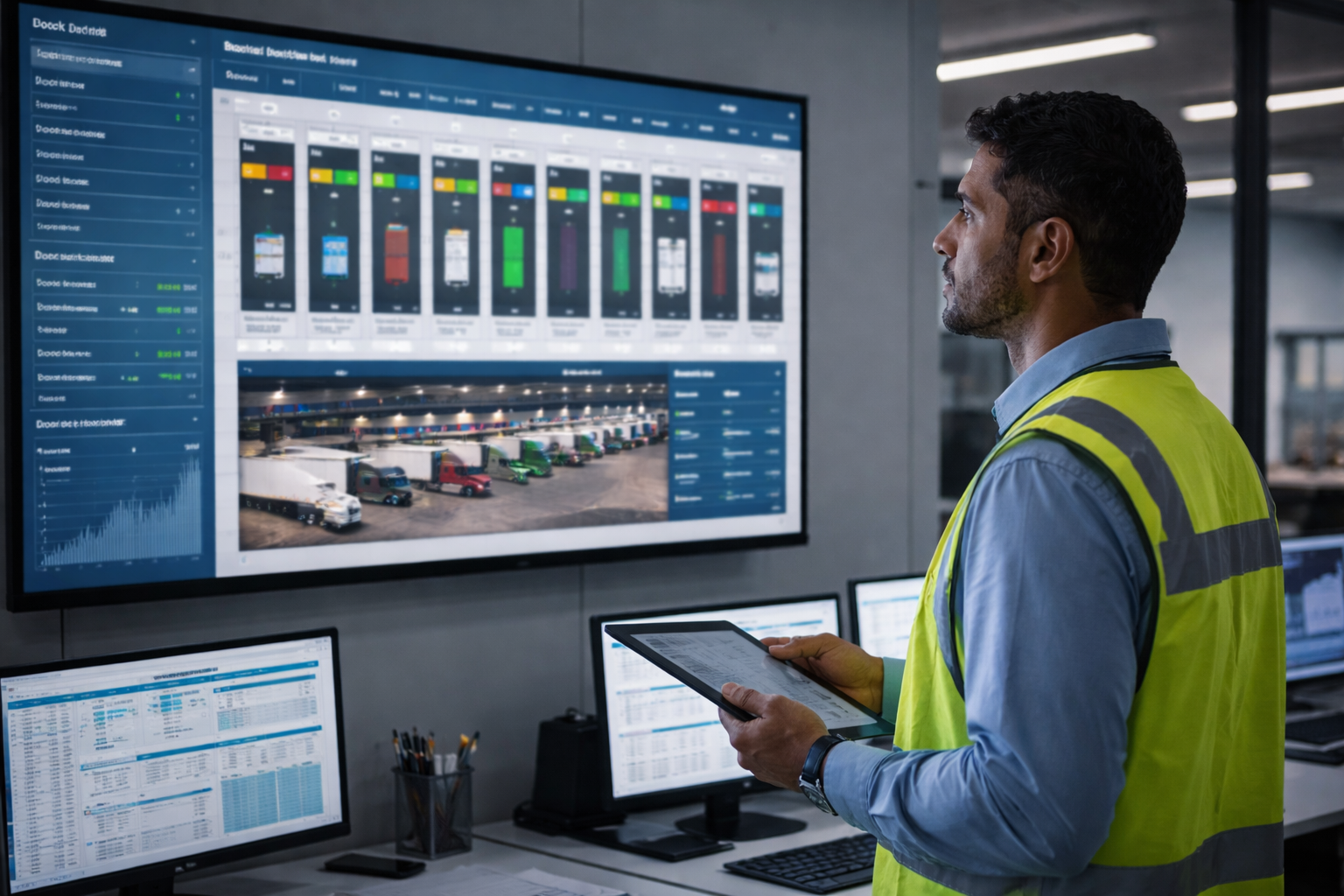
Unlock yard efficiency with our 2026 Yard Management Software guide. Features, McKinsey stats, and a Docklyx walkthrough. Digitizing your DC starts here.